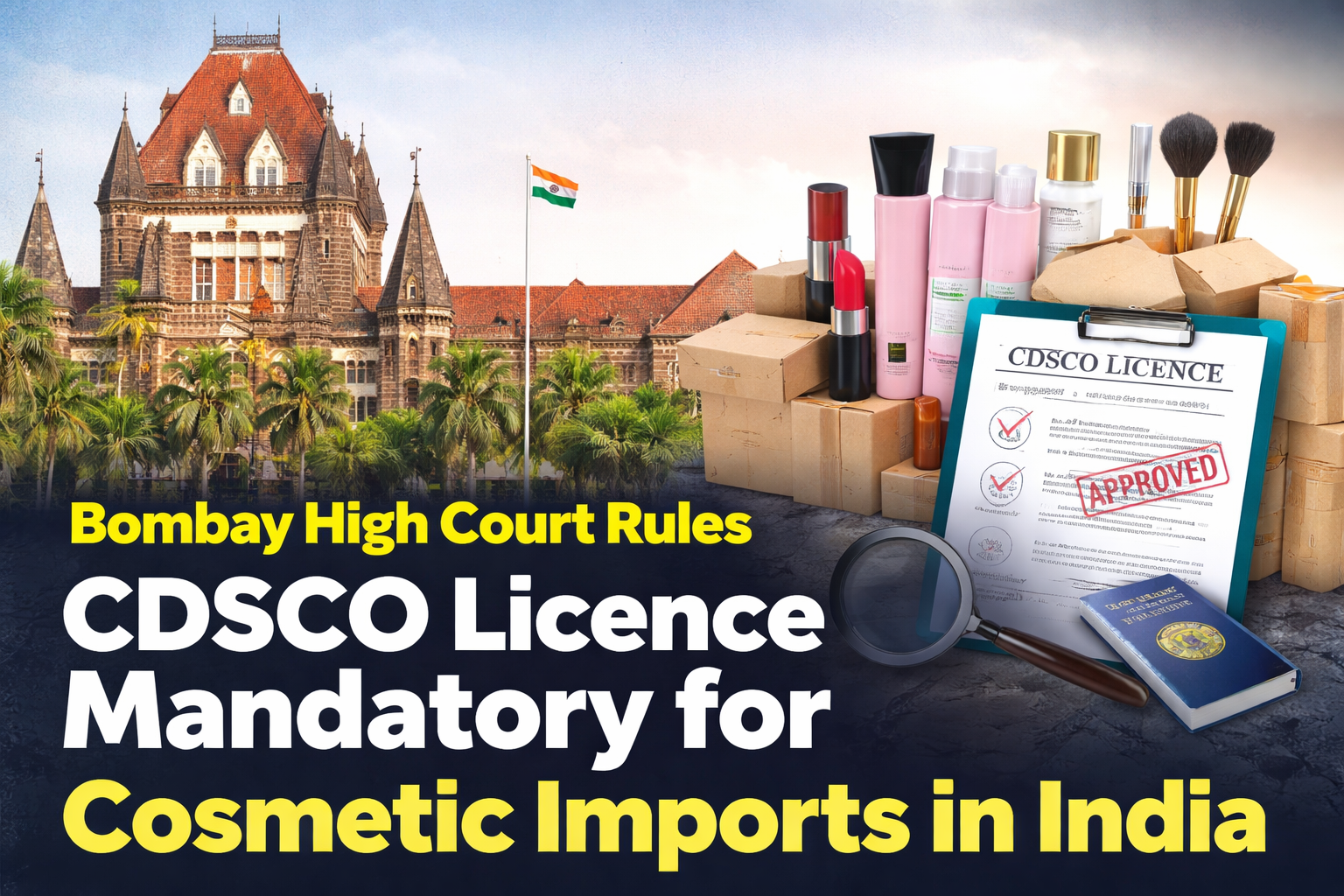
Bombay High Court Rules CDSCO Licence Mandatory for Cosmetic Imports in India
In a significant judgment, the Bombay High Court has clarified that the import of cosmetics into India without obtaining the mandatory licence from the Central Drugs Standard Control Organisation (CDSCO) is illegal and may render such goods as “prohibited” under the Customs Act. This ruling has major implications for importers, distributors, and cosmetic businesses operating in India.
Background of the Case
The case revolved around the import of cosmetic products that were seized by authorities due to non-compliance with regulatory requirements. The importer had failed to obtain the required registration or licence from CDSCO, which is the apex regulatory authority for drugs, cosmetics, and medical devices in India.
The Directorate of Revenue Intelligence (DRI) had intercepted and seized the consignment, suspecting violations of import regulations. The importer then approached the court seeking permission to re-export the goods.
However, the Bombay High Court refused to grant relief, emphasizing that regulatory compliance cannot be bypassed, especially in sectors that directly impact public health and safety.
Key Observations by the Court
The Court made several crucial observations:
-
Importing cosmetics without CDSCO registration is not permissible under Indian law.
-
Such goods may be classified as “prohibited goods” under the Customs Act, 1962.
-
Allowing re-export without completing legal proceedings could weaken enforcement mechanisms.
-
The importer was aware of the legal requirement but failed to comply.
The Court highlighted that regulatory frameworks exist to ensure consumer safety, and non-compliance cannot be treated lightly.
CDSCO Licence: Why It Is Mandatory
The CDSCO operates under the Drugs and Cosmetics Act, 1940 and plays a critical role in regulating the import of cosmetics into India. Importers must obtain a Registration Certificate (RC) before bringing cosmetic products into the country.
This process involves:
-
Submission of product details
-
Manufacturer information
-
Safety and quality certifications
-
Compliance with Cosmetic Rules, 2020
The Drugs Controller General of India (DCGI), under CDSCO, is responsible for granting these approvals. Without this registration, cosmetics cannot legally enter the Indian market.
Legal Implications of Non-Compliance
The judgment reinforces that non-compliance with CDSCO regulations can lead to serious consequences, including:
-
Seizure of goods by customs authorities
-
Classification of goods as prohibited imports
-
Legal action and penalties
-
Loss of business and reputational damage
Even if a product falls under the “free import” category under the Foreign Trade Policy, it still requires regulatory clearance from CDSCO. Import policy permissions do not override safety regulations.
Impact on Cosmetic Importers
This ruling serves as a strong warning for cosmetic importers in India. Businesses must ensure that:
-
All products are registered with CDSCO before import
-
Documentation is complete and accurate
-
Compliance with Cosmetic Rules, 2020 is strictly followed
Failure to do so may result in financial losses and legal complications.
Additionally, the Court’s refusal to allow re-export indicates a stricter stance by Indian authorities toward regulatory violations. Importers can no longer assume that non-compliant goods will be allowed to exit without consequences.
Importance of Regulatory Compliance
The judgment underscores the importance of compliance in sectors involving consumer safety. Cosmetics, although often perceived as non-critical, can pose serious health risks if they do not meet quality standards.
Regulatory authorities like CDSCO ensure that imported products:
-
Are safe for human use
-
Meet prescribed quality standards
-
Do not contain harmful substances
Strict enforcement helps prevent the entry of substandard or unsafe products into the Indian market.
Conclusion
The Bombay High Court’s decision reinforces the mandatory nature of CDSCO licensing for cosmetic imports. It sends a clear message that regulatory compliance is not optional but a legal necessity.
For businesses involved in importing cosmetics, this ruling highlights the need for due diligence and strict adherence to Indian laws. Ensuring proper registration and compliance not only avoids legal trouble but also builds trust with consumers and authorities.
In today’s regulatory environment, compliance is not just a legal requirement—it is a critical component of sustainable business operations.

















:-important-update-for-manufacturers.png)

















.png)