BIS Certification for Chemicals in India
The chemical industry plays a vital role in India’s industrial growth, supporting sectors such as pharmaceuticals, agriculture, construction, textiles, automotive, electronics, and consumer goods. To ensure safety, quality, and standardization of chemical products, the Bureau of Indian Standards (BIS) regulates the certification of chemicals sold, manufactured, or imported into India.
BIS Certification for Chemicals is mandatory for various chemical products under different Indian Standards (IS). These standards ensure that chemicals meet prescribed quality parameters, are safe for use, and comply with environmental and health regulations. Non-compliance can lead to penalties, product bans, or rejection at ports for imported chemicals.
This article provides a complete overview of BIS certification for chemicals, including applicability, product coverage, certification schemes, process, documents, timeline, cost, and common challenges.
What is BIS Certification?
The Bureau of Indian Standards (BIS) is the national standards body of India, established under the BIS Act, 2016. BIS formulates Indian Standards (IS) and ensures product conformity through certification and surveillance.
For chemical products, BIS certification confirms that the product:
Meets Indian quality and safety standards
Is suitable for industrial or consumer use
Complies with environmental and health norms
Is consistent in quality across batches
Why is BIS Certification Important for Chemicals?
BIS certification is crucial in the chemical sector due to the potential risks associated with improper handling, poor quality, or substandard chemicals.
Key Benefits of BIS Certification for Chemicals
Legal compliance with Indian regulations
Market access across India
Enhanced product credibility and trust
Safety assurance for users and the environment
Eligibility for government and PSU tenders
Smooth customs clearance for imports
Types of BIS Certification Schemes for Chemicals
Chemical products are certified under different BIS schemes depending on their nature and origin.
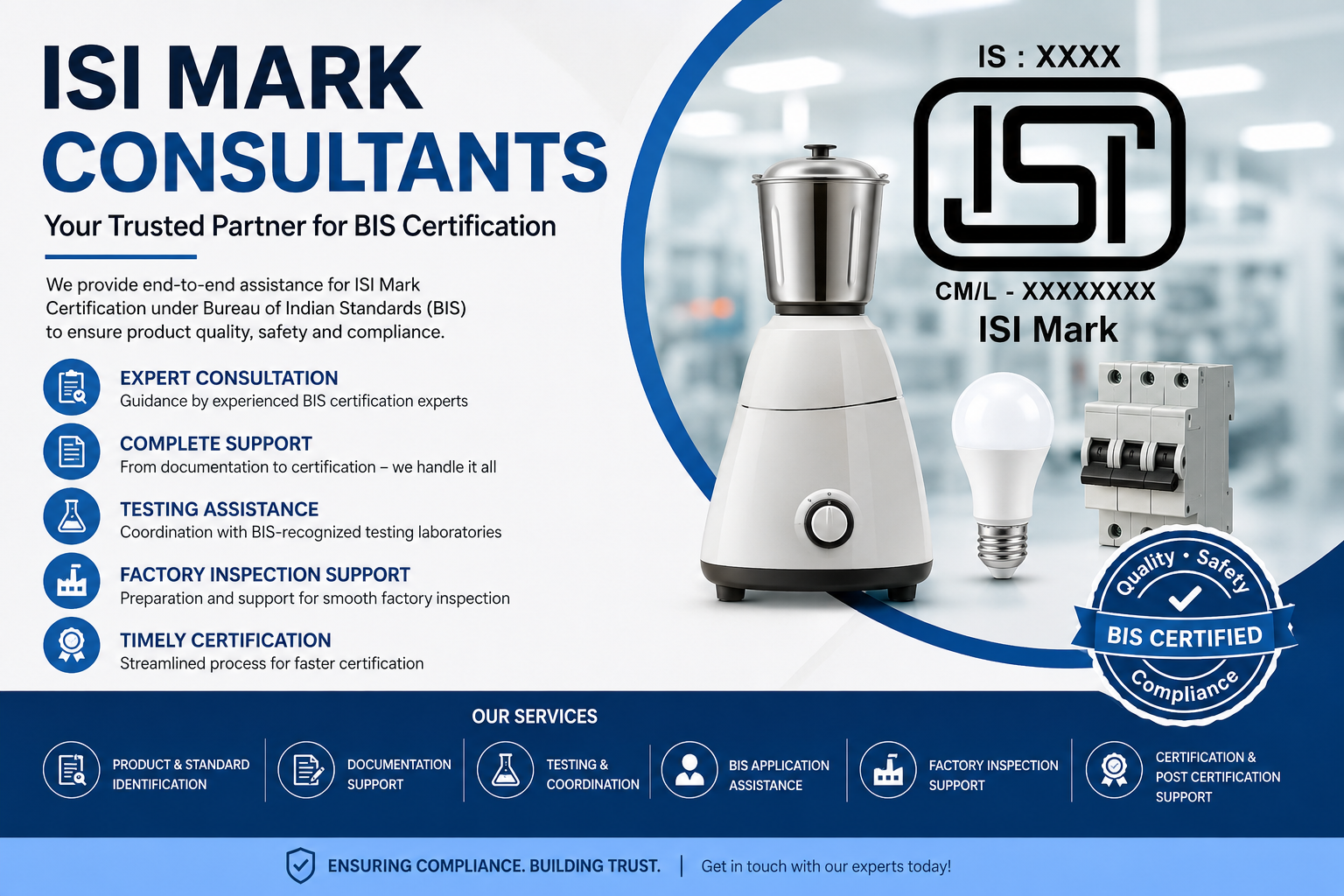
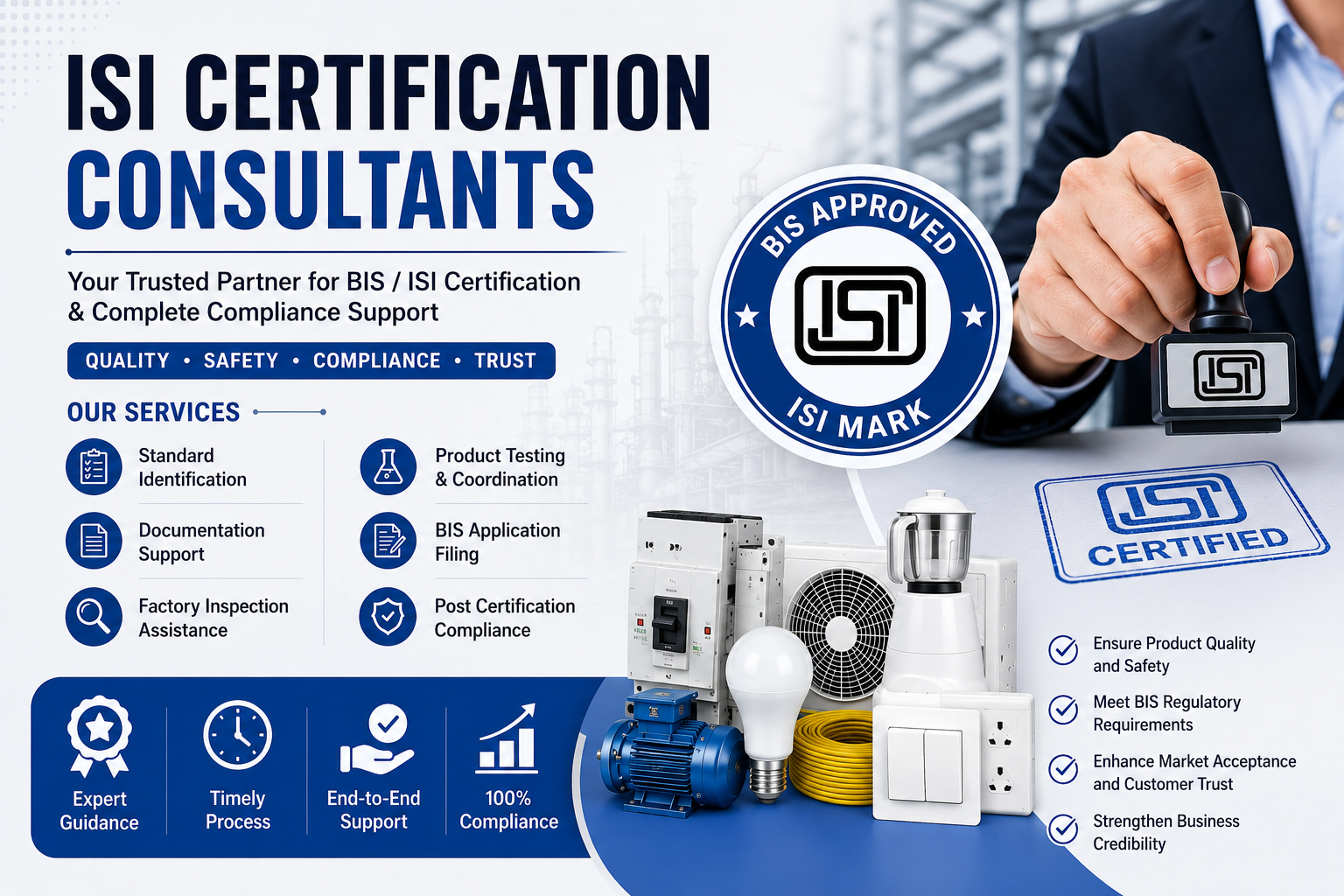
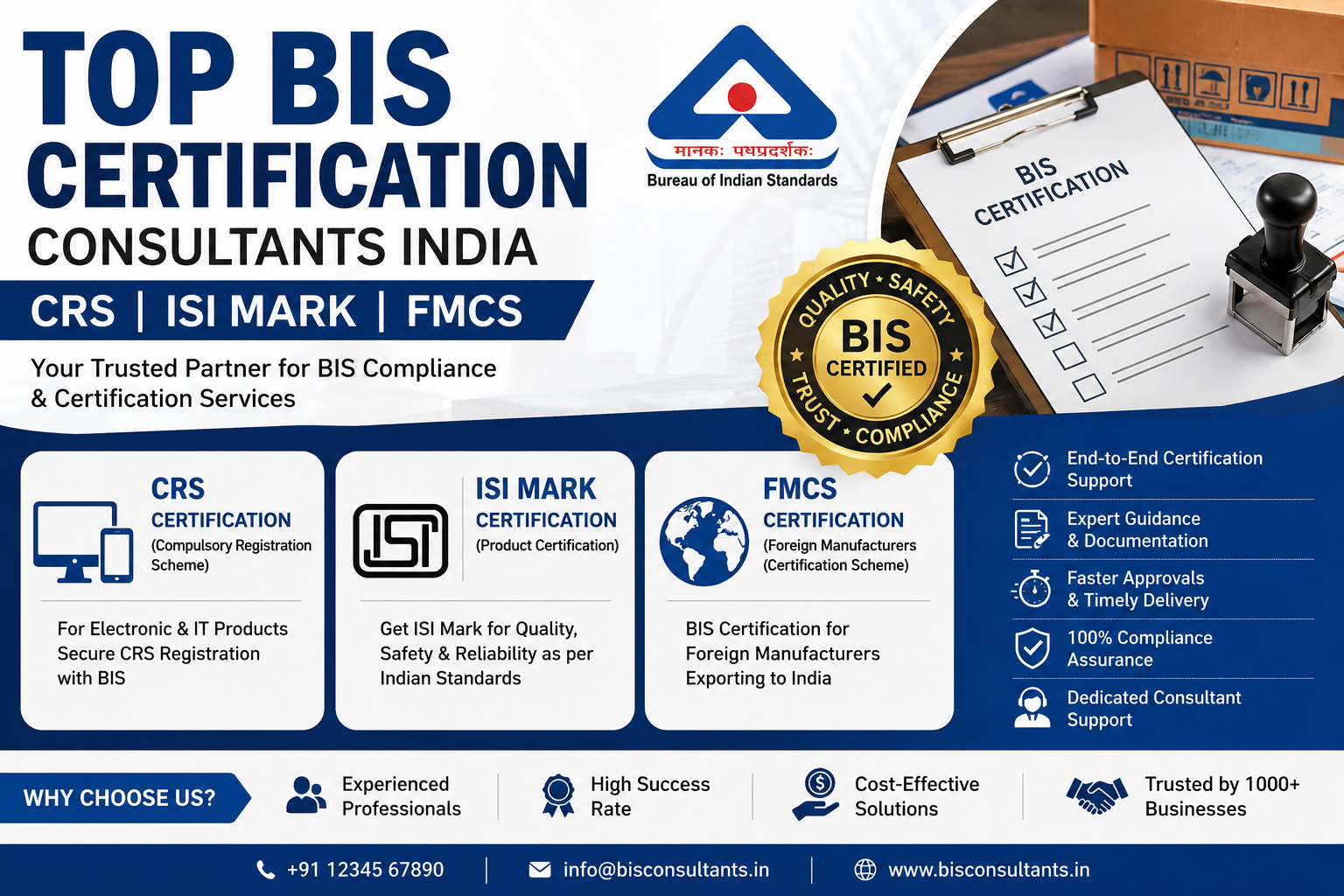
1. ISI Mark Scheme (Scheme-I)
This scheme applies to domestically manufactured chemicals. Manufacturers must obtain an ISI Mark License before selling the product in India.
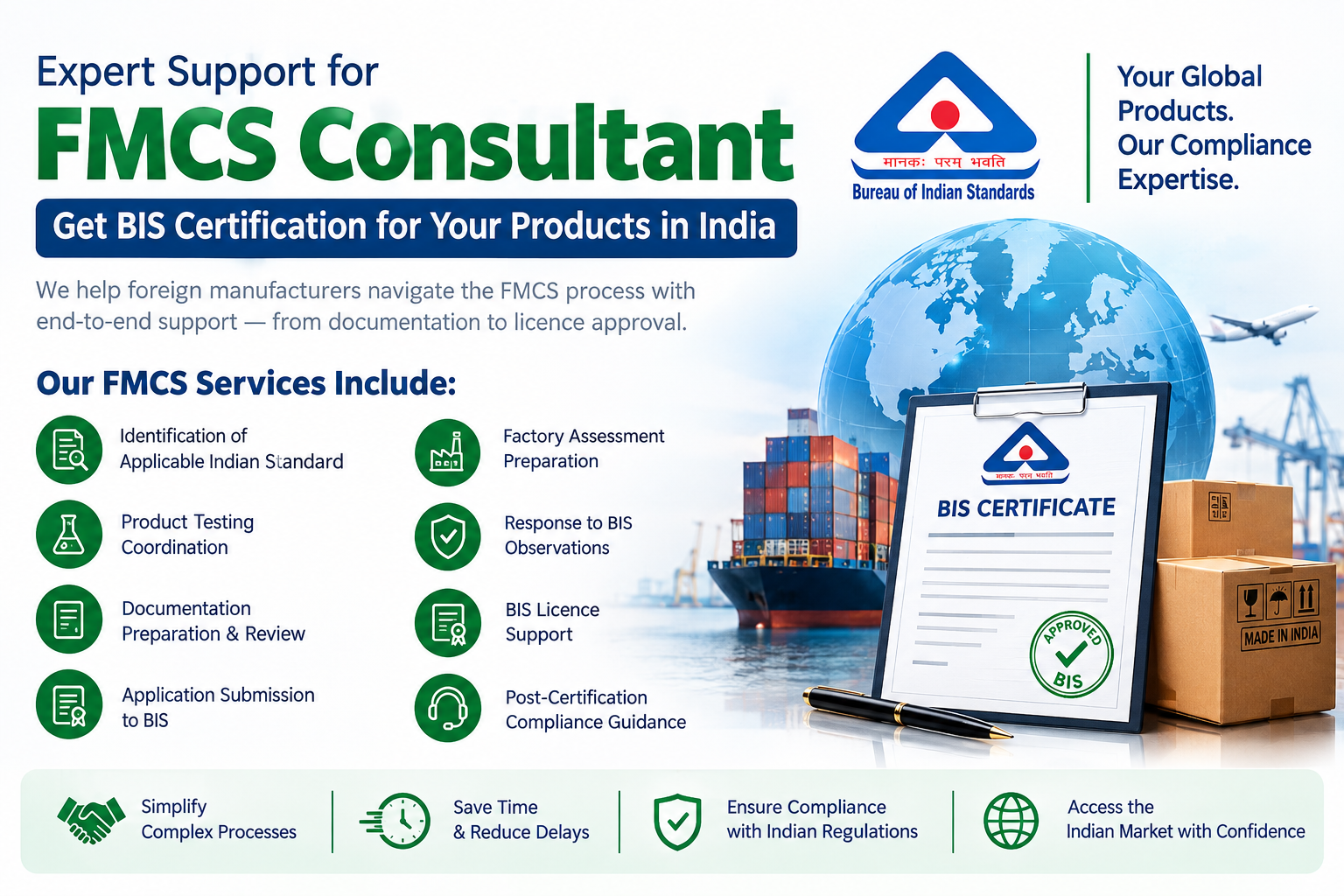
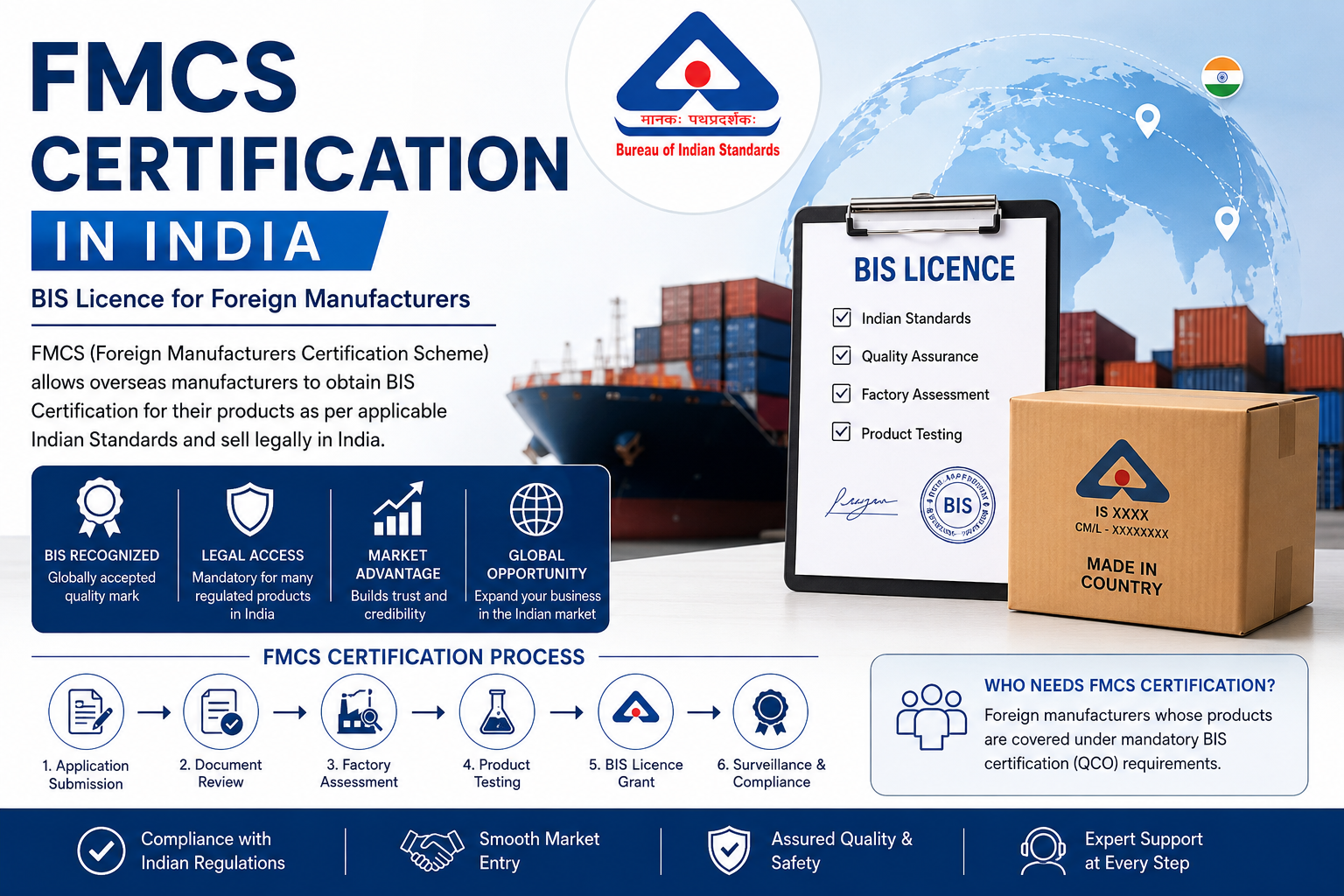
2. Foreign Manufacturers Certification Scheme (FMCS)
Under Scheme-II, foreign manufacturers exporting chemicals to India must obtain BIS certification under the FMCS scheme.
3. Compulsory Registration Scheme (CRS)
Some chemical-based products used in electronics or consumer goods may fall under CRS, although most chemicals are regulated under ISI or FMCS.
List of Chemicals Covered Under BIS Certification
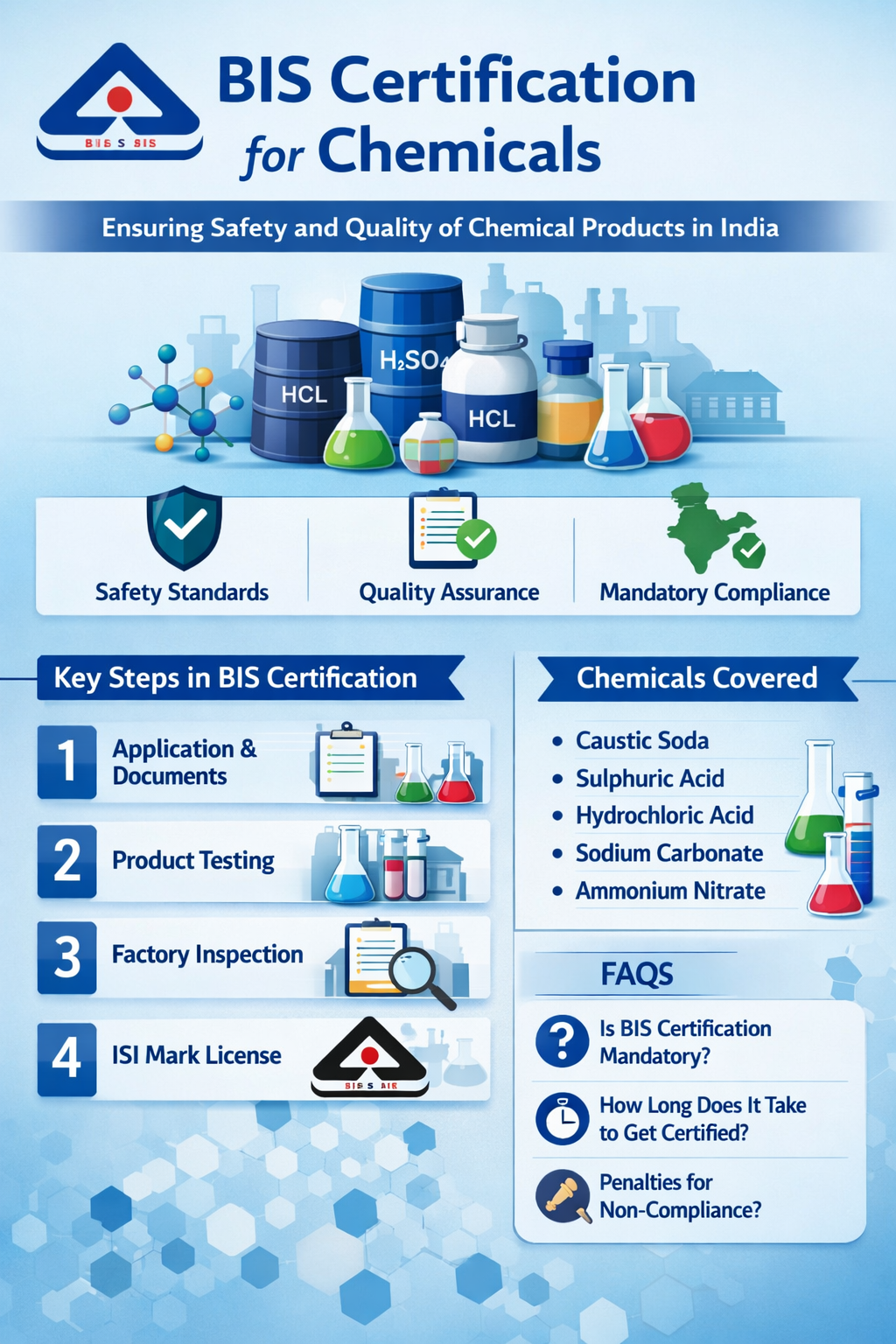
BIS has notified several chemicals under mandatory certification. Some commonly covered chemicals include:
Caustic Soda (IS 252)
Sulphuric Acid (IS 266)
Hydrochloric Acid (IS 265)
Nitric Acid (IS 264)
Ammonium Chloride (IS 325)
Sodium Bicarbonate (IS 2124)
Sodium Carbonate (IS 251)
Calcium Carbide (IS 1040)
Bleaching Powder (IS 1065)
Industrial Alcohols
Water Treatment Chemicals
Fertilizer-grade Chemicals
Textile Processing Chemicals
Note: The list is regularly updated by BIS. Expert consultation is recommended to confirm applicability.
Mandatory vs Voluntary BIS Certification for Chemicals
Mandatory Certification
Certain chemicals are notified under Quality Control Orders (QCOs) issued by the Government of India. Certification is compulsory before manufacturing, importing, or selling these chemicals.
Voluntary Certification
Manufacturers may voluntarily apply for BIS certification to enhance market trust, even if the product is not under mandatory regulation.
BIS Certification Process for Chemicals
The BIS certification process involves multiple stages and strict quality checks.
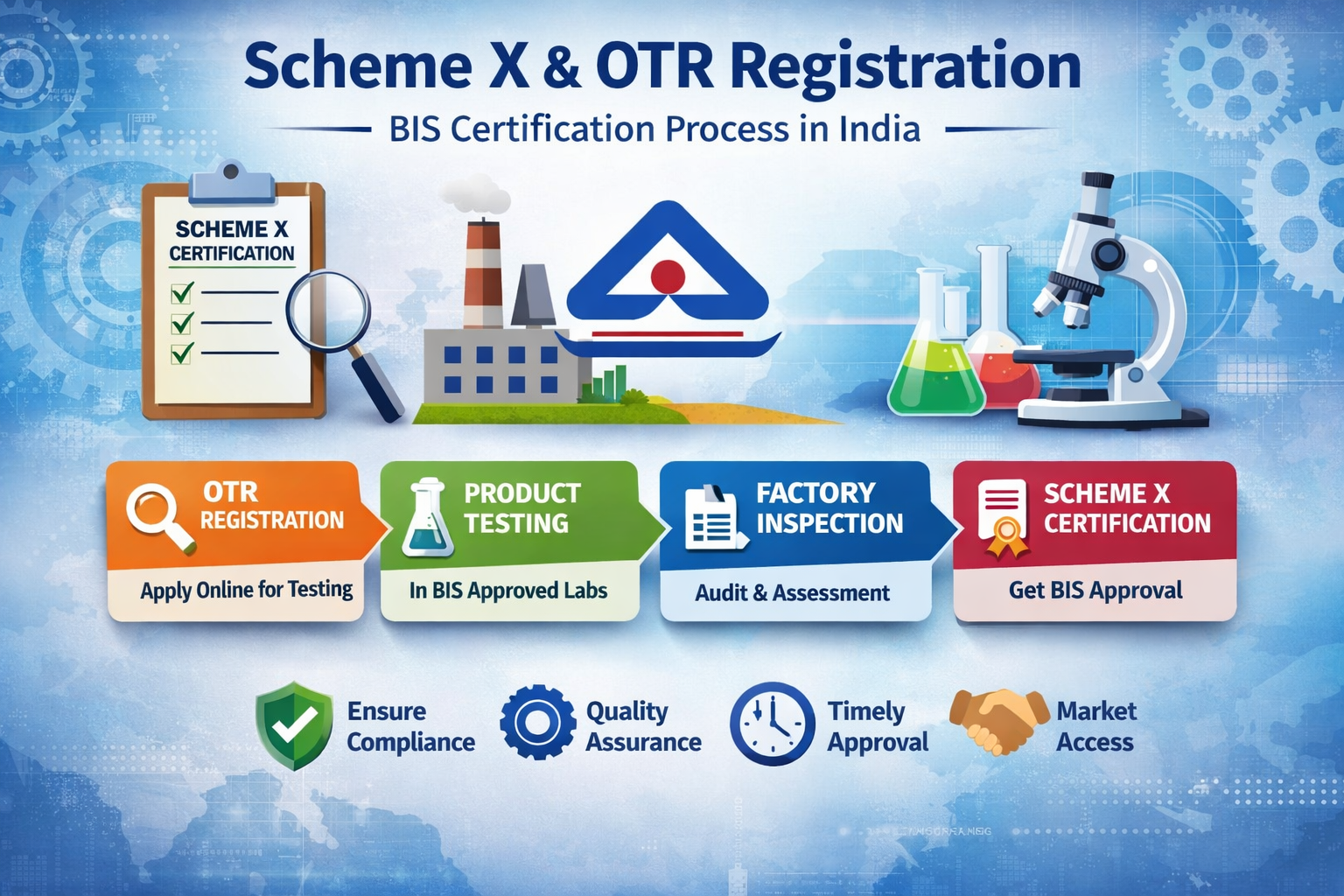
Step 1: Identify Applicable Indian Standard
Each chemical product has a specific Indian Standard (IS) defining quality parameters, test methods, and packaging norms.
Step 2: Application Submission
Manufacturers submit the application online via the BIS portal along with required documents and fees.
Step 3: Product Testing in BIS-Recognized Laboratory
Chemical samples are tested in a BIS-approved laboratory to verify compliance with the applicable IS.
Step 4: Factory Inspection (For Manufacturers)
BIS officials conduct a factory audit to assess:
Manufacturing infrastructure
Quality control systems
In-house testing facilities
Raw material sourcing
Step 5: Grant of BIS License
Upon successful evaluation, BIS grants the license to use the ISI Mark or certification mark.
Step 6: Surveillance and Renewal
BIS conducts periodic surveillance, sample testing, and license renewal to ensure ongoing compliance.
Documents Required for BIS Certification for Chemicals
Typical documents include:
Application form
Certificate of incorporation / company registration
Factory license
Manufacturing process flowchart
List of machinery and equipment
In-house testing facility details
Test reports from BIS-recognized labs
Quality control manuals
Raw material specifications
Authorization letter
Brand/trademark details
Timeline for BIS Certification for Chemicals
Total Timeline: 6–10 weeks (may vary based on product complexity and readiness)
Cost of BIS Certification for Chemicals
The cost depends on:
Type of chemical
Number of variants
Laboratory testing charges
BIS government fees
Inspection and surveillance charges
Approximate Cost Range
Domestic Manufacturers: ?1.5 – ?4 lakhs
Foreign Manufacturers (FMCS): Higher due to inspection and logistics
BIS Certification for Imported Chemicals
Foreign manufacturers exporting chemicals to India must obtain BIS certification under FMCS. Key points include:
Mandatory nomination of an Authorized Indian Representative (AIR)
Factory inspection by BIS officials
Testing in Indian BIS-recognized labs
Compliance with Indian labeling and packaging rules
Non-certified chemical imports are subject to customs rejection or seizure.
Common Challenges in BIS Certification for Chemicals
Identifying correct Indian Standard
Meeting strict purity and composition requirements
Inadequate in-house testing facilities
Delays in laboratory testing
Non-compliance during factory inspection
Professional consultancy helps reduce errors and delays.
Role of BIS Consultant for Chemical Certification
A BIS consultant assists in:
Applicability assessment
Standard identification
Documentation preparation
Laboratory coordination
Factory inspection support
Timely license approval
Expert guidance ensures smooth and cost-effective certification.
Why Choose Fusion Compliance Services?
Fusion Compliance Services is a trusted BIS consultancy providing end-to-end support for chemical certification in India.
Our Key Strengths
Extensive experience in BIS certification for chemicals
Dedicated compliance experts
End-to-end documentation and liaison support
Faster approvals and reduced rejection risk
Support for domestic and foreign manufacturers
Conclusion
BIS Certification for Chemicals is a critical requirement for ensuring safety, quality, and legal compliance in the Indian market. With increasing regulatory scrutiny and expanding Quality Control Orders, manufacturers and importers must proactively comply with BIS norms.
Whether you are a domestic chemical manufacturer or a foreign exporter, obtaining BIS certification not only ensures compliance but also strengthens market credibility and business growth.
For hassle-free BIS certification for chemicals, professional consultancy plays a crucial role in navigating complex regulations and ensuring timely approval.
Frequently Asked Questions (FAQs) – BIS Certification for Chemicals
1. What is BIS Certification for chemicals?
BIS Certification for chemicals is an approval issued by the Bureau of Indian Standards to ensure that chemical products meet Indian quality, safety, and performance standards before being manufactured, sold, or imported into India.
2. Is BIS certification mandatory for all chemicals in India?
No, BIS certification is mandatory only for chemicals notified under Quality Control Orders (QCOs). However, voluntary certification can be obtained to improve market credibility and regulatory acceptance.
3. Which chemicals require mandatory BIS certification?
Chemicals such as caustic soda, sulphuric acid, hydrochloric acid, nitric acid, sodium carbonate, ammonium chloride, bleaching powder, and several water treatment chemicals require mandatory BIS certification as per notified Indian Standards.
4. Who needs BIS certification for chemicals?
BIS certification is required by:
Domestic chemical manufacturers
Foreign manufacturers exporting chemicals to India
Importers dealing with BIS-notified chemical products
5. What are the BIS certification schemes applicable to chemicals?
Chemicals are certified under:
ISI Mark Scheme (Scheme-I) for Indian manufacturers
Foreign Manufacturers Certification Scheme (FMCS) for overseas manufacturers
6. What is the validity of BIS certification for chemicals?
BIS certification is generally valid for 1 to 2 years and can be renewed after successful compliance verification and surveillance by BIS.
7. What documents are required for BIS certification for chemicals?
Key documents include:
Company registration certificate
Factory license
Manufacturing process flowchart
List of machinery
Test reports from BIS-recognized labs
In-house testing details
Quality control manuals
8. How long does BIS certification for chemicals take?
The certification process usually takes 6 to 10 weeks, depending on product complexity, laboratory testing timelines, and factory readiness.
9. What is the cost of BIS certification for chemicals?
The cost varies based on product type, testing requirements, and inspection scope. On average, it ranges between ?1.5 lakh to ?4 lakh for domestic manufacturers. FMCS cases may involve higher costs.
10. Is factory inspection mandatory for BIS chemical certification?
Yes, BIS conducts a factory inspection to verify manufacturing capabilities, quality control systems, and compliance with applicable Indian Standards.



:-important-update-for-manufacturers.png)






.png)