FMCS Certification in India
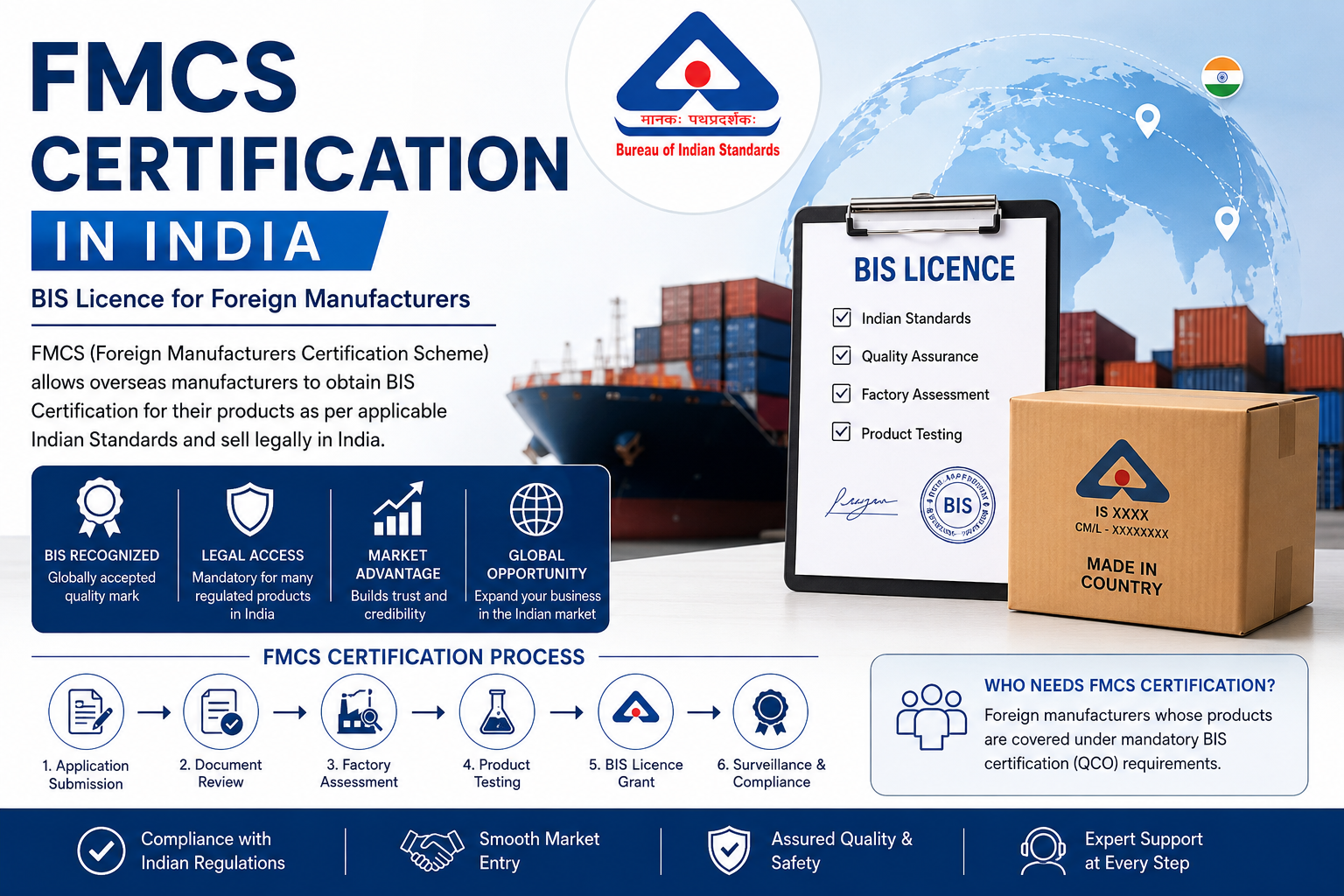
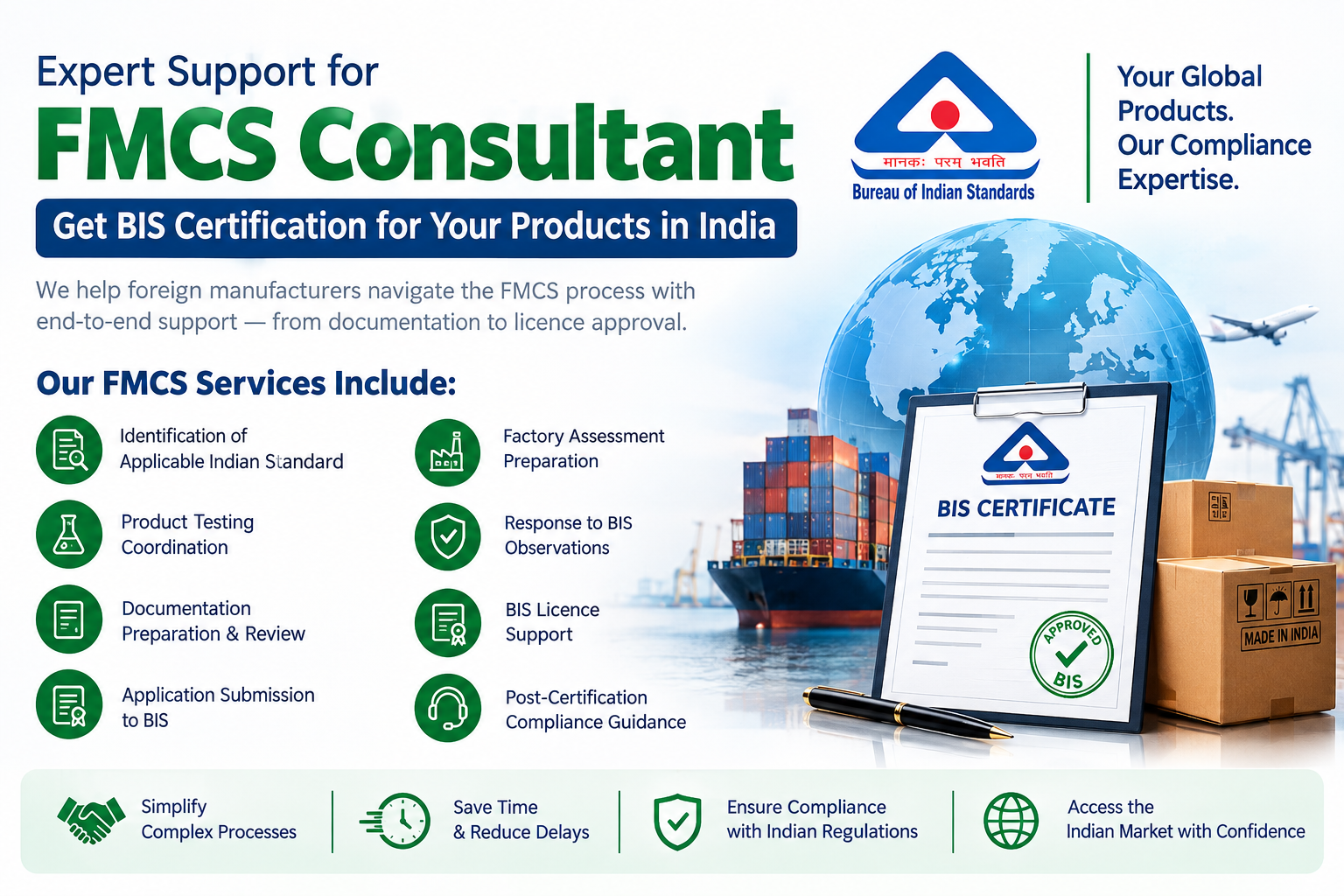
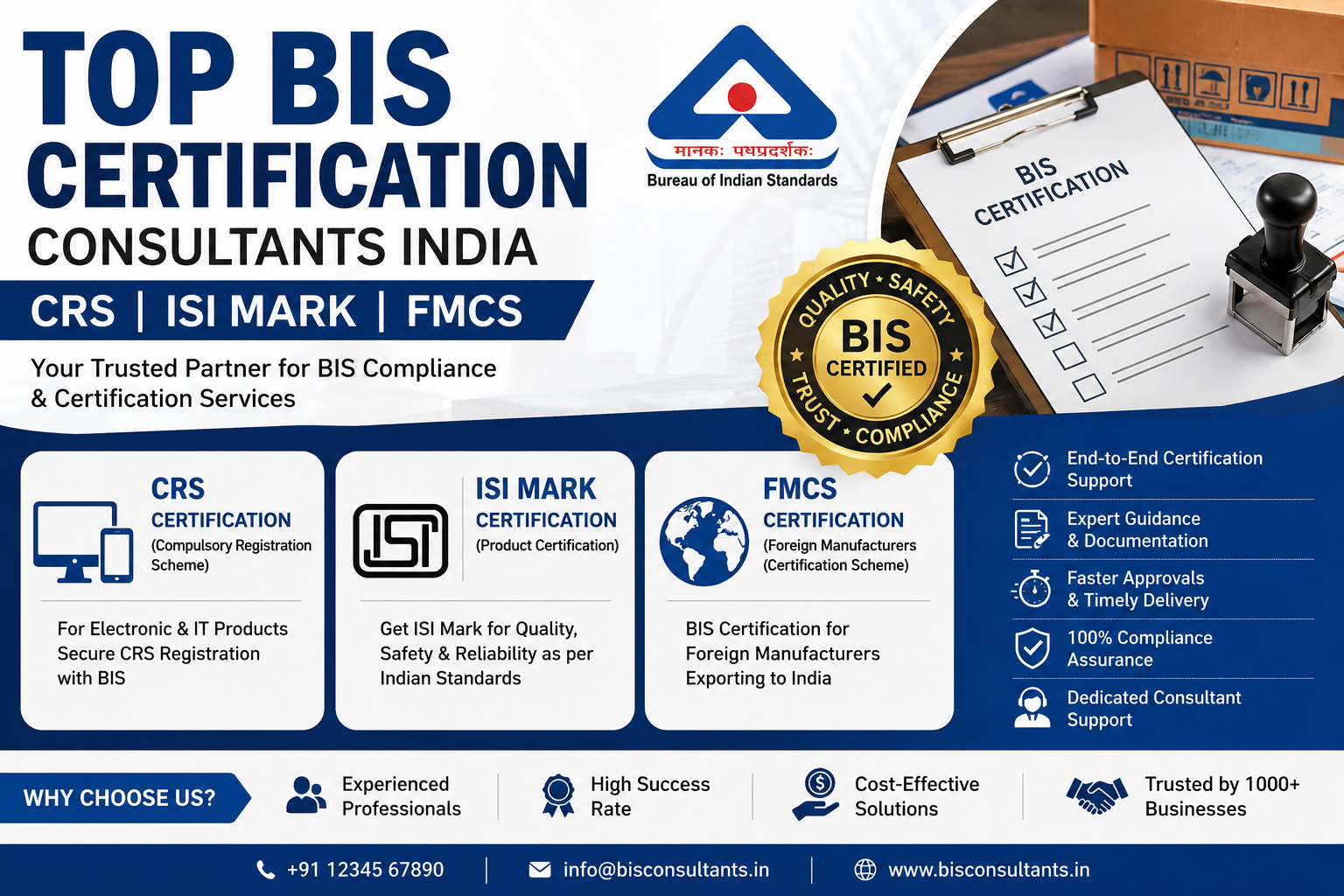
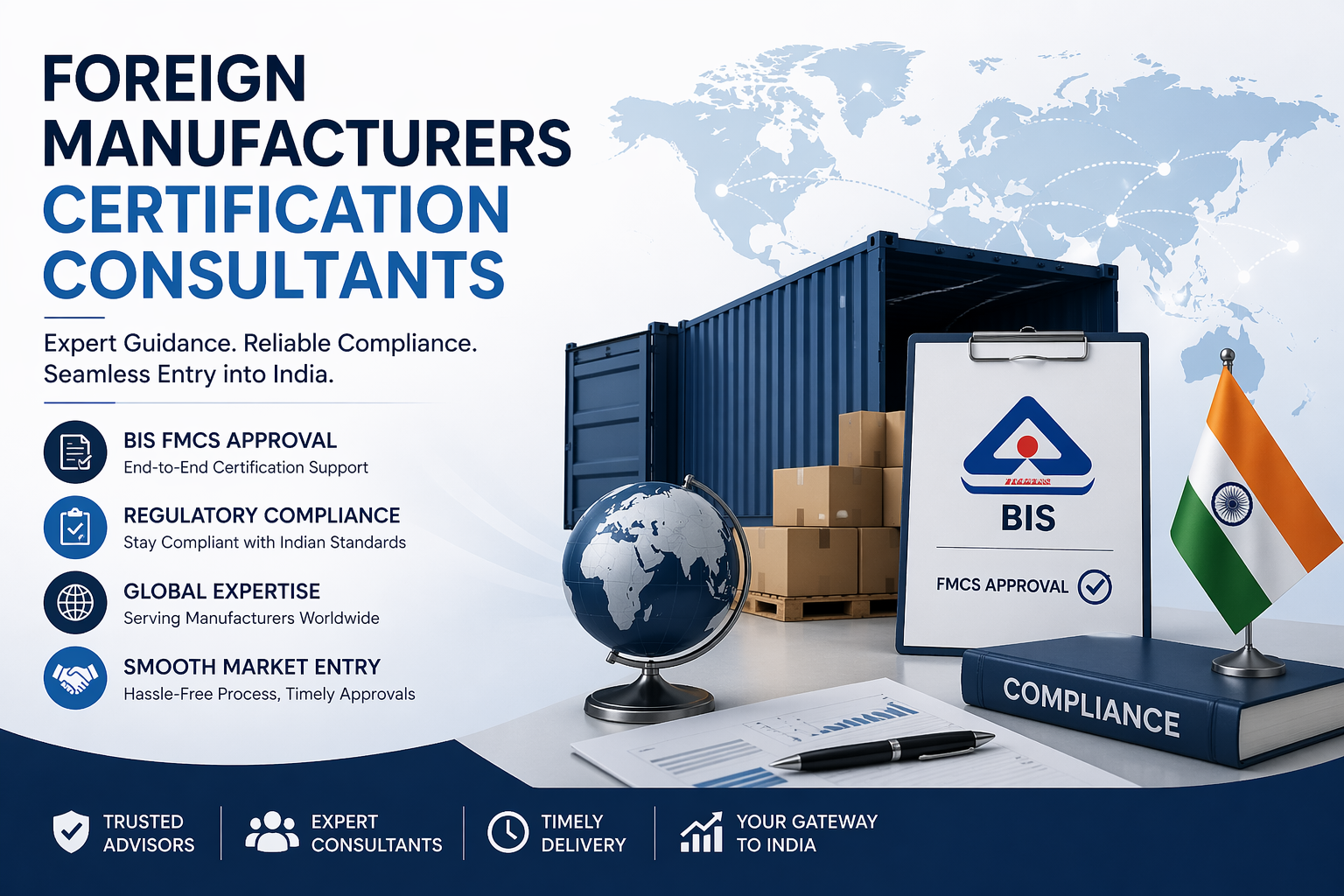
FMCS Certification in India is an important compliance requirement for foreign manufacturers who want to sell products in the Indian market under the applicable Bureau of Indian Standards (BIS) requirements. FMCS stands for Foreign Manufacturers Certification Scheme, which enables eligible overseas manufacturers to obtain a BIS licence for products that are covered under mandatory Indian Standards and Quality Control Orders (QCOs). Under the FMCS scheme, foreign manufacturers can obtain authorization to use the Standard Mark (ISI Mark) on certified products manufactured at their overseas production facility. This certification demonstrates that the product conforms to the relevant Indian Standard and meets the quality and safety requirements applicable in India. FMCS is administered by the Bureau of Indian Standards (BIS) for manufacturers located outside India. Unlike domestic BIS certification, the FMCS process is specifically designed for foreign manufacturing units. A foreign manufacturer must demonstrate that its manufacturing facilities, production processes, quality-control systems, testing arrangements, and products comply with the applicable Indian Standard. BIS may conduct an inspection of the overseas manufacturing premises and evaluate product testing and quality-control arrangements before granting the licence. The certification is generally applicable to products for which BIS certification is mandatory under the relevant regulations. Therefore, manufacturers should first identify the correct Indian Standard and determine whether their product falls under a mandatory certification requirement. Foreign manufacturers supplying products to India may need FMCS certification when their products are covered by mandatory BIS certification requirements. The requirement can apply to manufacturers producing products such as electrical and electronic goods, construction materials, chemicals, household products, automotive components, steel products and various other regulated categories. The exact requirements depend on the product, applicable Indian Standard, QCO, testing requirements and manufacturing process. Importers and overseas manufacturers should verify the applicable requirements before commercial shipments are planned. The FMCS certification process involves several important stages. First, the manufacturer identifies the applicable Indian Standard for the product. The manufacturer then prepares the required technical and company documents, including manufacturing details, quality-control information, testing facilities and product specifications. An application is submitted to BIS under the Foreign Manufacturers Certification Scheme. BIS reviews the application and supporting documentation. Depending on the applicable requirements, an inspection of the manufacturing premises may be conducted by BIS officials or authorized personnel. During the inspection, BIS evaluates manufacturing processes, quality-control procedures, testing facilities and the manufacturer's ability to consistently produce products meeting the relevant Indian Standard. Product samples may also be tested in accordance with the applicable requirements. After successful completion of the evaluation and fulfilment of applicable requirements, BIS may grant the licence to the foreign manufacturer. The manufacturer can then use the BIS Standard Mark in accordance with the licence conditions. The documentation requirements vary according to the product and applicable Indian Standard. Common documents may include company registration documents, manufacturing-unit details, product technical specifications, process flow charts, quality-control information, details of testing equipment, calibration certificates, test reports, factory layout and details of responsible technical personnel. Documents related to the authorized Indian representative may also be required. Since documentation requirements can vary between product categories, manufacturers should prepare the application according to the specific BIS requirements applicable to their product. Obtaining FMCS certification can provide several advantages to foreign manufacturers. It allows eligible manufacturers to meet mandatory Indian regulatory requirements and legally supply certified products in the Indian market where BIS certification is required. BIS certification can also improve customer confidence because it demonstrates conformity with the applicable Indian Standard. Certified products may be more acceptable to Indian importers, distributors, project companies and institutional buyers that require regulatory compliance. For international manufacturers planning long-term business in India, obtaining the appropriate BIS licence can also support smoother market entry and reduce compliance-related difficulties. The FMCS application process can involve technical documentation, product testing, factory inspection and coordination with BIS. An experienced FMCS consultant in India can assist foreign manufacturers with identifying applicable standards, preparing documentation, coordinating testing, completing the application and supporting the manufacturer during the inspection and certification process. Consultants can also help identify documentation gaps and guide manufacturers regarding Indian regulatory requirements. However, the final decision to grant a BIS licence rests with BIS and depends on compliance with the applicable requirements. FMCS Certification in India is a significant compliance pathway for foreign manufacturers whose products are subject to mandatory BIS certification. By obtaining the appropriate BIS licence, overseas manufacturers can demonstrate conformity with applicable Indian Standards and meet regulatory requirements for the Indian market. Before starting the application, manufacturers should identify the applicable standard, QCO and product-specific requirements. Proper documentation, suitable testing facilities, effective quality control and successful factory inspection are key components of the certification process. Professional FMCS consultancy can help manufacturers understand the procedure and manage the application more efficiently.What is FMCS Certification?
Who Needs FMCS Certification?
FMCS Certification Process in India
Documents Required for FMCS
Benefits of FMCS Certification
Role of an FMCS Consultant
Conclusion


:-important-update-for-manufacturers.png)





.png)