Solid Waste Management Rules 2026
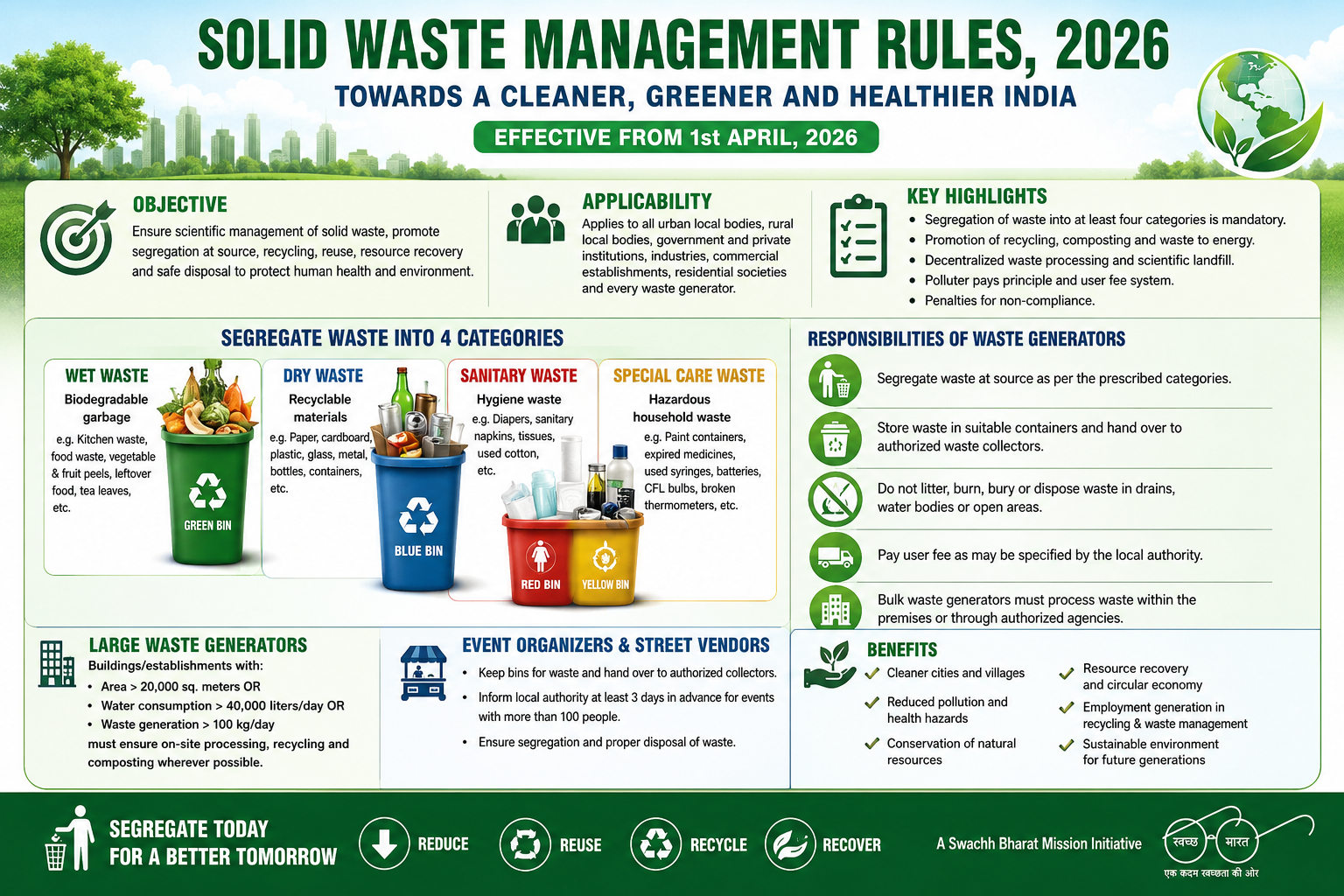
The Government of India has introduced the Solid Waste Management Rules 2026 to strengthen waste handling, segregation, recycling, and environmental protection across urban and rural areas. These updated rules replace the earlier 2016 framework and aim to improve scientific waste management practices in households, institutions, industries, commercial establishments, and public places. The rules were notified by the Ministry of Environment, Forests and Climate Change and came into effect from 1 April 2026. The new rules apply to all urban local bodies, rural local bodies, government organisations, private institutions, railway stations, airports, ports, industries, residential societies, markets, hotels, hospitals, educational institutions, and every waste generator in India. One of the major objectives of the Solid Waste Management Rules 2026 is to reduce environmental pollution caused by improper disposal of waste. The rules encourage segregation of waste at source, recycling, composting, biomethanation, and safe disposal of residual waste. The government has also emphasized decentralized waste processing systems to reduce transportation costs and landfill burden. Under these rules, waste is categorized into different streams such as wet waste, dry waste, sanitary waste, horticulture waste, recyclable waste, and special care waste. Waste generators are required to separate waste into at least four categories before handing it over to authorized waste collectors. This segregation system helps improve recycling efficiency and ensures safer disposal methods. Wet waste includes kitchen waste, vegetable waste, food waste, fruit waste, and other biodegradable materials. Such waste can be converted into compost or biogas through composting and biomethanation processes. Dry waste includes recyclable items such as paper, cardboard, plastic, metal, and glass. Special care waste includes items such as paint containers, expired medicines, used syringes, batteries, CFL bulbs, and other hazardous household waste. The rules also place important responsibilities on waste generators. Every household, shop, office, hotel, restaurant, institution, and residential society must ensure proper segregation and storage of waste. Waste should not be thrown in drains, water bodies, streets, or open areas. Burning or burying waste is also prohibited. Large waste generators such as malls, hotels, hospitals, residential societies, educational institutions, markets, and commercial complexes are expected to establish waste processing systems within their premises wherever possible. According to the rules, buildings with an area of more than 20,000 square meters, water consumption above 40,000 liters per day, or waste generation exceeding 100 kilograms per day are categorized as bulk waste generators. These entities must take additional measures for waste management and recycling. Street vendors and event organizers also have responsibilities under the new regulations. Vendors must maintain containers for waste generated during their business activities and deposit the waste only at authorized collection points. Event organizers conducting gatherings of more than 100 people must inform local authorities in advance and ensure waste segregation and proper disposal arrangements. Another important aspect of the Solid Waste Management Rules 2026 is the focus on recycling and waste-to-energy initiatives. The rules promote the use of non-recyclable combustible waste for energy generation and co-processing in industries. This approach supports resource recovery and reduces dependence on landfills. The government has also emphasized the role of local authorities in implementing effective waste management systems. Municipal bodies are responsible for door-to-door waste collection, transportation, processing, recycling, scientific landfill management, and remediation of legacy waste dump sites. Local authorities may also impose user fees and penalties on individuals or organizations that fail to comply with waste management rules. The 2026 rules support environmental sustainability by encouraging composting, recycling, circular economy practices, and reduction of landfill waste. Proper implementation of these rules can significantly improve cleanliness, reduce pollution, conserve natural resources, and create employment opportunities in the recycling and waste processing sectors. In conclusion, the Solid Waste Management Rules 2026 represent a major step toward cleaner and more sustainable waste management practices in India. Every citizen, business, institution, and local authority has a role to play in ensuring effective waste segregation, recycling, and safe disposal. Compliance with these rules will not only help protect the environment but also contribute to better public health and sustainable urban development across the country.








:-important-update-for-manufacturers.png)






.png)