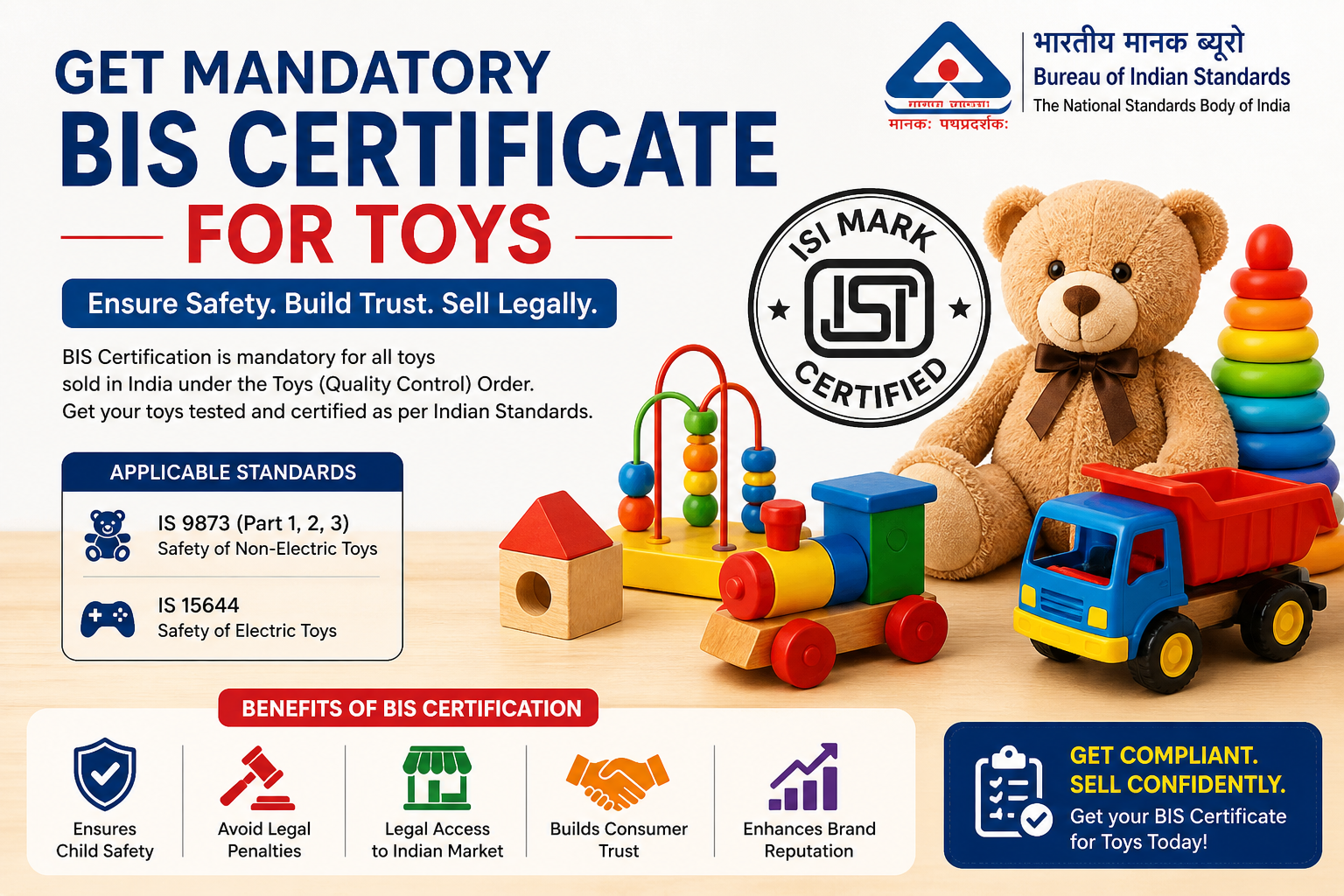
BIS certificate for toys
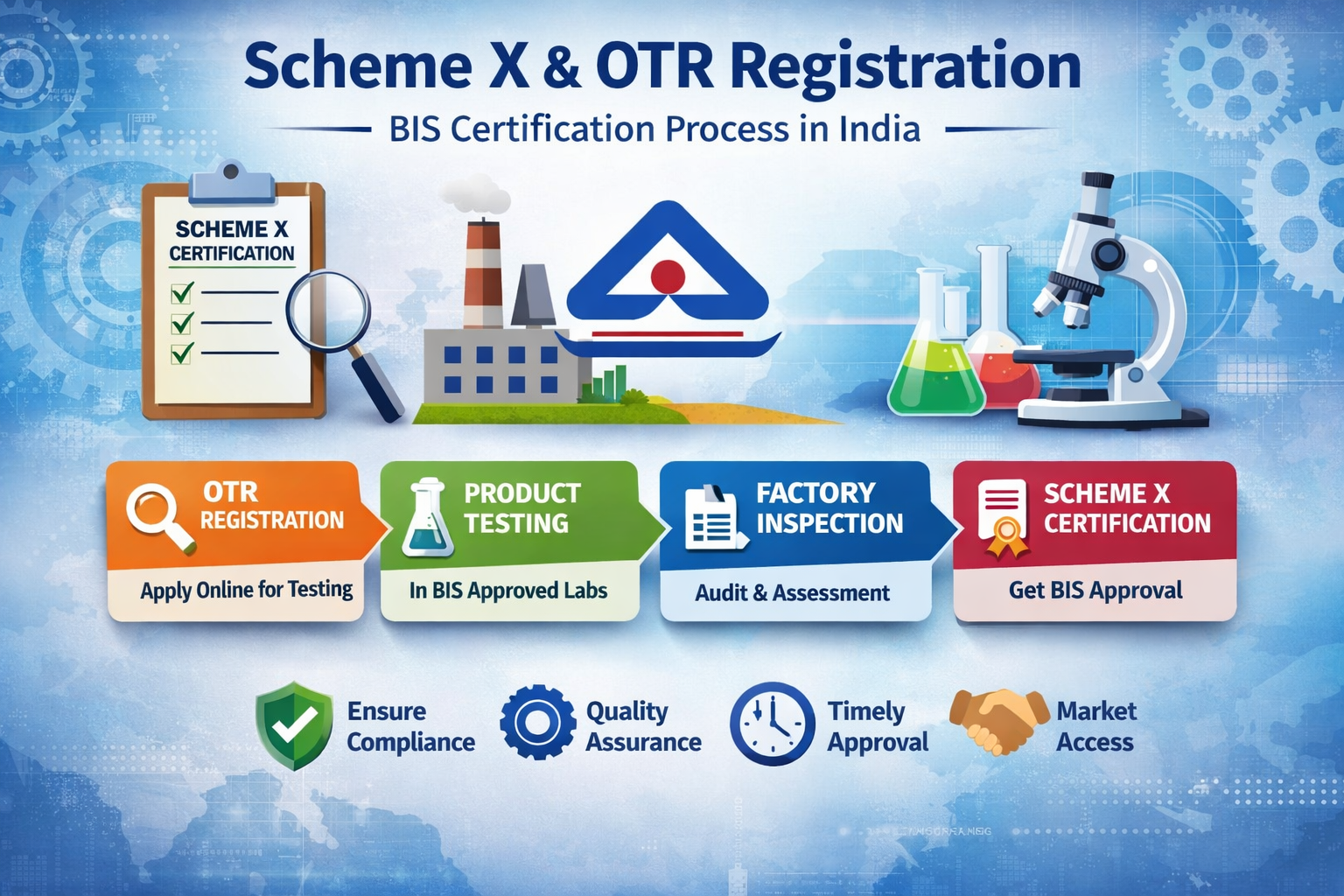
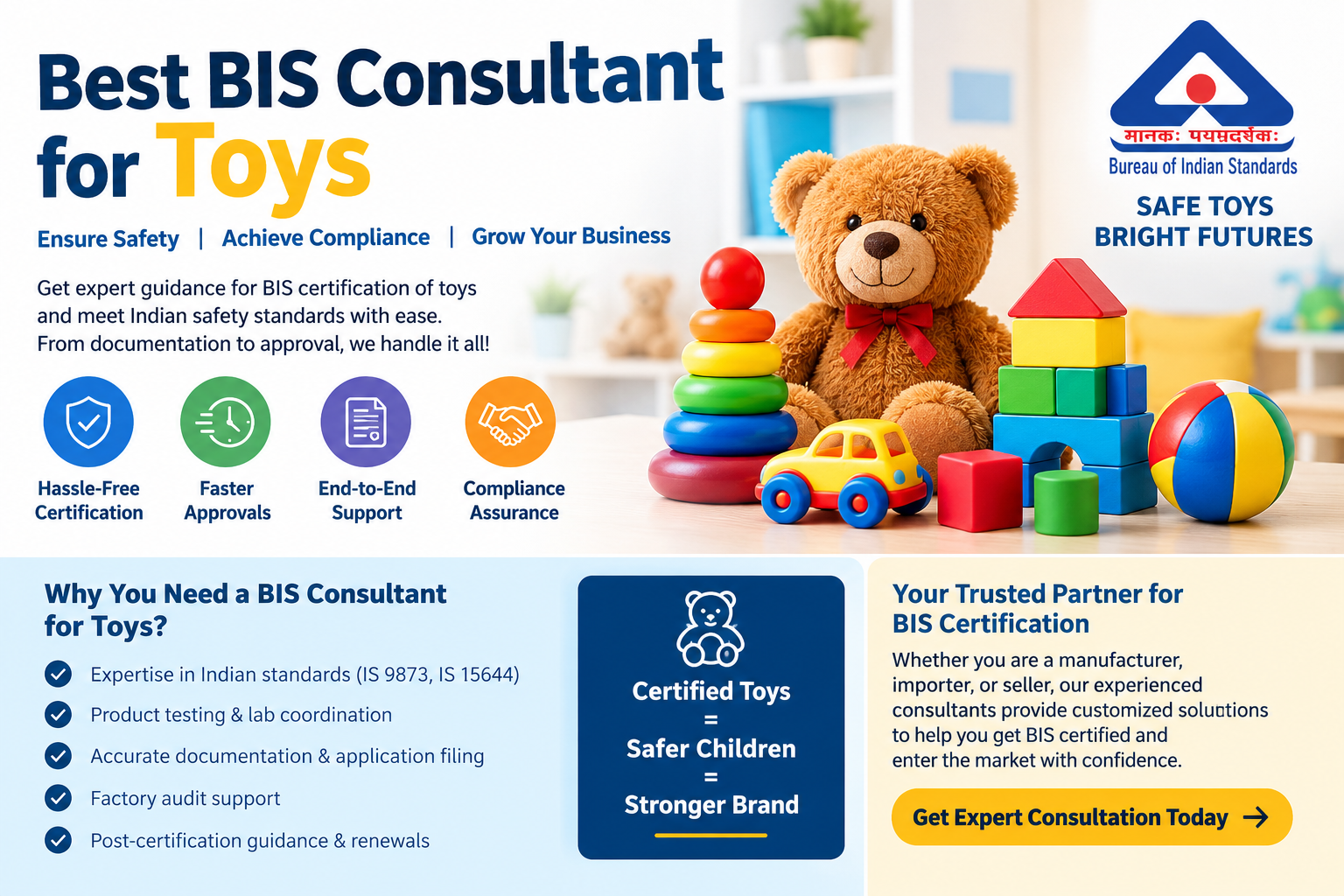
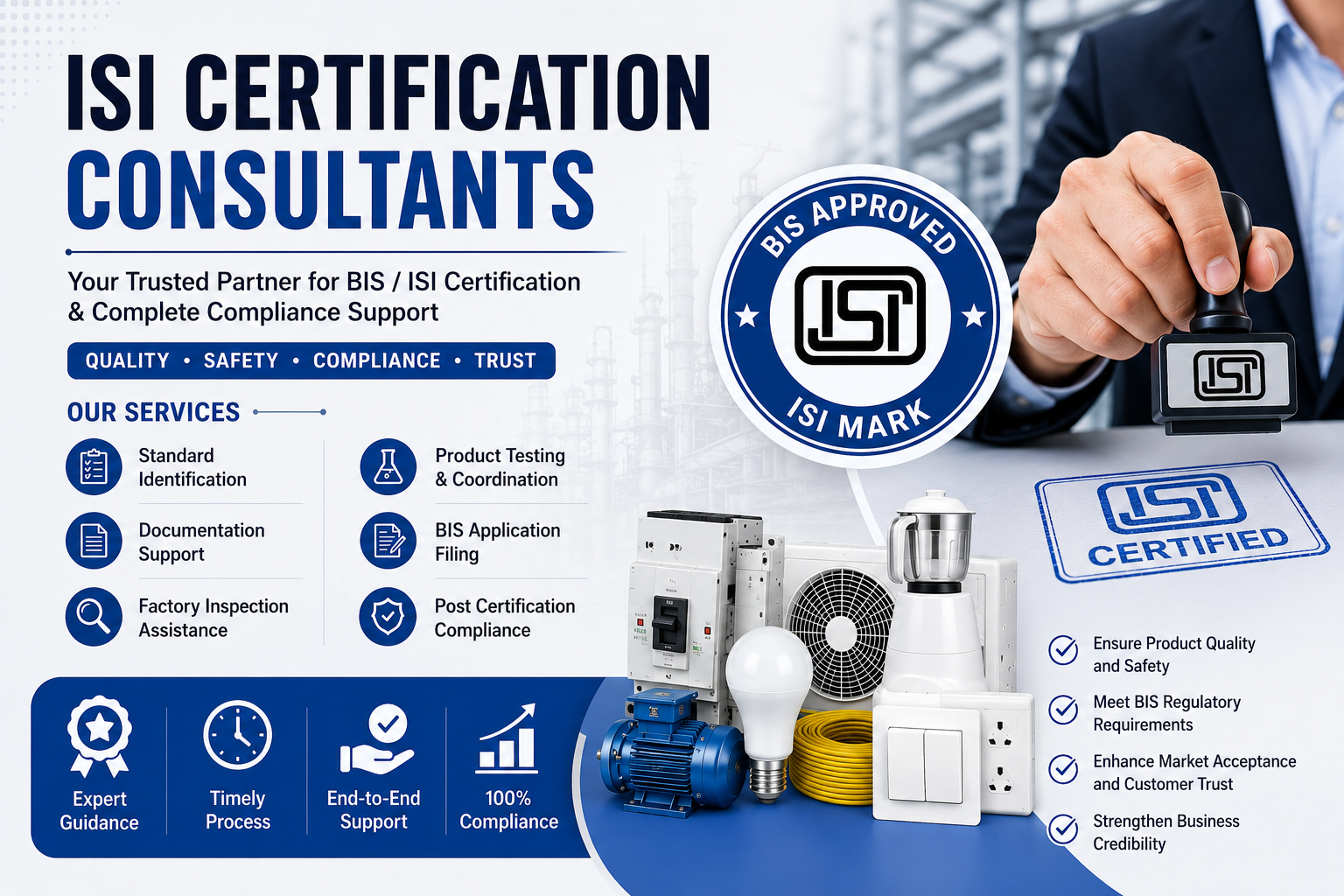
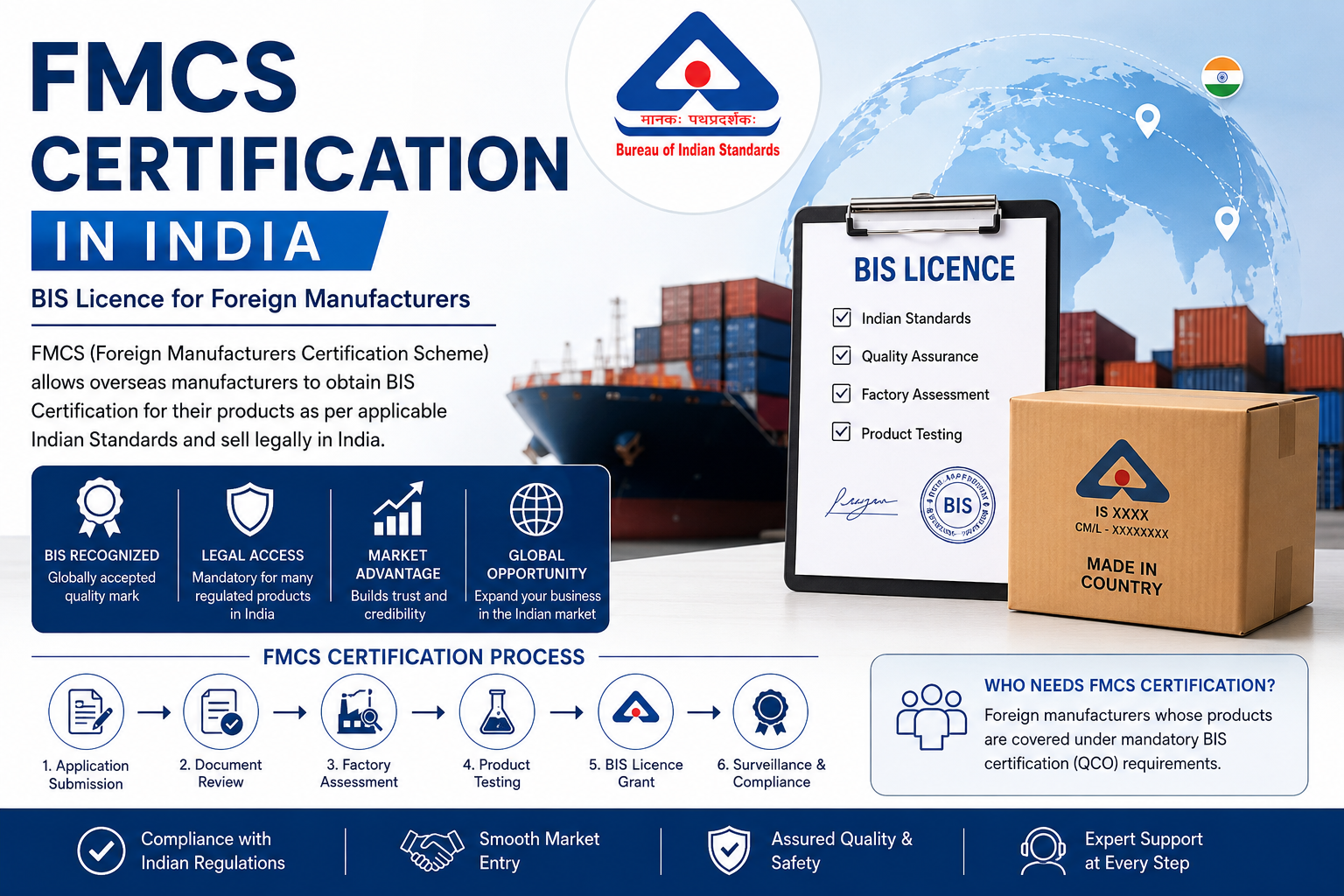
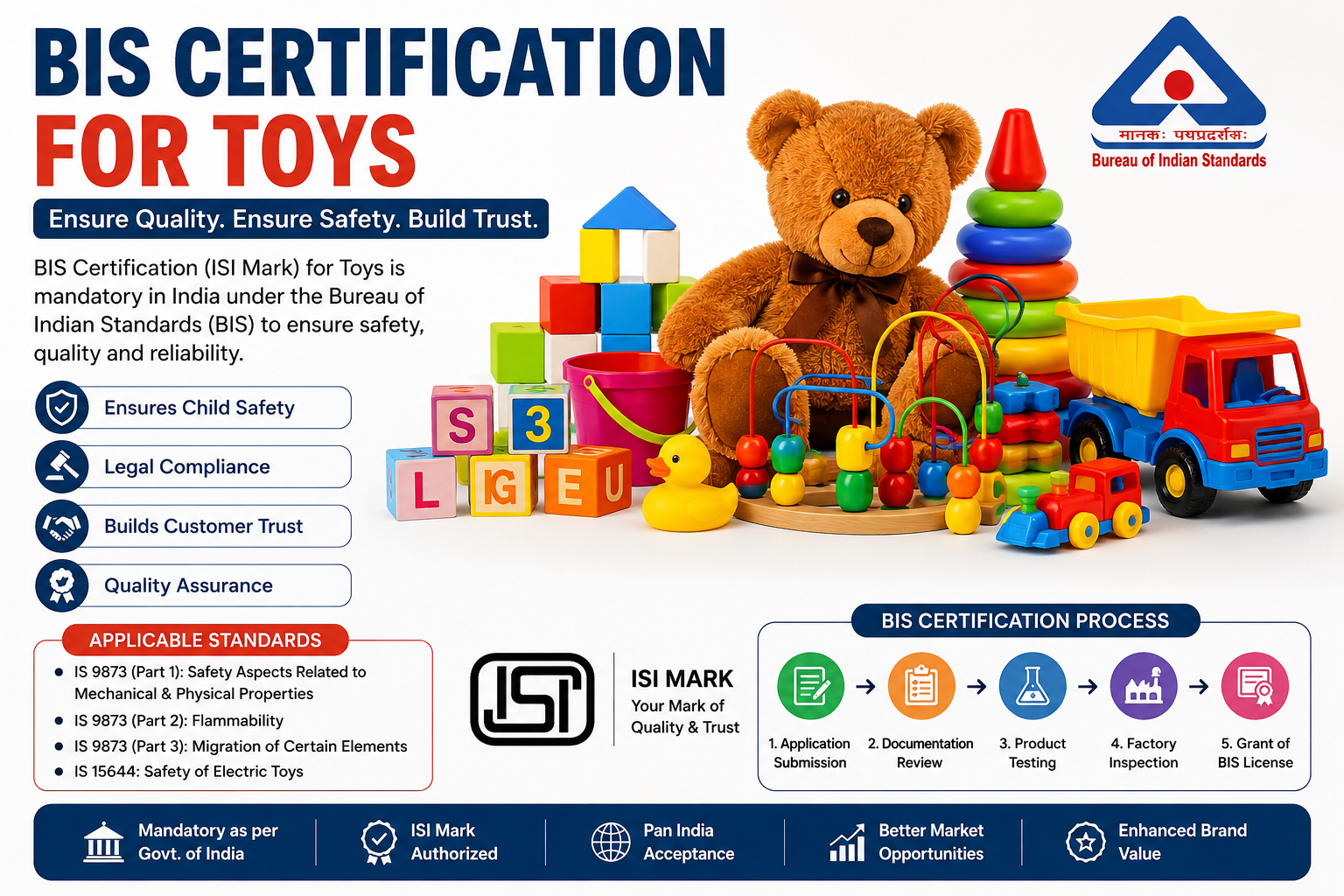
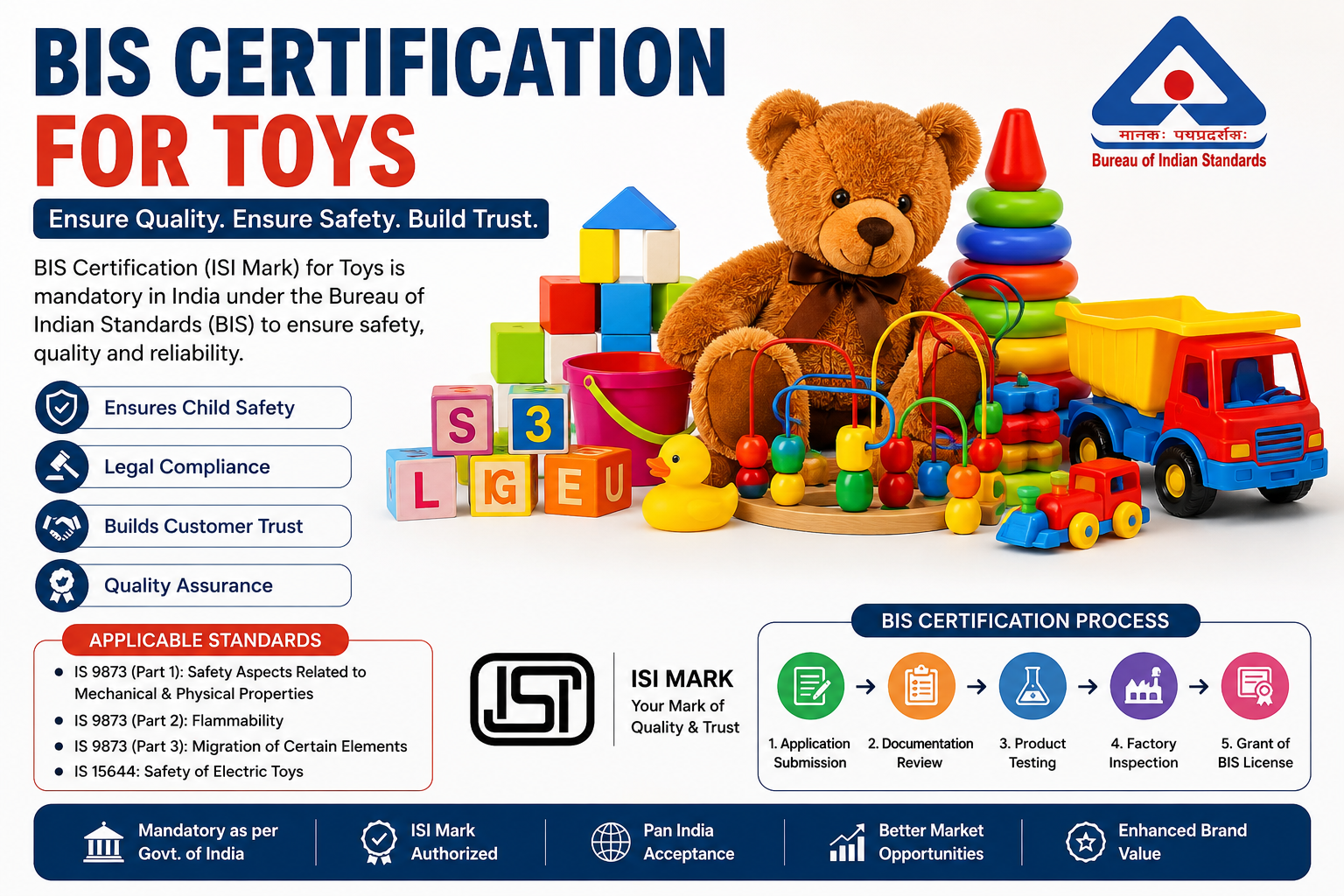
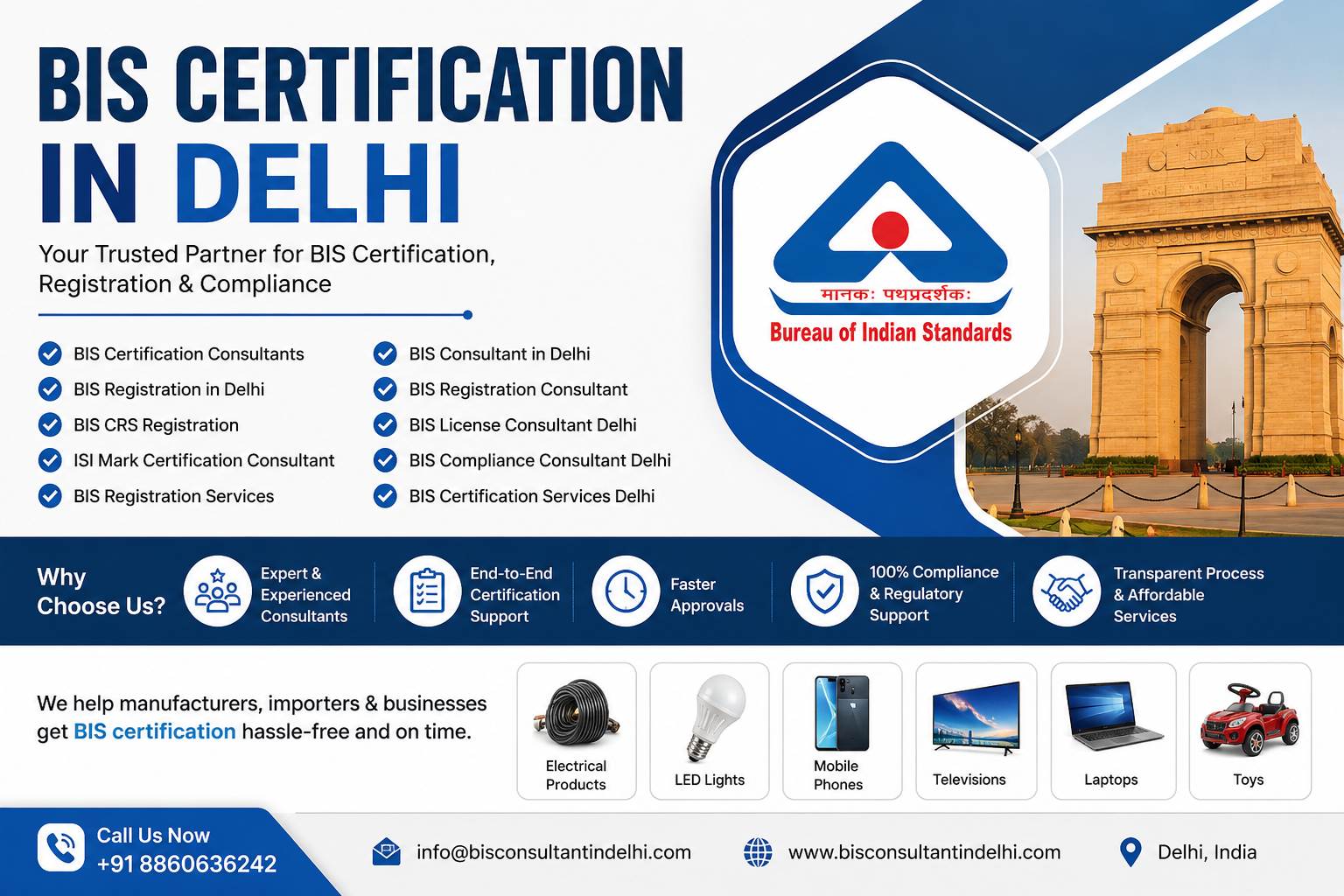
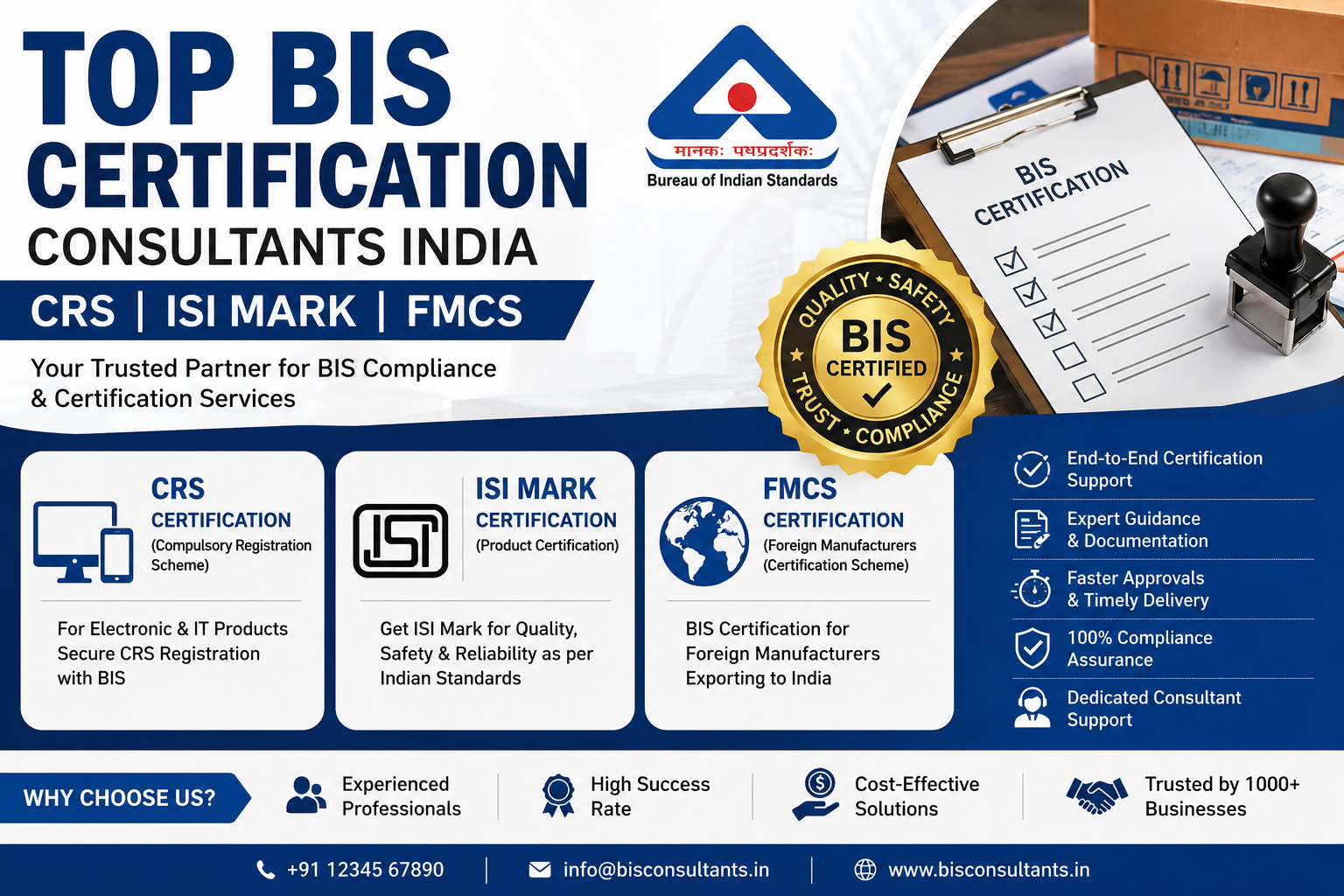
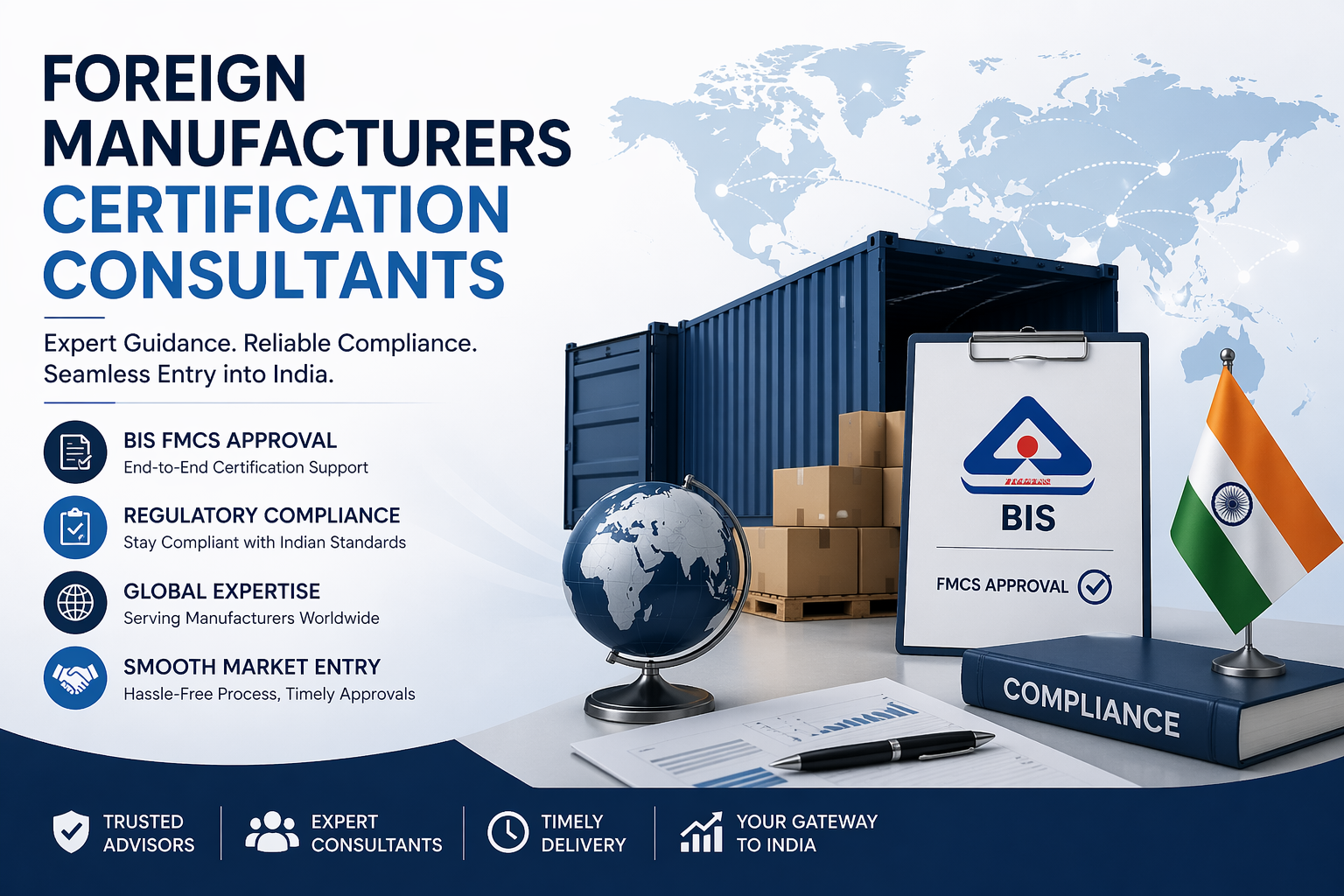
Obtaining a mandatory BIS certificate for toys is essential for manufacturers, importers, and sellers who want to operate legally in the Indian market. The Bureau of Indian Standards (BIS), under the Government of India, has made it compulsory for all toys—whether manufactured domestically or imported—to comply with specific safety and quality standards. This regulation ensures that toys available in the market are safe for children and meet defined quality benchmarks. The mandatory BIS certification for toys was enforced under the Toys (Quality Control) Order, issued by the Department for Promotion of Industry and Internal Trade (DPIIT). According to this order, toys must bear the ISI mark, indicating compliance with Indian Standards. For electric toys, the applicable standard is IS 15644, while for non-electric toys, it is IS 9873 (Part 1 to Part 9). Without BIS certification, the sale, import, or distribution of toys in India is strictly prohibited and may lead to penalties, product seizure, or legal action. The certification process involves several important steps. First, the manufacturer must identify the applicable Indian Standard for their toy category. After this, they need to apply for BIS certification through the appropriate scheme. For domestic manufacturers, the ISI Mark Scheme (Scheme-I) is applicable, whereas foreign manufacturers must apply under the Foreign Manufacturers Certification Scheme (FMCS). Once the application is submitted, BIS conducts a factory inspection to assess manufacturing processes, quality control measures, and testing capabilities. During the inspection, samples of toys are collected and sent to BIS-recognized laboratories for testing. These tests ensure that the toys meet safety requirements such as mechanical strength, absence of toxic materials, flammability limits, and electrical safety (for electric toys). After successful testing and inspection, BIS grants the license to use the ISI mark on the products. This mark serves as proof that the toy complies with Indian safety standards and can be sold in the market. The certification is not a one-time process; manufacturers must maintain compliance through regular surveillance audits and testing to retain their license. One of the key benefits of obtaining BIS certification for toys is enhanced consumer trust. Parents are increasingly aware of product safety, and the ISI mark assures them that the toy is safe for their children. Additionally, BIS certification helps businesses expand their market reach, as it is a legal requirement for selling toys in India. It also improves brand credibility and reduces the risk of product recalls or legal issues. For importers, BIS certification is equally important. Imported toys must also comply with Indian standards and be certified under the FMCS scheme. Importers must ensure that their foreign manufacturers have valid BIS licenses before bringing products into India. Customs authorities may detain or reject shipments that do not meet BIS requirements. The documentation required for BIS certification includes business registration proof, manufacturing details, product specifications, test reports, and quality control documents. For foreign manufacturers, additional documents such as an authorized Indian representative (AIR) nomination are required. The entire process can take a few weeks to a few months, depending on the complexity of the product and readiness of the manufacturer. Despite the strict requirements, the Indian government introduced this regulation to curb the influx of low-quality and unsafe toys, especially from unregulated markets. The aim is to promote domestic manufacturing, ensure child safety, and maintain quality standards across the industry. In conclusion, obtaining a mandatory BIS certificate for toys is not just a legal obligation but also a critical step toward ensuring product safety and business growth. Whether you are a manufacturer or importer, compliance with BIS standards is essential to operate successfully in the Indian toy market. Partnering with an experienced BIS consultant can simplify the certification process, reduce delays, and ensure hassle-free approval.
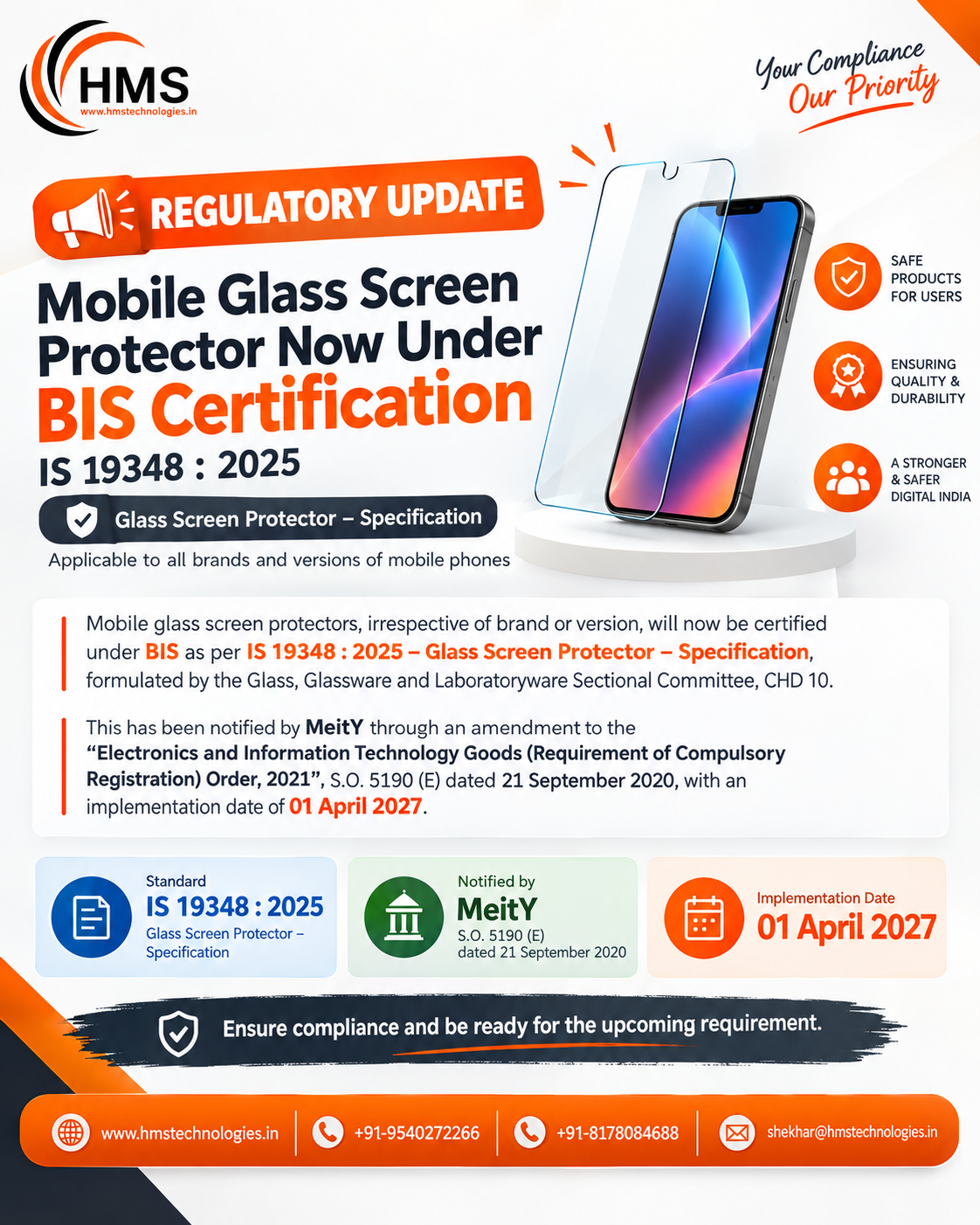


:-important-update-for-manufacturers.png)





.png)