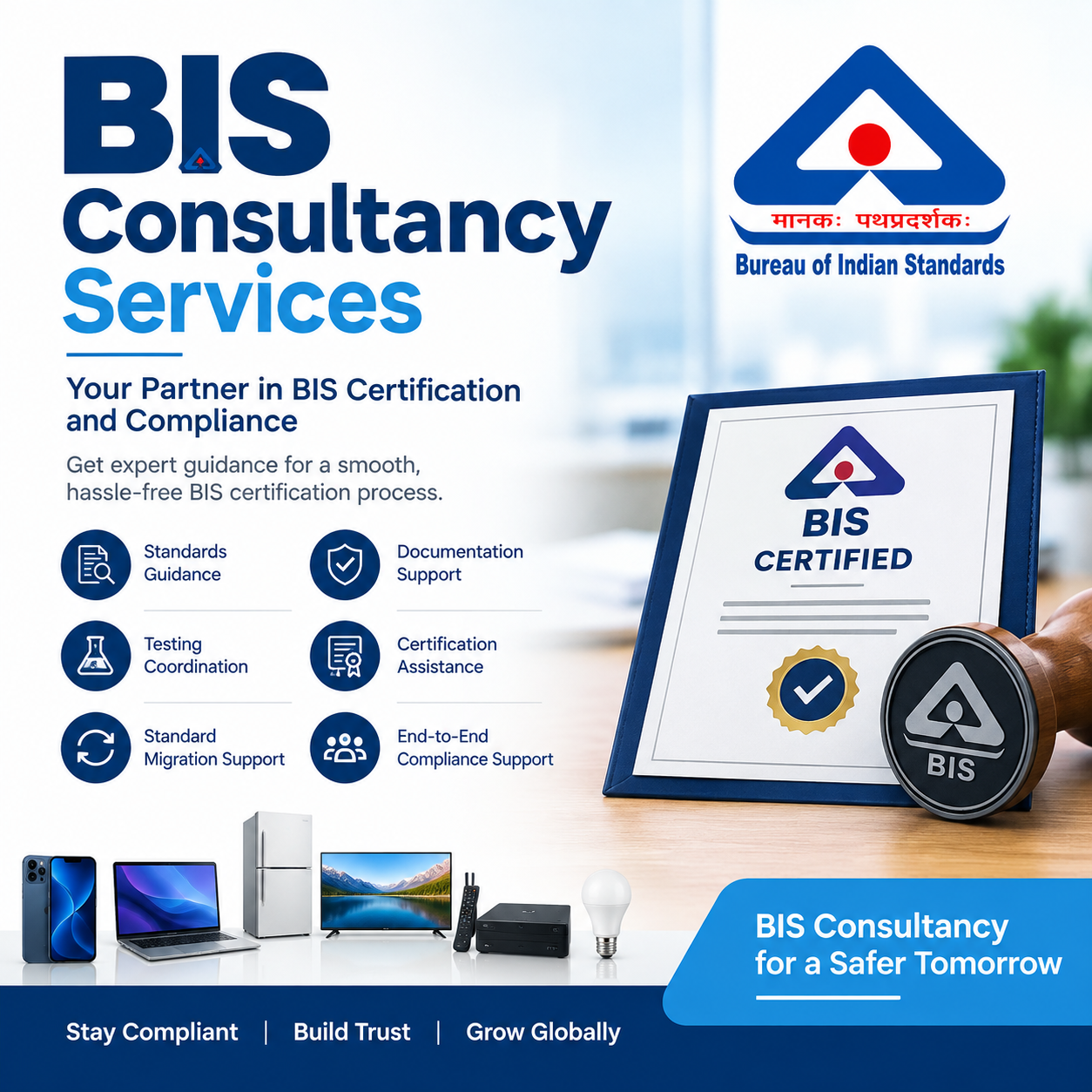
BIS Consultancy Services
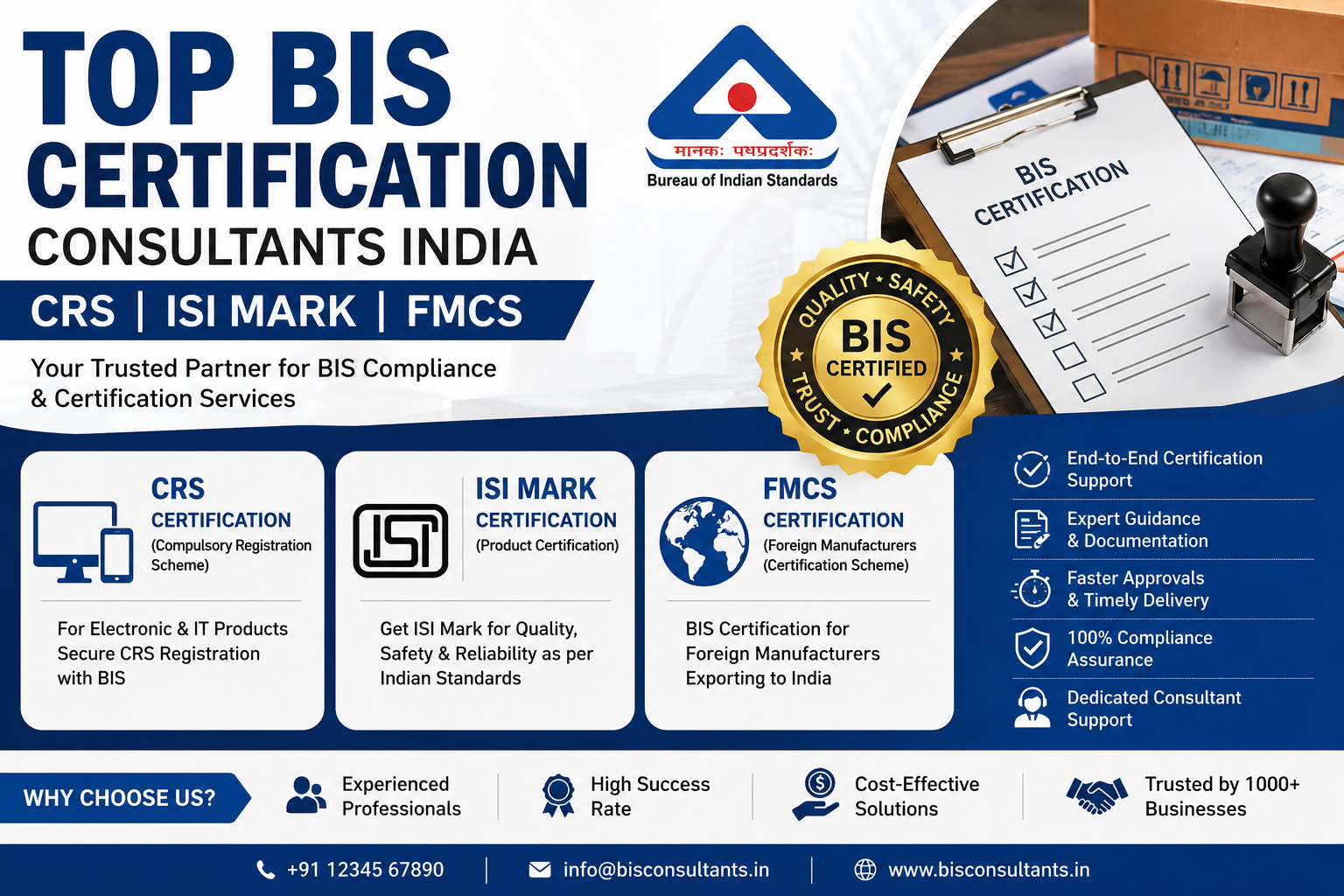
BIS Consultancy Services helps manufacturers, importers, exporters, and businesses understand and complete the regulatory requirements of the Bureau of Indian Standards (BIS). BIS compliance may involve product testing, technical documentation, factory inspection, application filing, product certification, registration, and post-approval compliance. For businesses planning to sell regulated products in the Indian market, understanding the applicable BIS requirements at an early stage can help reduce documentation issues and avoid unnecessary delays. BIS consultancy services provide professional assistance throughout the BIS certification or registration process. Depending on the product and applicable Indian Standard, a consultant may assist with identifying the relevant standard, preparing documents, coordinating testing, submitting applications, responding to queries, and supporting the certification process. The exact BIS procedure depends on the product category and the applicable certification scheme. Some products may require a BIS Certification under the ISI Mark Scheme, while certain electronic and IT products may fall under the Compulsory Registration Scheme (CRS). Other products may be covered under specific government Quality Control Orders (QCOs). BIS is India's national standards body and develops standards for a wide range of products, processes, and services. Where the government makes a product subject to mandatory BIS requirements through applicable regulations or QCOs, manufacturers or importers need to meet those requirements before placing the product on the Indian market. Non-compliance can create challenges involving: Product testing Regulatory approvals Import and customs processes Product manufacturing Market access Licensing and registration Documentation Inspection and surveillance requirements Professional BIS consultancy can help businesses understand which requirements apply to their products and what steps need to be completed. The first step is determining the applicable Indian Standard (IS) for the product. A consultant can help review product specifications, construction, intended use, technical parameters, and product category to identify the relevant standard. Correct standard identification is important because testing and certification requirements are generally linked to the applicable standard. BIS consultancy may cover assistance with different certification routes, including: BIS ISI Mark Certification BIS Compulsory Registration Scheme (CRS) Foreign Manufacturers Certification Scheme (FMCS) BIS Scheme X Certification Product-specific BIS certification requirements The applicable route depends on the product and regulatory notification. Testing is an important part of many BIS approval processes. Products may need to be tested against specified requirements of the applicable Indian Standard at a BIS-recognized or otherwise permitted laboratory, depending on the scheme. Consultants can assist with: Identifying applicable tests Preparing samples Coordinating with laboratories Understanding test reports Resolving documentation discrepancies Supporting retesting where required A BIS application generally requires appropriate technical and legal documents. Depending on the product and scheme, documentation may include: Product specifications Technical drawings Test reports Manufacturing process details Factory information Quality-control documents Machinery details Calibration records Raw-material details Trademark documents Company registration documents Authorization documents A consultant can help organize the documentation according to the applicable BIS requirements. BIS applications need to be submitted through the applicable process and supported by relevant documents. Consultancy services can include application preparation, document review, submission support, and communication regarding deficiencies or queries. For certification schemes involving factory assessment, the manufacturing facility may be inspected to verify production capabilities, testing facilities, quality-control arrangements, and other requirements. Consultants can help manufacturers prepare for inspections by reviewing the applicable requirements and identifying areas that may require attention. Obtaining a BIS licence or registration is not always the end of the compliance process. Depending on the applicable scheme, manufacturers may have continuing obligations related to testing, surveillance, marking, renewal, documentation, and quality control. Ongoing consultancy can help businesses track these requirements and maintain compliance. Although the exact procedure varies by product, a typical BIS compliance process may involve: Step 1: Product Assessment Step 2: Identify Applicable Standard Step 3: Select the Applicable Scheme Step 4: Testing Step 5: Documentation Step 6: Application Submission Step 7: Scrutiny/Inspection Step 8: Certification/Registration Step 9: Maintain Compliance BIS consultancy can be useful for: Indian manufacturers Foreign manufacturers Importers Exporters Startups launching regulated products Electronics manufacturers Electrical equipment manufacturers Consumer-product manufacturers Industrial product manufacturers Businesses affected by new QCOs Companies seeking expansion into the Indian market Foreign manufacturers may have additional requirements depending on the applicable BIS scheme and manufacturing location. A structured consultancy approach can help businesses: Identify applicable BIS requirements Understand the certification route Prepare documentation systematically Coordinate product testing Reduce avoidable application errors Prepare for applicable factory inspections Respond to regulatory queries Understand ongoing compliance obligations However, consultancy does not replace the authority of BIS or the applicable testing and certification requirements. The final approval remains subject to the relevant regulatory process. When selecting a BIS consultant, businesses should consider the consultant's experience with the relevant product category, understanding of Indian Standards, documentation capabilities, testing coordination experience, and knowledge of the applicable BIS scheme. It is also useful to clarify the scope of services before engagement, including testing coordination, documentation, application support, inspection assistance, and post-certification support. BIS Consultancy Services can provide structured support to businesses navigating India's product compliance requirements. From identifying the correct Indian Standard and coordinating testing to preparing documentation and supporting certification applications, professional assistance can make the compliance process more organised. Because BIS requirements vary significantly by product and certification scheme, businesses should first identify the applicable standard, QCO, and certification route before starting the application process. 1. What are BIS Consultancy Services? 2. Is BIS certification mandatory for every product? 3. What is the difference between BIS certification and BIS registration? 4. How long does BIS certification take? 5. Is product testing required for BIS certification? 6. Can foreign manufacturers apply for BIS certification? 7. What documents are required for BIS certification? 8. Can a BIS consultant guarantee certification? 9. Does BIS certification need to be renewed? 10. Why should businesses use a BIS consultant?What Are BIS Consultancy Services?
Why Is BIS Compliance Important?
Key BIS Consultancy Services
1. BIS Standard Identification
2. BIS Certification and Registration
3. Product Testing Coordination
4. Technical Documentation
5. BIS Application Support
6. Factory Inspection Support
7. BIS License Maintenance
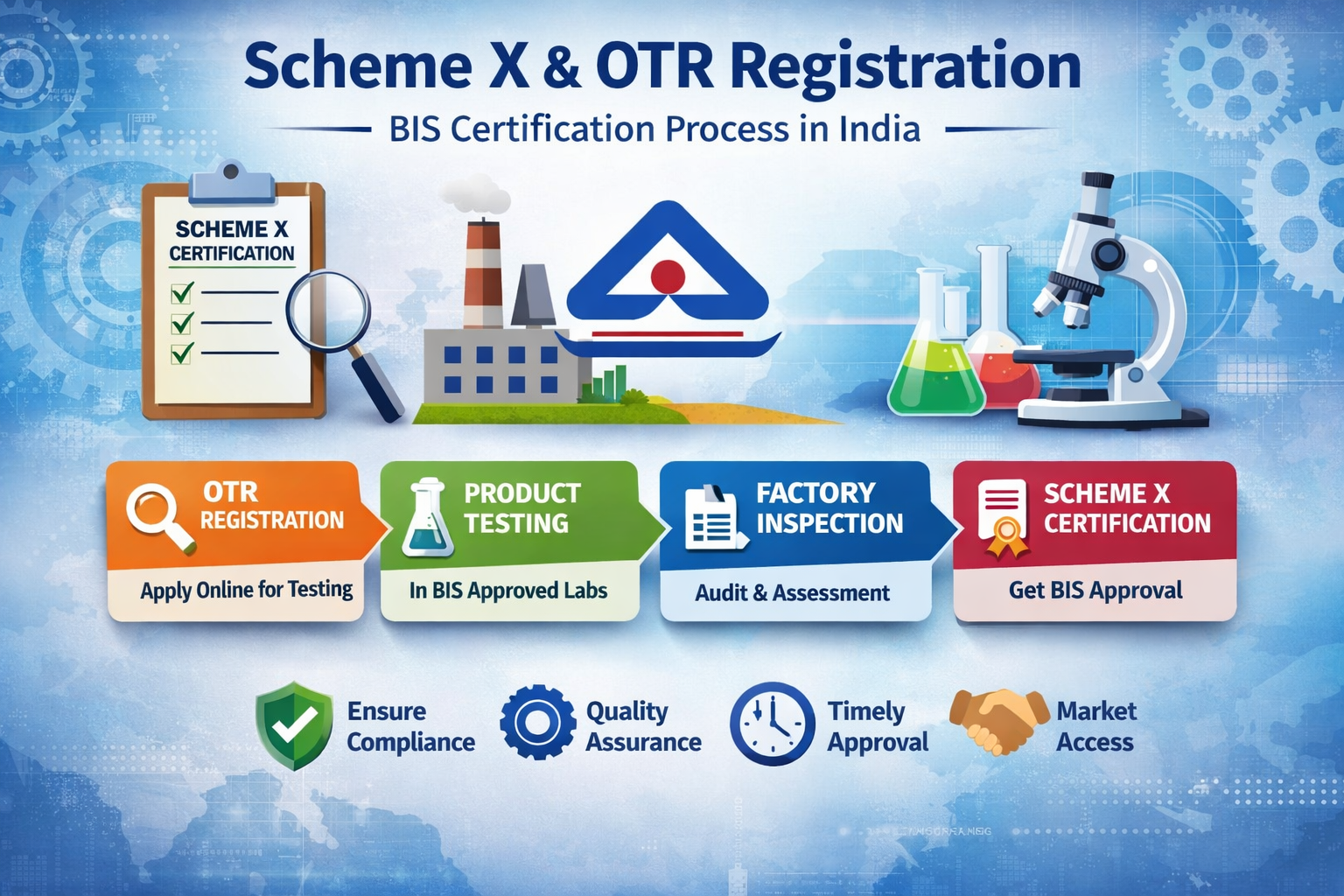
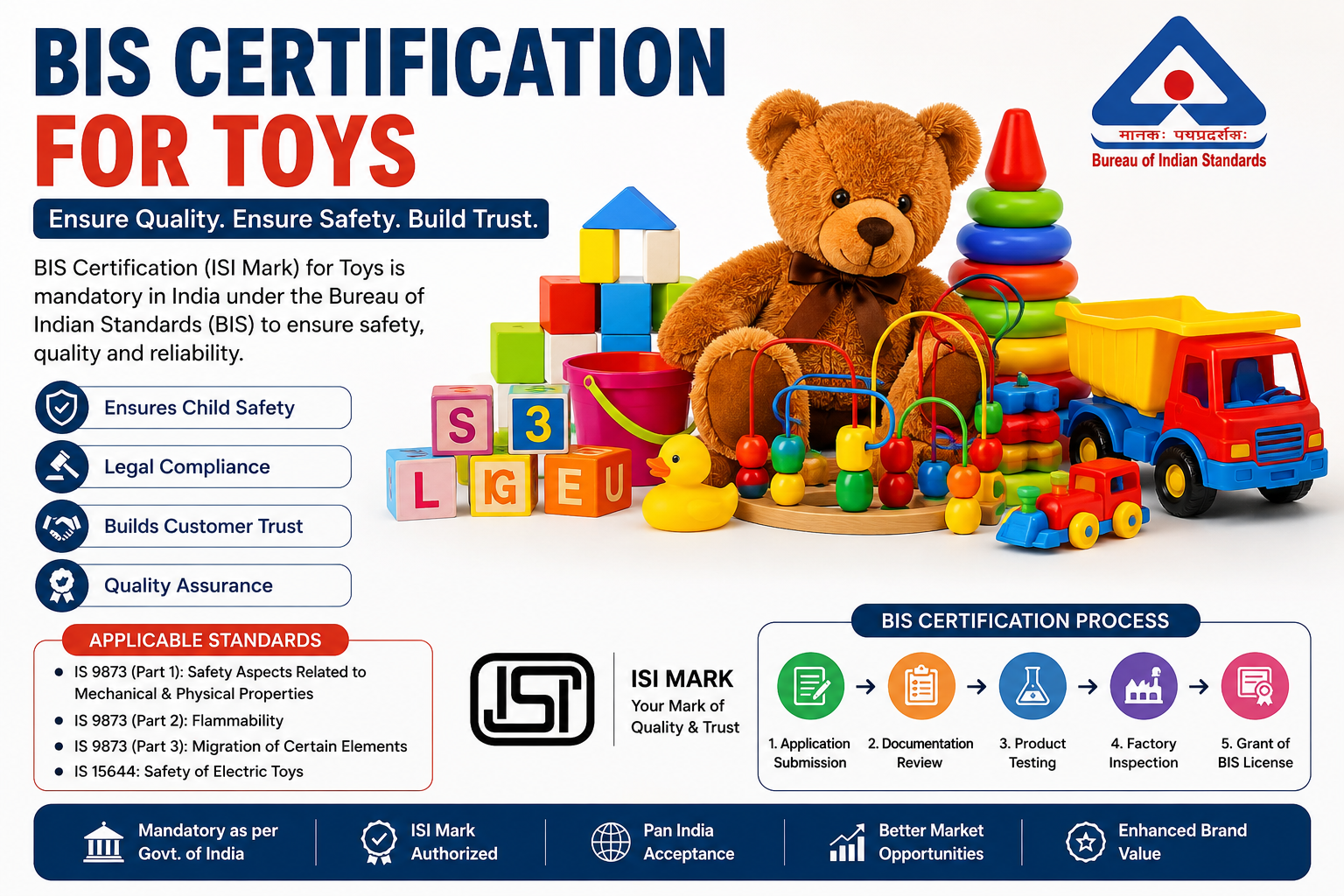
BIS Certification Process
Understand the product, manufacturer, model, specifications, and intended Indian market.
Determine the relevant Indian Standard and applicable regulatory notification or QCO.
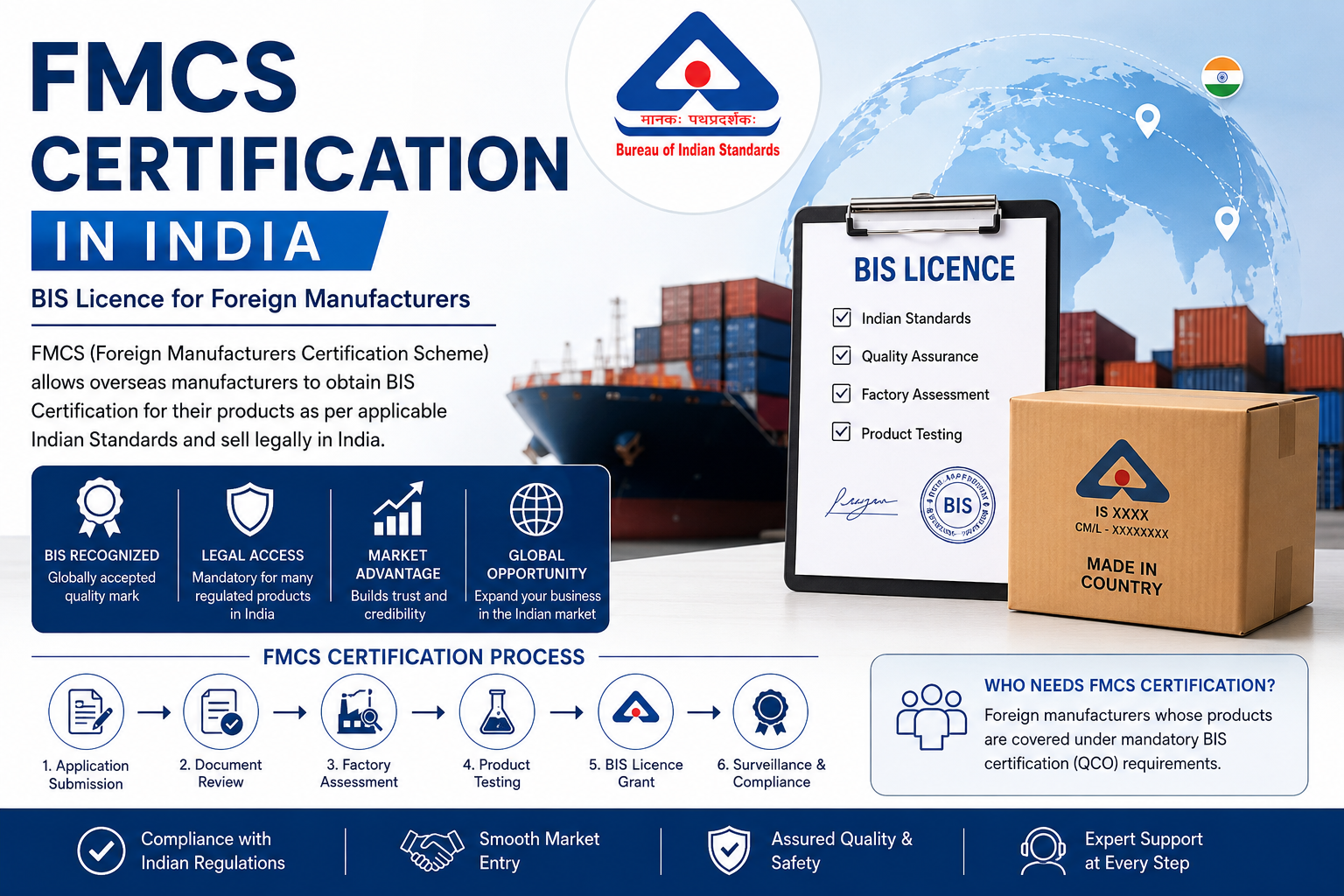
Identify whether ISI, CRS, FMCS, Scheme X, or another BIS route applies.
Arrange the required product testing and obtain the necessary test reports.
Prepare technical, factory, legal, and quality-control documents.
Submit the application through the applicable BIS process.
Respond to BIS queries and, where applicable, prepare for factory inspection.
Once the applicable requirements are fulfilled, BIS certification or registration can be granted.
Continue meeting applicable testing, marking, surveillance, renewal, and quality requirements.Who Needs BIS Consultancy Services?
Benefits of Professional BIS Consultancy
Choosing BIS Consultancy Services
Conclusion
Frequently Asked Questions (FAQs)
BIS consultancy services provide professional assistance for understanding and completing applicable BIS certification, registration, testing, documentation, and compliance requirements.
No. BIS requirements depend on the product and applicable regulations. Certain products are subject to mandatory BIS requirements, while others may not require mandatory certification.
BIS certification and registration are different regulatory routes. The applicable process depends on the product category and relevant BIS scheme, such as ISI Mark Certification or CRS.
The timeline varies according to the product, testing requirements, documentation, inspection requirements, and the applicable BIS scheme. Delays can also occur if documents or test results require correction.
Testing is required for many BIS certification processes, but the exact testing requirements depend on the applicable Indian Standard and certification scheme.
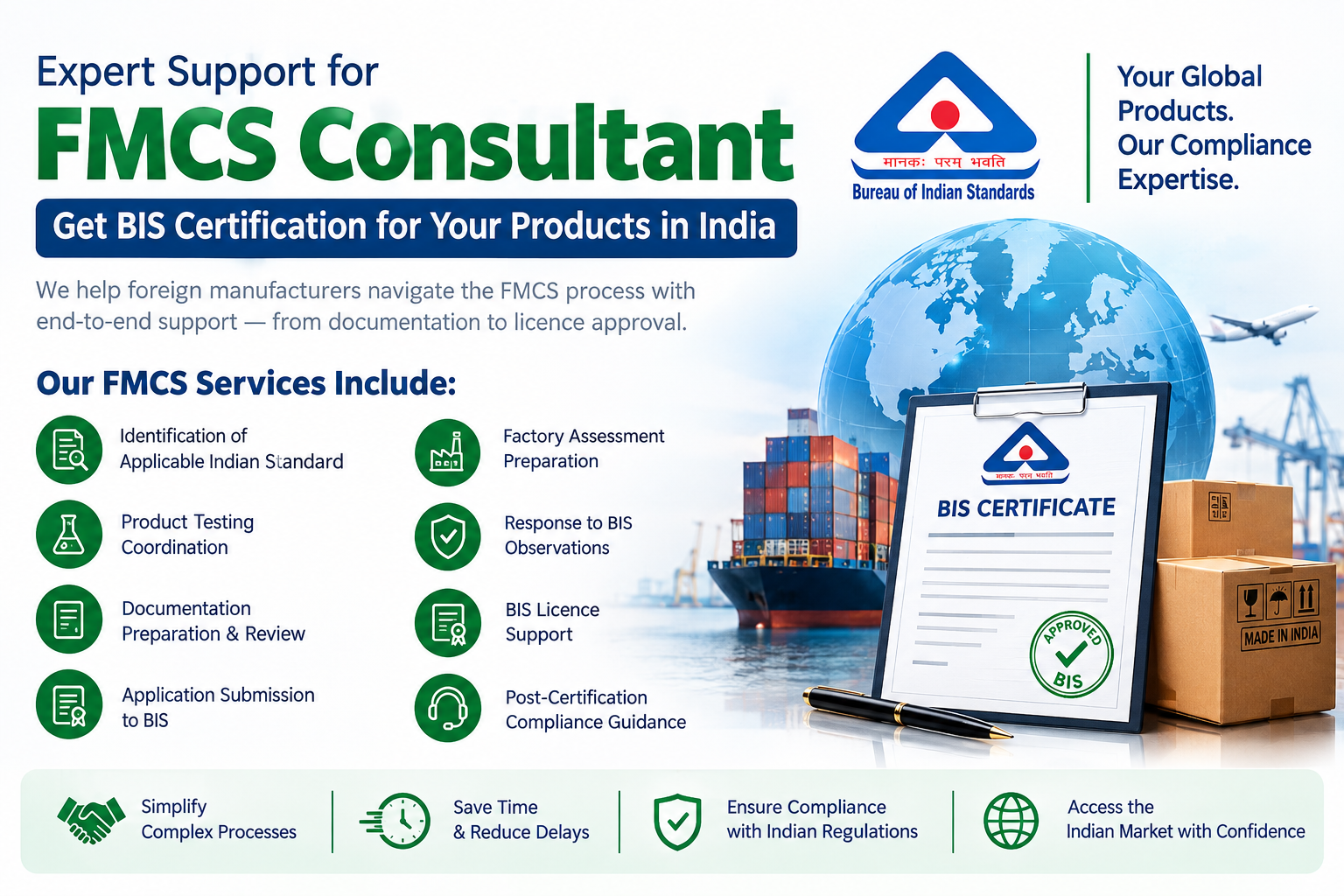
Yes. Foreign manufacturers can obtain BIS approval under applicable schemes such as FMCS or other relevant routes, subject to the requirements applicable to their products and manufacturing facilities.
Documents vary by scheme and product but can include technical specifications, drawings, test reports, manufacturing details, quality-control information, company documents, and other supporting records.
No consultant can legitimately guarantee approval independently of the BIS assessment process. Certification depends on fulfillment of the applicable requirements and the decision of the competent authority.
Depending on the applicable scheme, licence or registration may have renewal or continuing compliance requirements. Businesses should follow the specific conditions applicable to their approval.
A consultant can provide structured assistance with standard identification, testing coordination, documentation, application procedures, inspection preparation, and ongoing compliance requirements.

:-important-update-for-manufacturers.png)





.png)