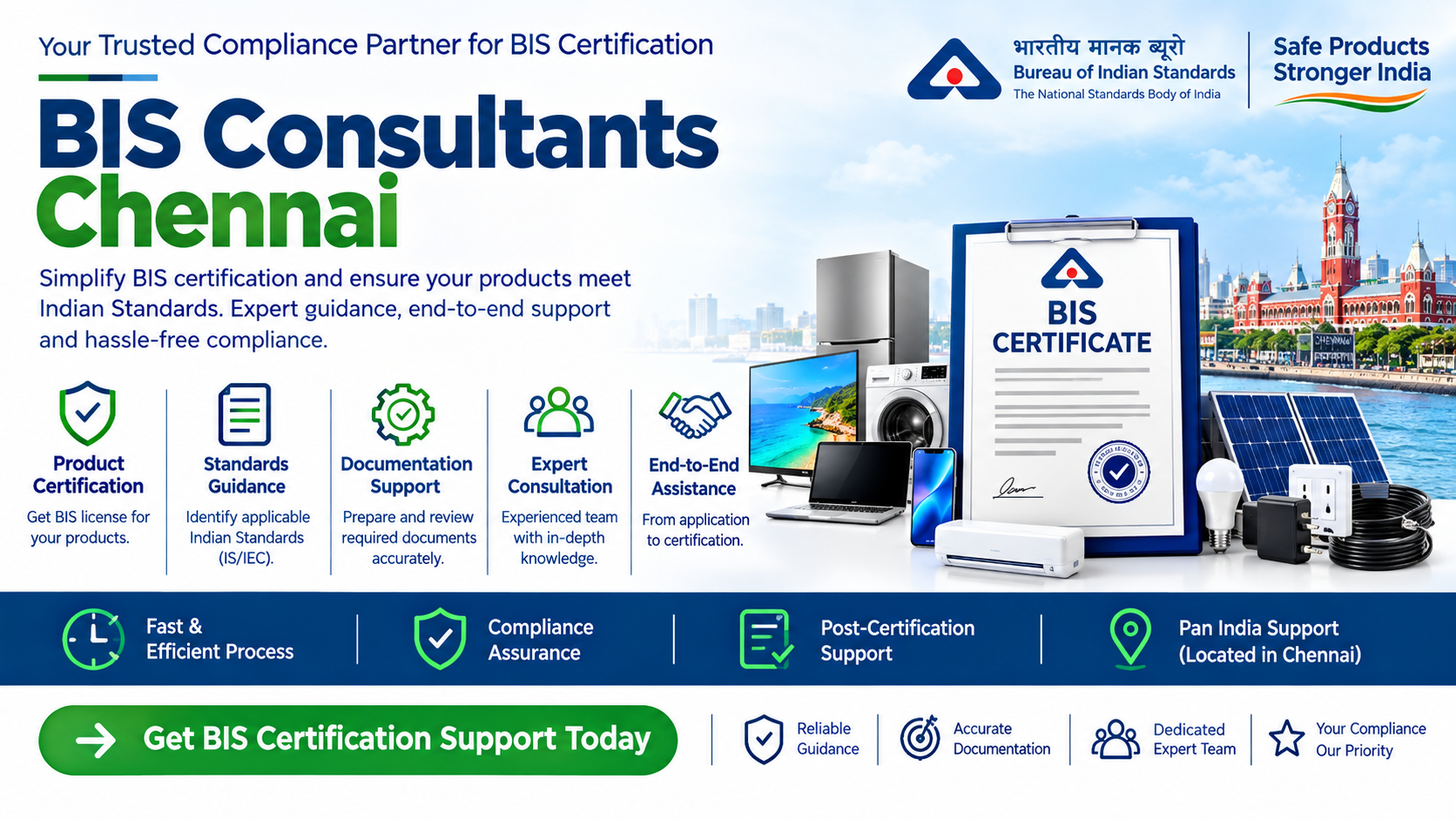
BIS Consultants Chennai
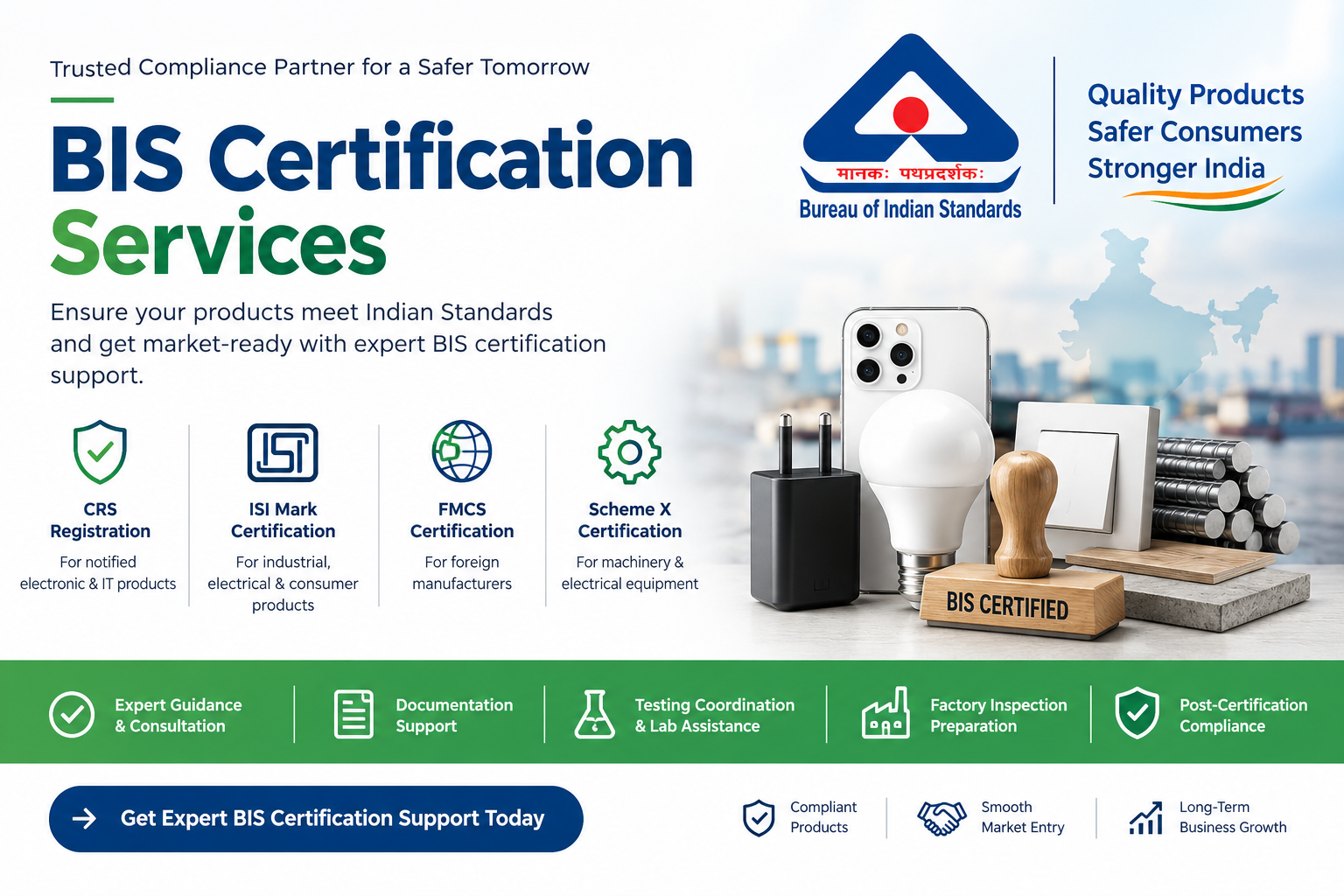
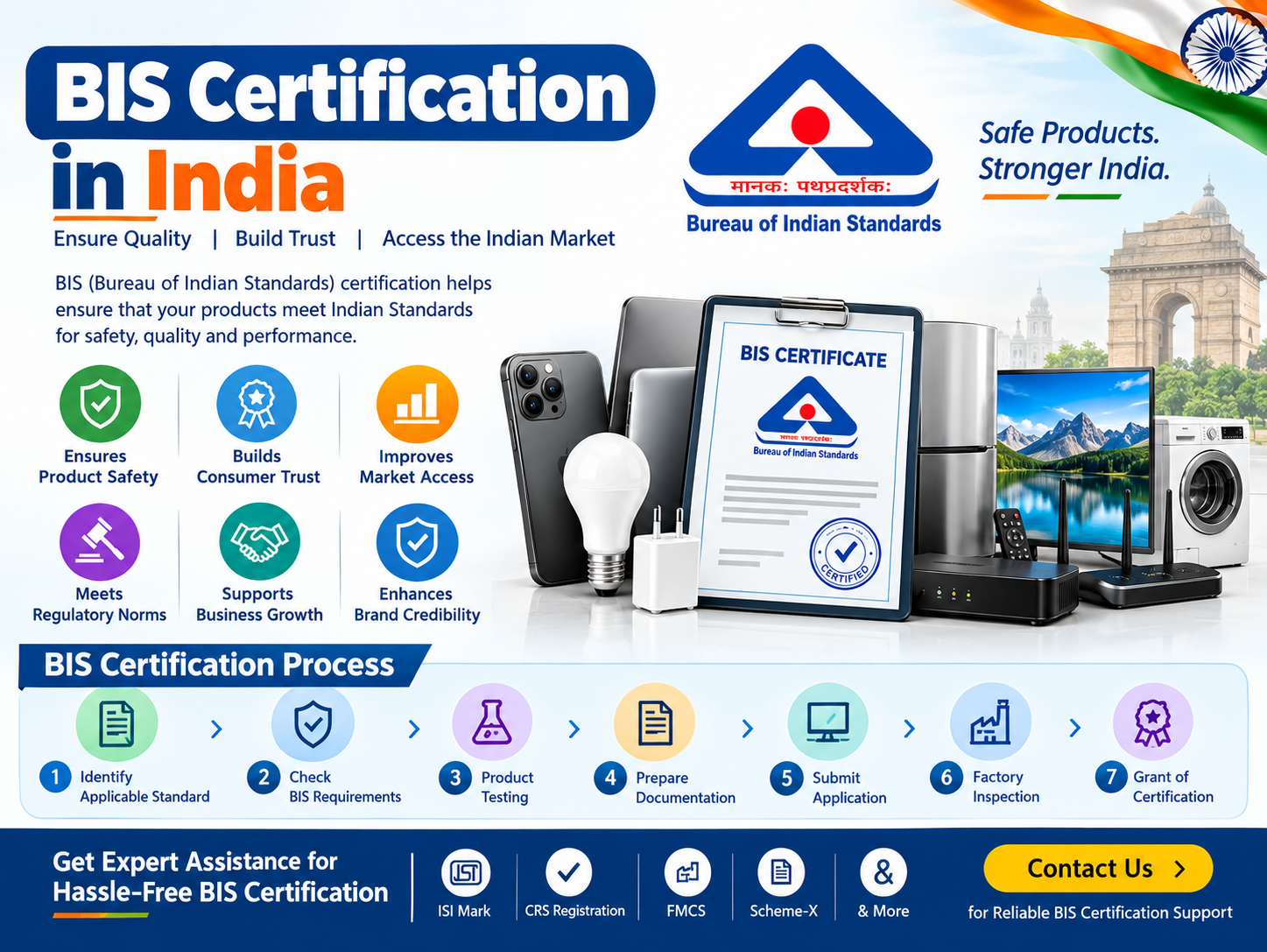
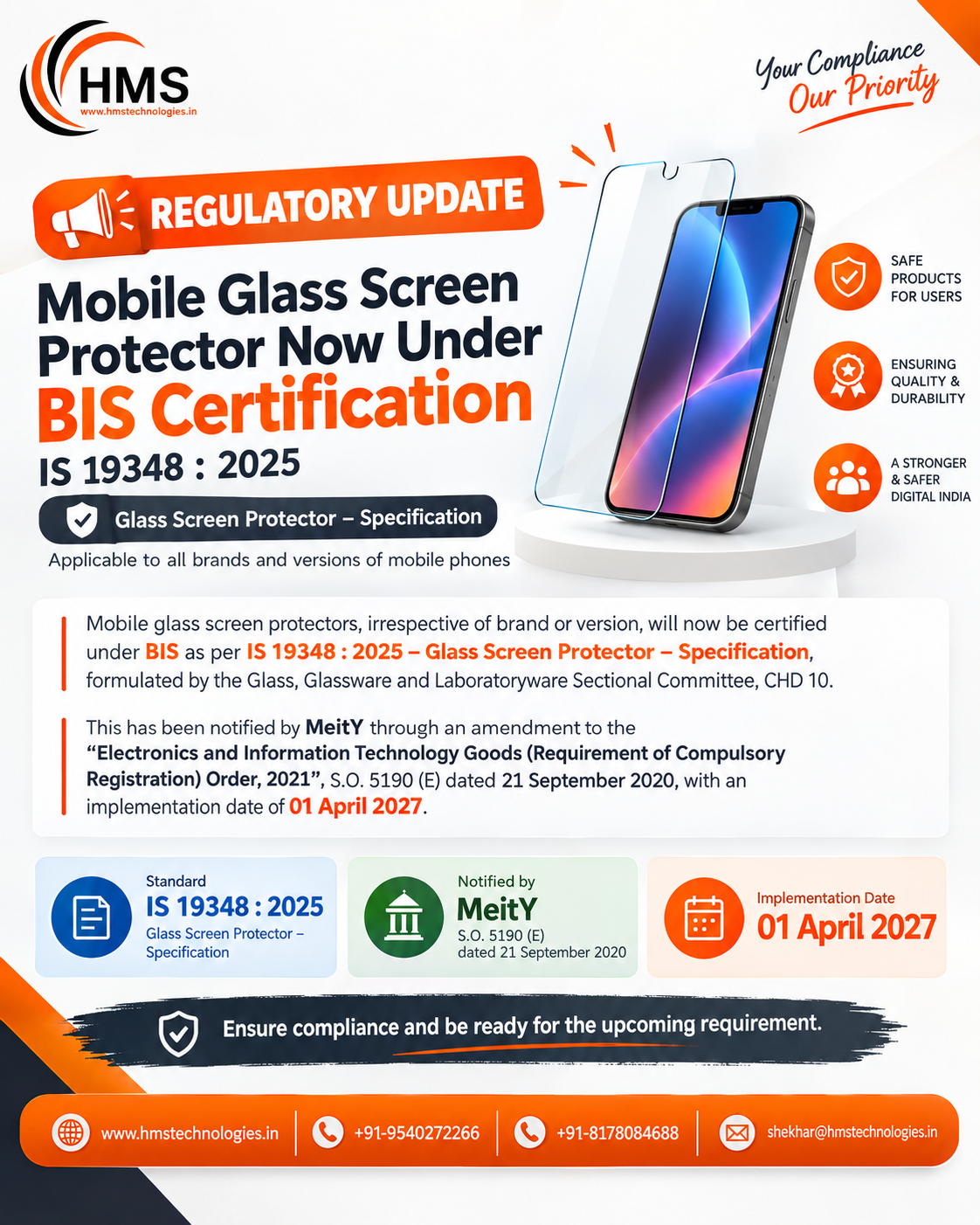
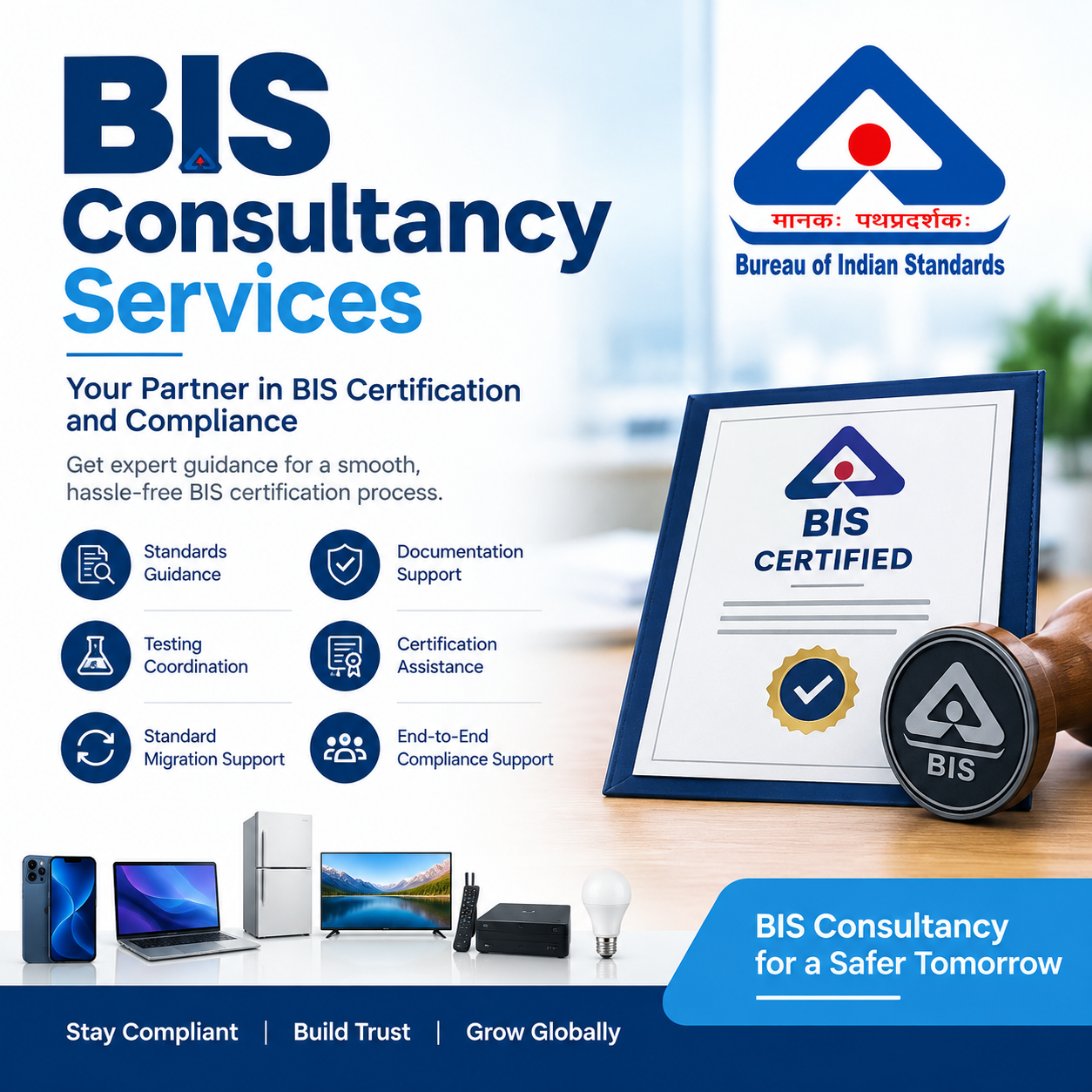
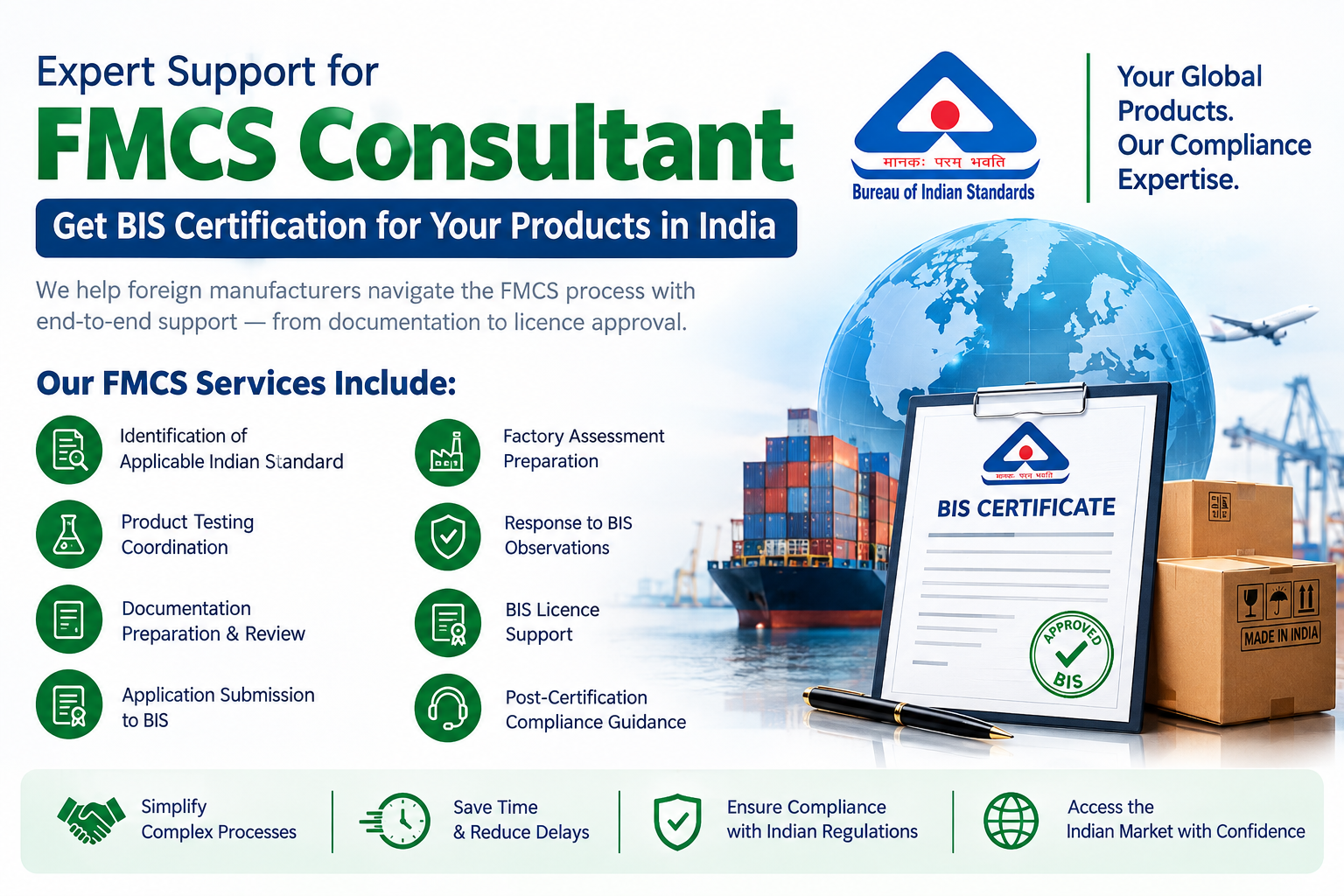
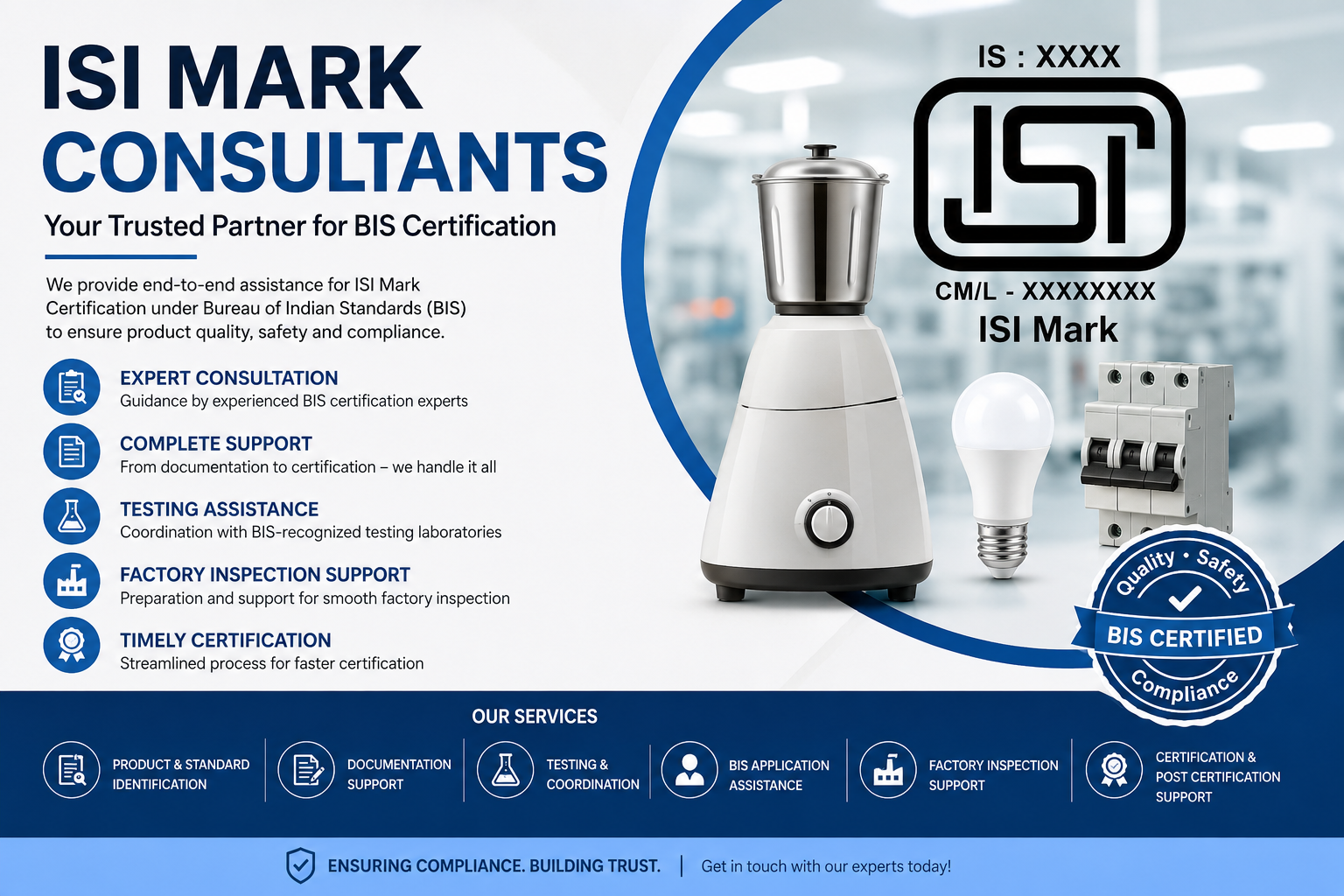
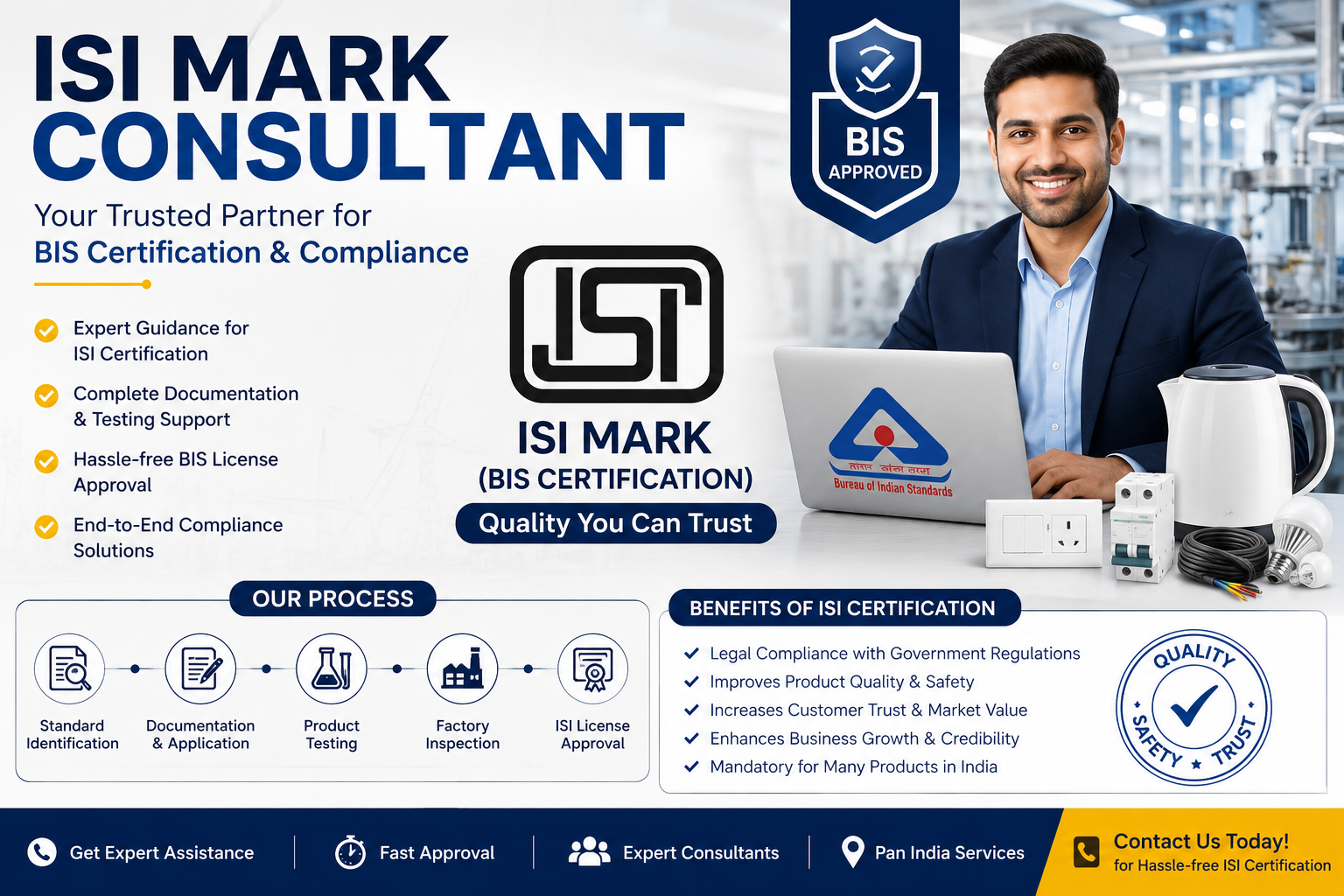
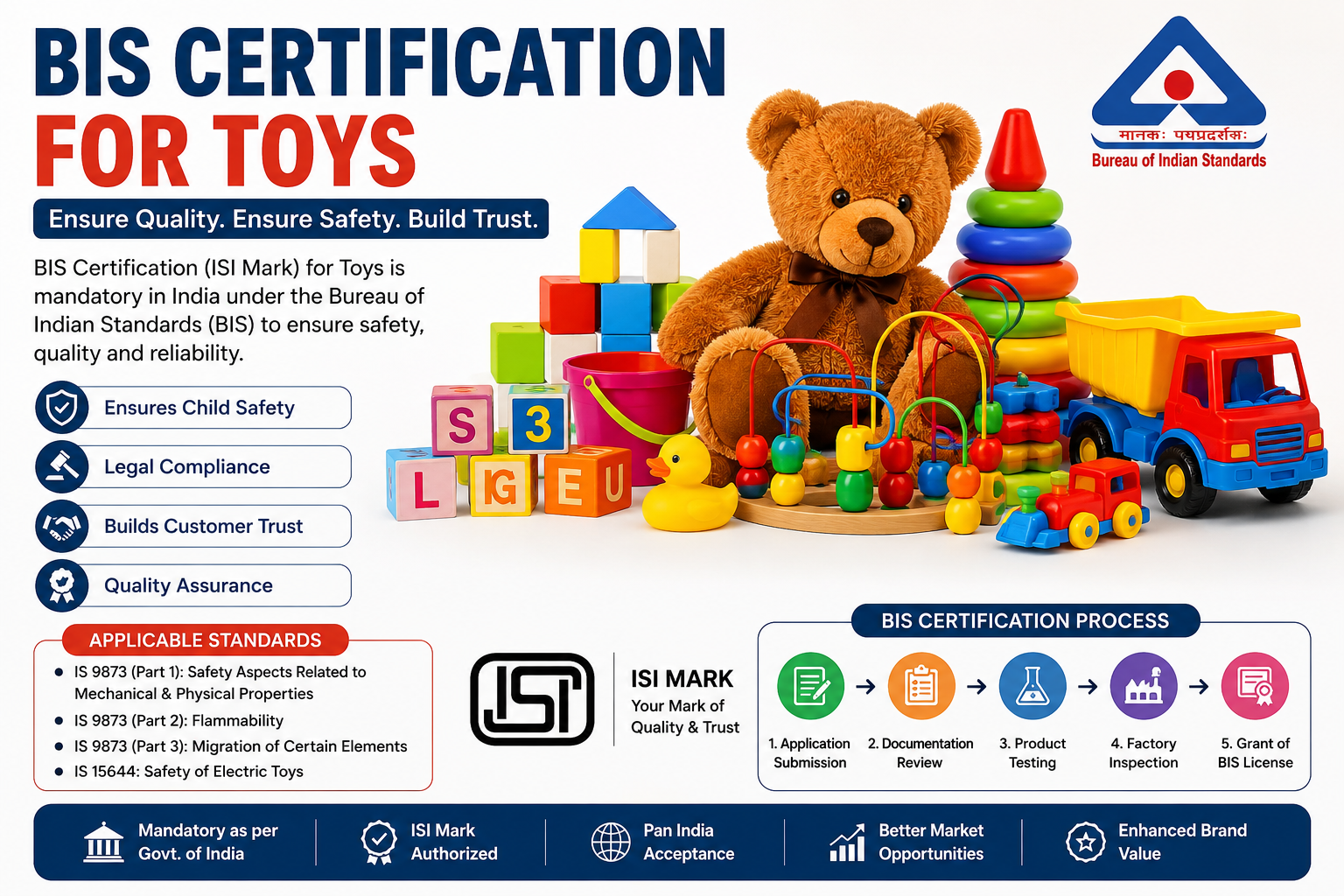
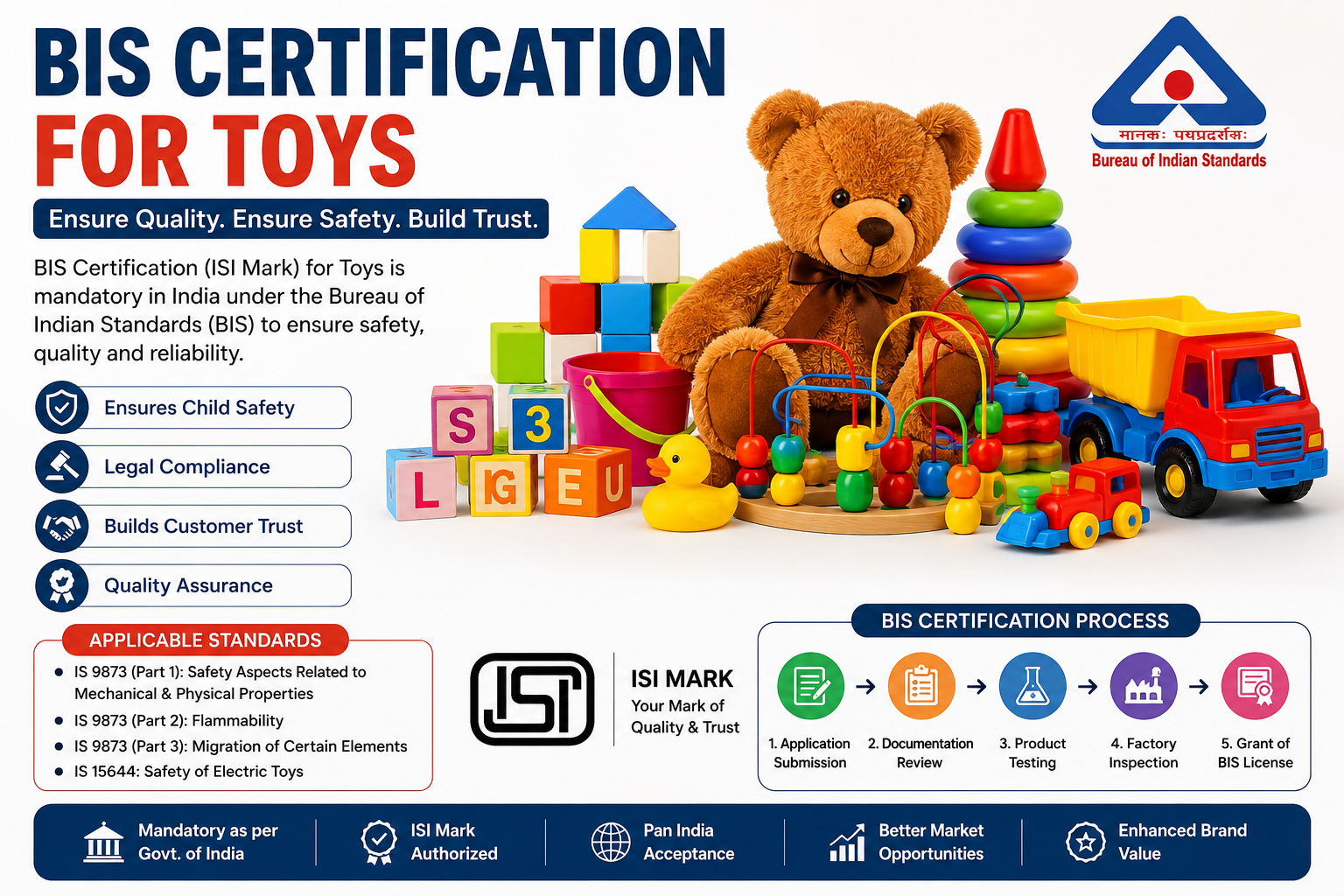
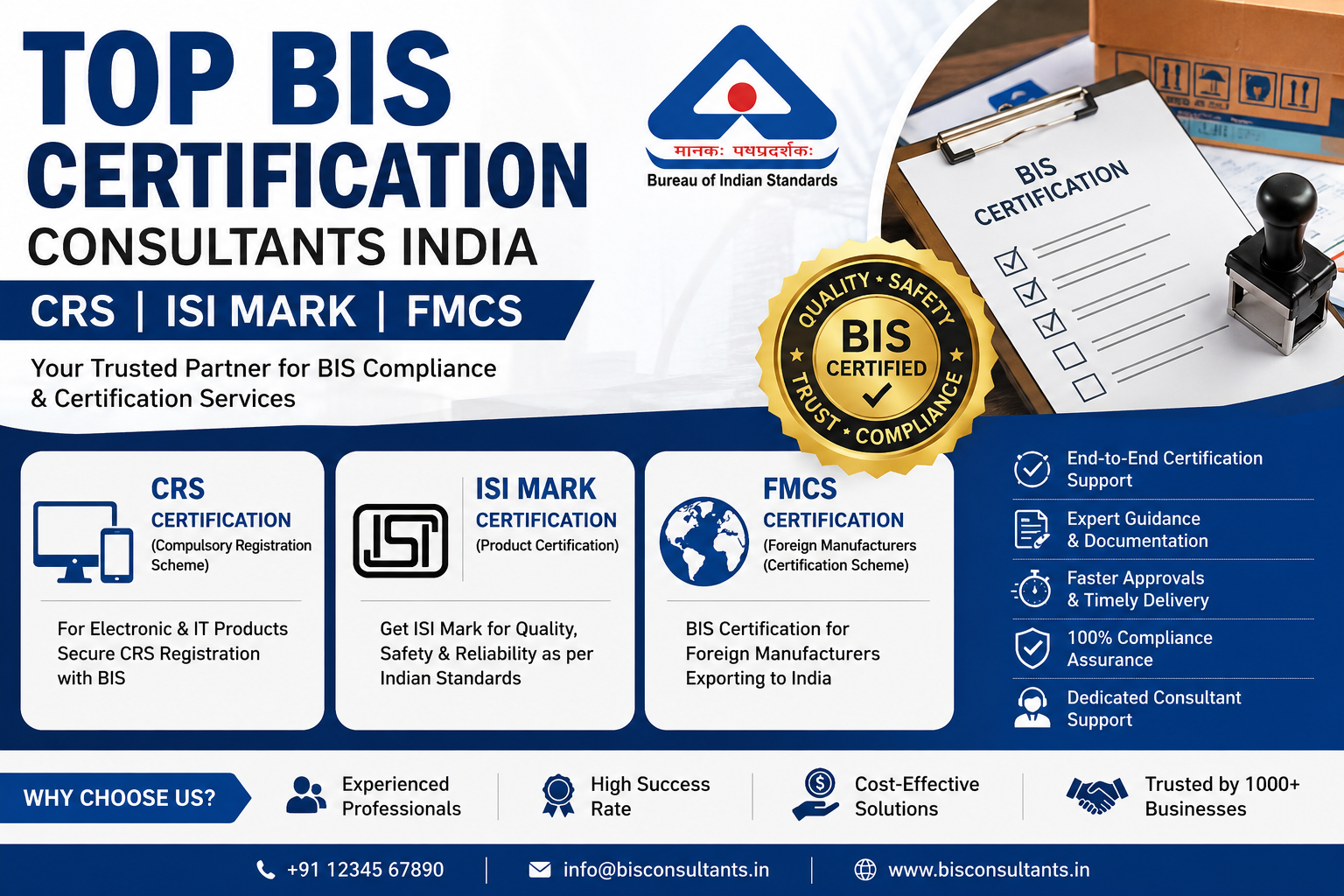
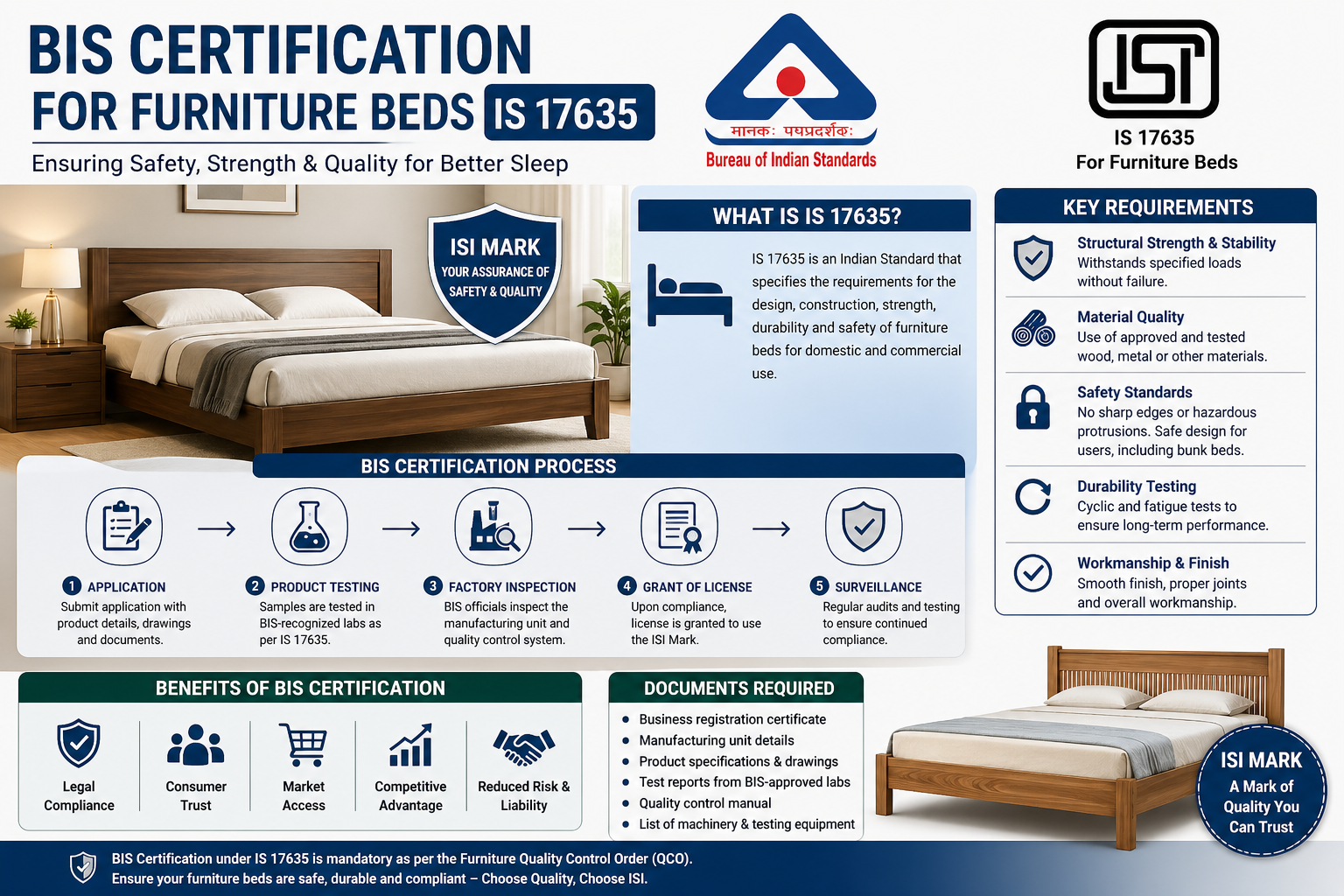
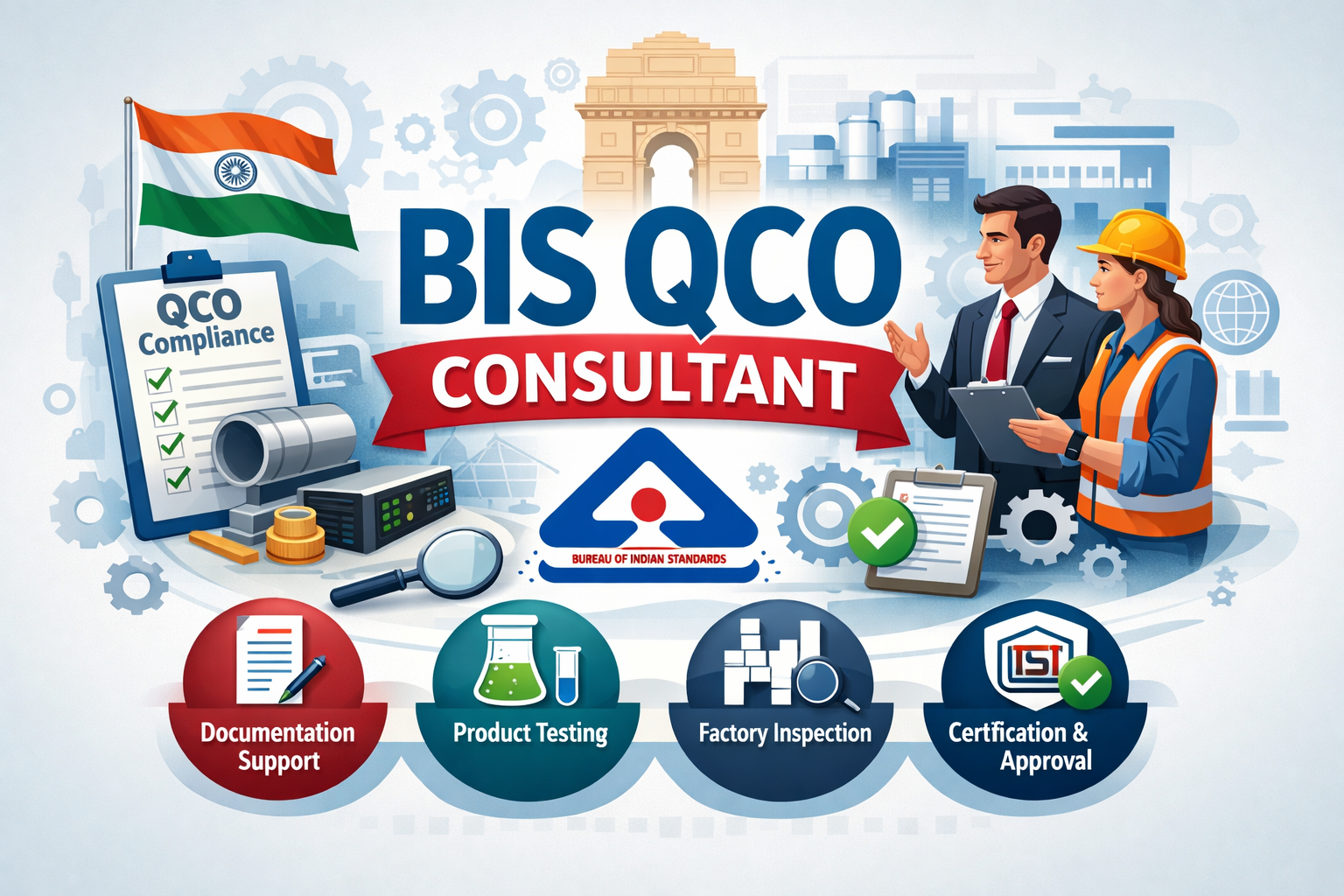
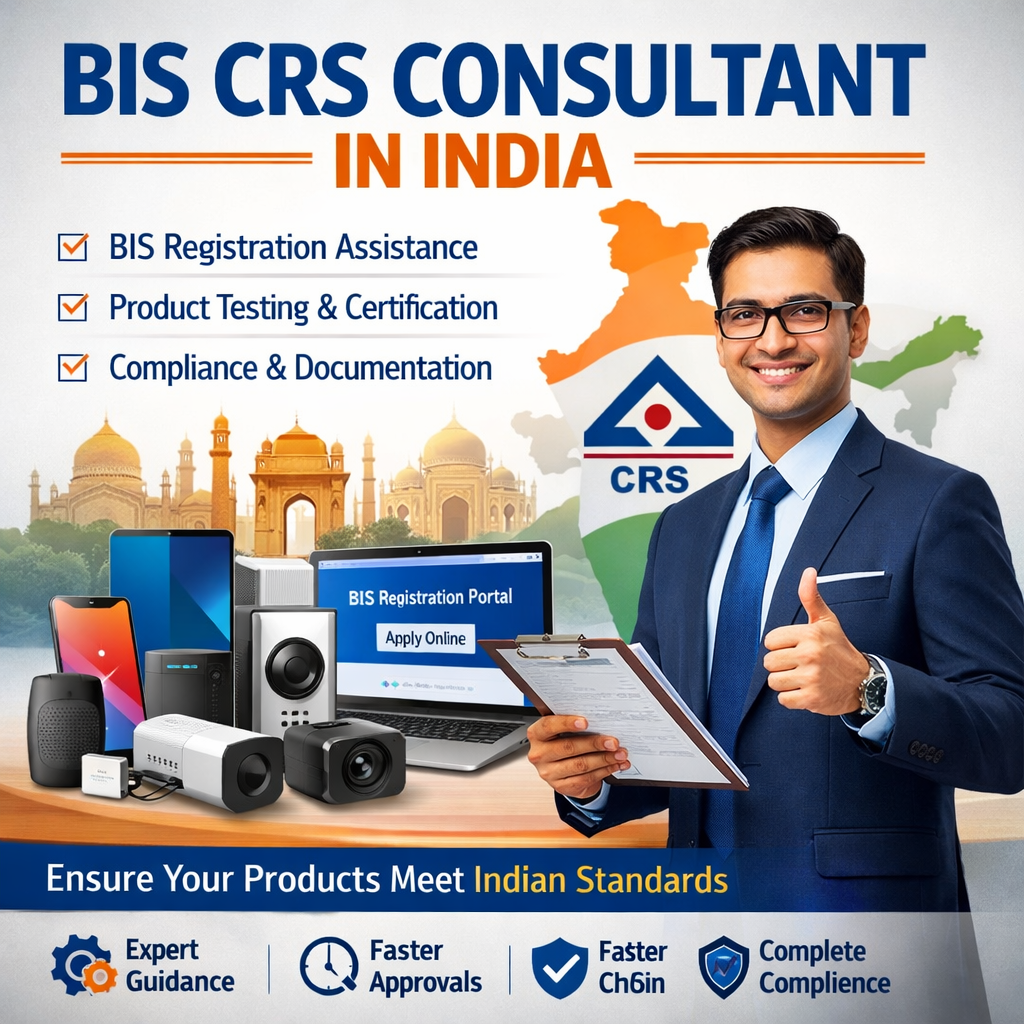
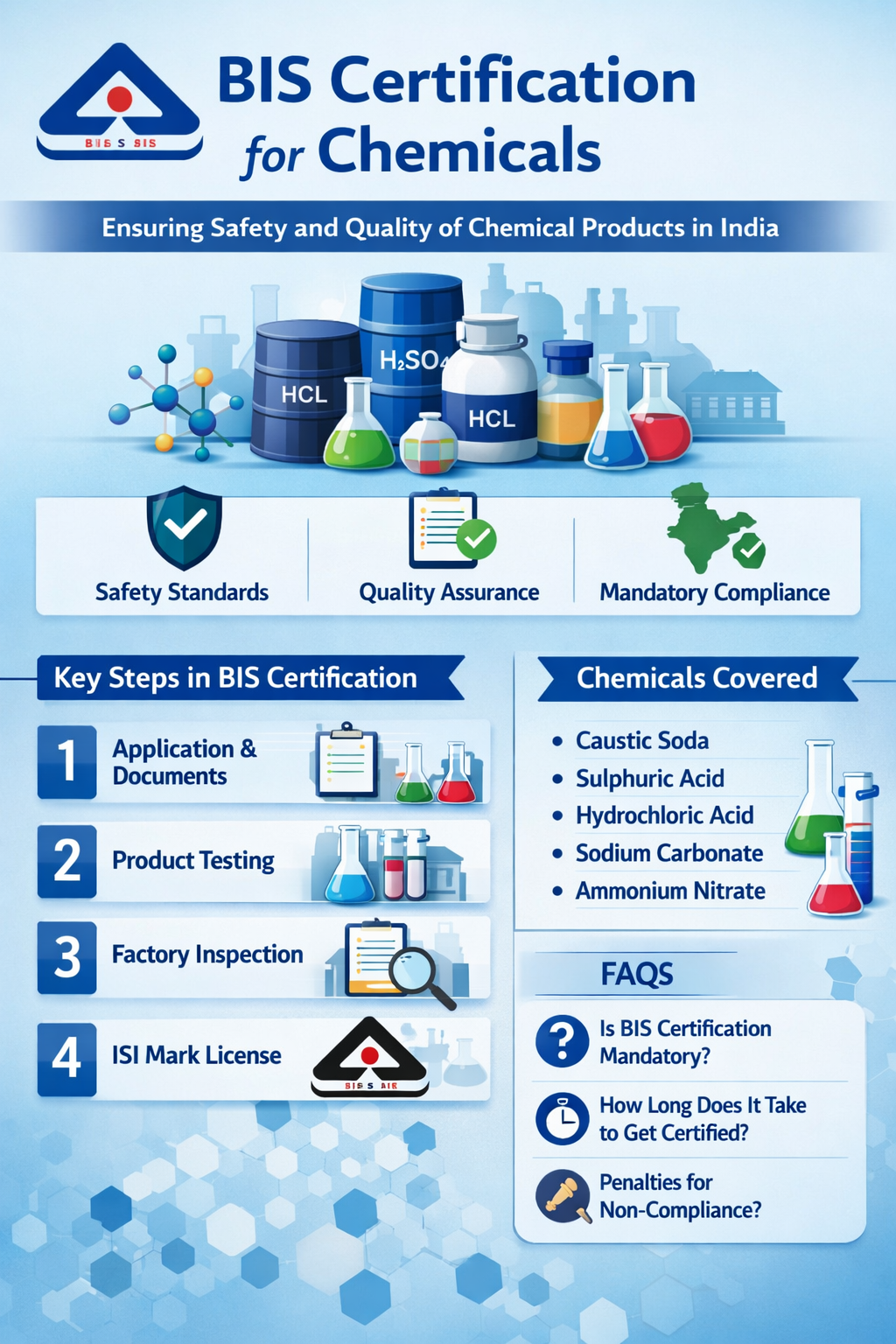
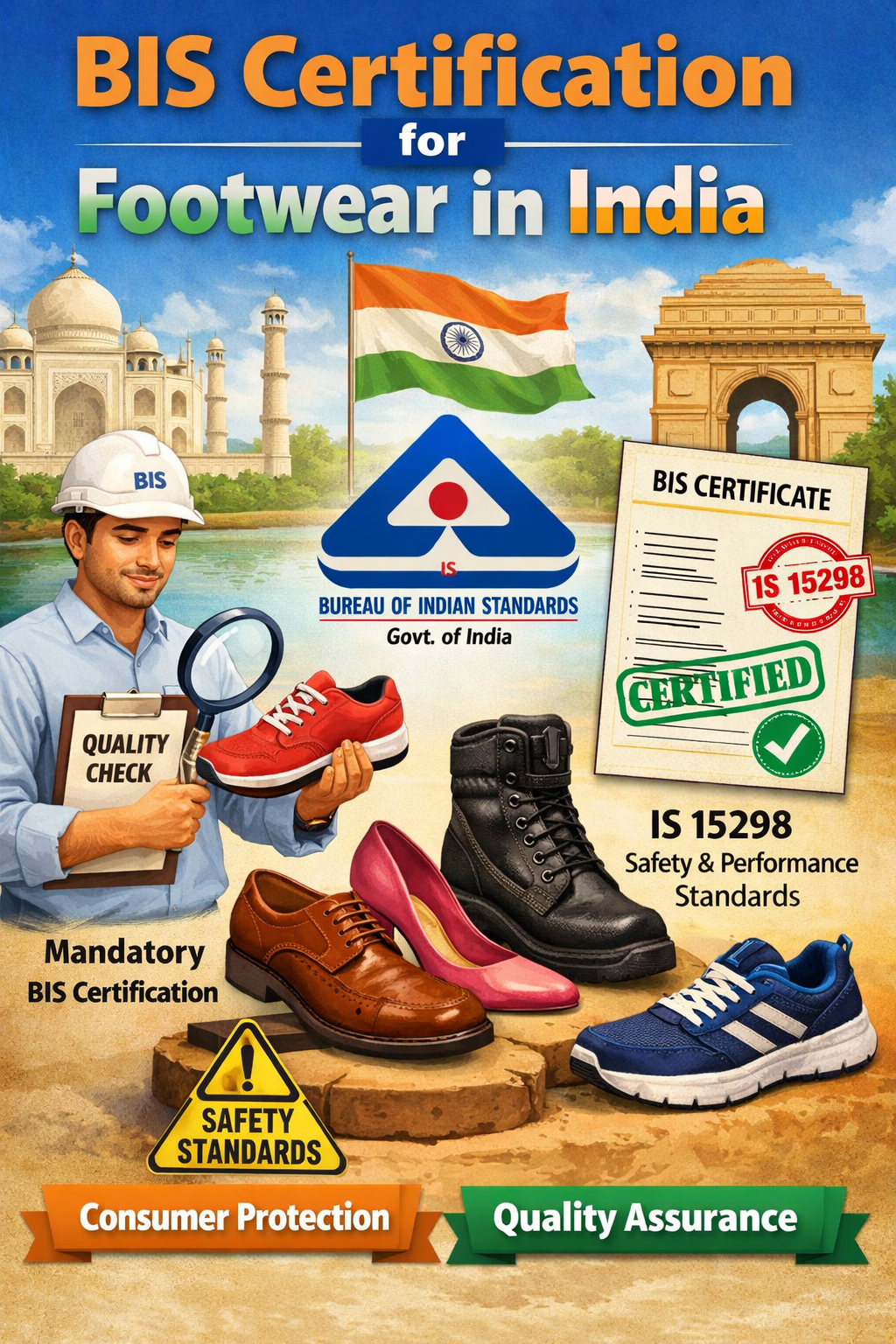
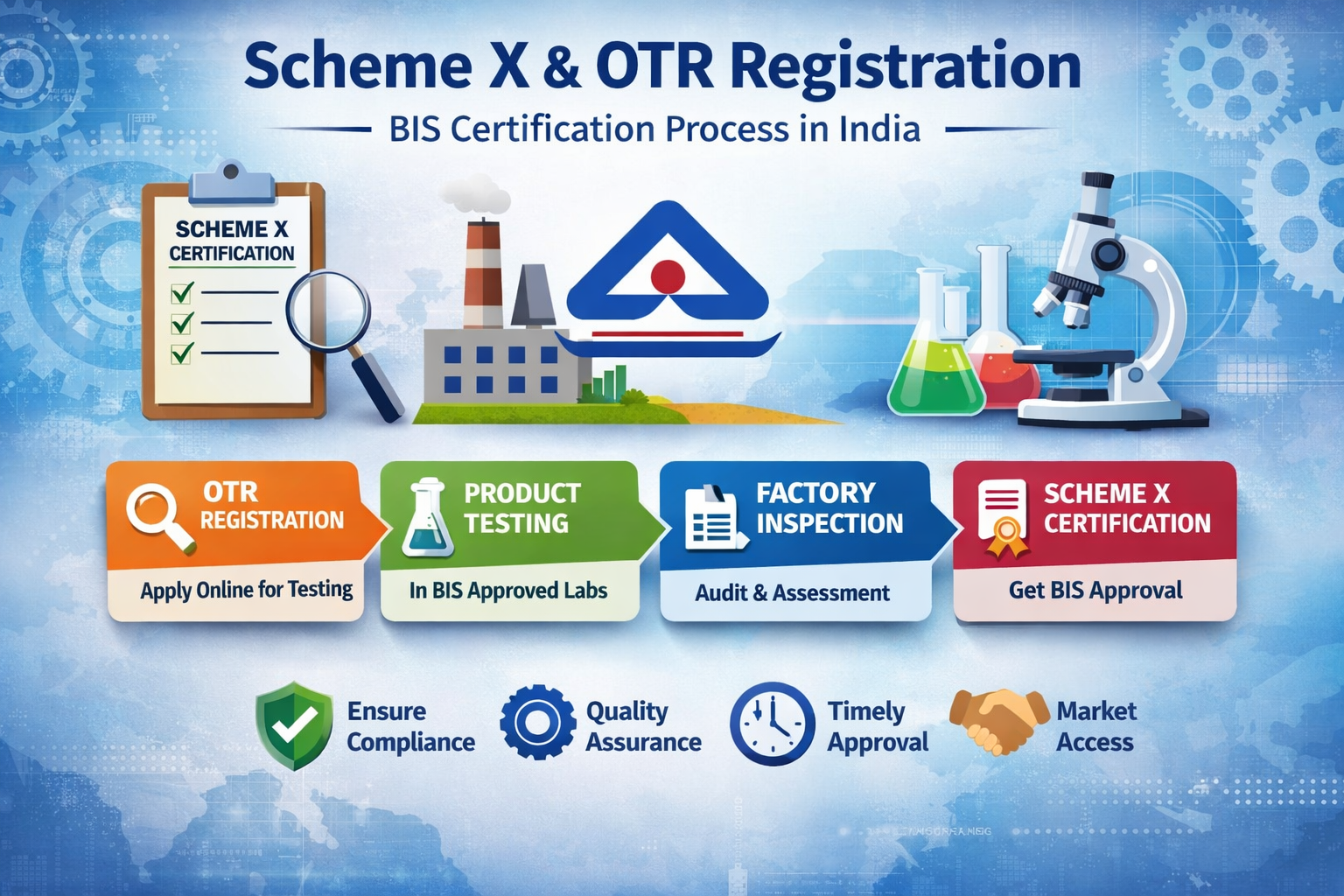
Businesses that manufacture, import, or sell regulated products in India may need to comply with the standards established by the Bureau of Indian Standards (BIS). For manufacturers and importers operating in Chennai, obtaining the appropriate BIS certification is an important step toward meeting applicable Indian quality and safety requirements. BIS consultants in Chennai help businesses understand certification procedures, prepare documentation, coordinate product testing, and navigate the application process. Chennai is a major industrial and commercial centre in Tamil Nadu, with businesses operating in electronics, electrical equipment, automotive components, consumer products, machinery, furniture, and other manufacturing sectors. Companies in these industries may need BIS certification depending on their products and the applicable Quality Control Orders (QCOs) or certification schemes. Professional BIS certification consultants help businesses identify the relevant Indian Standard, determine the applicable certification scheme, and understand the steps required to obtain a BIS licence or registration. The Bureau of Indian Standards is India's national standards body. It develops and maintains Indian Standards and administers product certification schemes to support product quality, safety, and reliability. BIS certification demonstrates that a product covered by an applicable certification requirement complies with the relevant Indian Standard, subject to the conditions of the applicable scheme. Depending on the product and regulatory requirement, manufacturers may need a BIS licence, registration, or another form of conformity assessment. BIS certification requirements differ according to the product category, manufacturing location, applicable standard, and certification scheme. Therefore, businesses should identify the correct compliance route before submitting an application. Obtaining BIS certification can involve technical documentation, laboratory testing, factory inspection, and communication with the relevant authorities. Businesses unfamiliar with these procedures may experience delays due to incomplete applications or incorrect documentation. Experienced BIS consultants in Chennai can provide professional assistance throughout the certification process. Key benefits include: Certification guidance: Assistance in identifying the relevant Indian Standard and applicable BIS scheme. Documentation support: Help preparing and reviewing application documents. Product testing coordination: Assistance in arranging testing through an appropriate BIS-recognised or otherwise authorised laboratory, as applicable. Application assistance: Guidance on submitting applications and responding to queries. Factory inspection preparation: Support in understanding applicable manufacturing and quality-control requirements. Regulatory updates: Guidance on relevant changes to standards, QCOs, and certification requirements. Ongoing compliance: Assistance with licence renewals, scope changes, and other applicable post-certification requirements. Consultants can help streamline the process, although the final decision to grant certification rests with BIS or the relevant authority. Businesses may require different types of BIS certification depending on their products and regulatory obligations. The Compulsory Registration Scheme (CRS) applies to notified product categories, including certain electronic and information technology products. Manufacturers must comply with the applicable Indian Standard and registration requirements before placing covered products on the Indian market. BIS consultants can assist with product classification, test report coordination, document preparation, online registration procedures, and responses to application queries. Examples of product categories that may fall under applicable CRS requirements include certain electronic devices, power supplies, lighting products, and information technology equipment. The exact requirement must be verified for each product. The ISI Mark is associated with BIS product certification under applicable schemes. Manufacturers of products covered by mandatory certification requirements must obtain the appropriate licence before manufacturing or selling products under the relevant certification framework. BIS consultants in Chennai can help businesses understand the relevant Indian Standard, arrange product testing, prepare manufacturing documentation, and get ready for factory inspections where required. Depending on the applicable standard and QCO, products such as cement, electrical appliances, steel products, and other industrial or consumer goods may require certification. Foreign manufacturers supplying products to India may need certification under the Foreign Manufacturers Certification Scheme when the relevant product falls within its scope and certification is mandatory. The FMCS process can involve factory assessment, product testing, manufacturing-quality requirements, and appointment of an authorised Indian representative, as applicable. Professional consultants can guide overseas manufacturers through the documentation and application process while helping them understand their responsibilities under the scheme. Scheme X is a BIS conformity assessment framework applicable to specified products and product categories under the relevant regulations. It may cover certain machinery, electrical equipment, and other notified products, depending on the applicable regulatory provisions. Businesses should verify whether their product falls within the current scope of Scheme X and whether a mandatory requirement applies to it. Consultants can assist with identifying the applicable requirements, understanding testing and conformity assessment procedures, and preparing the necessary technical documentation. The certification procedure depends on the applicable scheme and product category. A typical process may include the following steps: Step 1: Product identification Identify the exact product, model, technical specifications, intended use, and manufacturing location. Step 2: Applicable Indian Standard Determine the relevant Indian Standard and verify whether a QCO or other regulatory provision makes certification mandatory. Step 3: Documentation preparation Prepare the required documents, which may include business registration details, manufacturing information, product specifications, test-related documents, and quality-control records. Step 4: Product testing Arrange the prescribed testing through the laboratory and testing route accepted under the applicable certification scheme. Step 5: Application submission Submit the application with the required information, supporting documents, and applicable government fees. Step 6: Factory inspection, if required For schemes involving factory assessment, the manufacturer must demonstrate compliance with the relevant manufacturing and quality-control requirements. Step 7: Application review BIS reviews the application, test reports, inspection findings, and other applicable requirements. Additional information or corrective action may be requested. Step 8: Grant of certification Certification is granted only after the applicable requirements have been fulfilled and the competent authority approves the application. The time required varies according to the product, scheme, testing requirements, document quality, and regulatory review. The documentation required depends on the applicable scheme. Commonly requested documents may include: Business registration or incorporation documents. Manufacturing unit details and address proof. Product specifications and technical datasheets. Product photographs and model information. Manufacturing process details. Quality-control and testing arrangements. Relevant test reports. Authorisation documents, where applicable. Brand or trademark-related documents, where required. Importer or authorised Indian representative documents, for applicable cases. Other declarations and forms prescribed by BIS. Manufacturers should obtain a scheme-specific document checklist before applying because requirements can differ substantially between product categories. BIS consultants can assist eligible businesses across a wide range of industries, including: Electronics and information technology products. Electrical appliances and equipment. Lighting products and LED products. Steel, cement, and construction materials. Automotive components and industrial products. Furniture and other regulated consumer products. Machinery and equipment covered by applicable requirements. Imported products manufactured outside India. Certification applicability must always be verified against the current Indian Standards, product scope, and applicable regulatory notifications. Choosing a suitable consultant can help businesses manage the certification process more efficiently. Before selecting a service provider, consider its experience with your product category, familiarity with the relevant BIS scheme, documentation support, laboratory coordination capabilities, and communication practices. A reliable consultant should explain the applicable procedure, provide a clear scope of services, identify potential compliance issues, and communicate realistic expectations. Businesses should also confirm the applicable official fees and professional charges separately. No consultant can legitimately guarantee approval regardless of compliance. The product, documentation, testing results, and other applicable requirements must satisfy the relevant rules. Whether a company is based in Chennai, elsewhere in Tamil Nadu, or outside India, the certification process depends primarily on the product and the applicable BIS scheme rather than the location of its consultant. Manufacturers and importers can seek professional assistance with product classification, testing coordination, application preparation, factory inspection readiness, and post-certification compliance. Foreign manufacturers should pay particular attention to the requirements of the scheme applicable to their products. Early compliance planning can help businesses identify testing requirements, prepare technical records, and reduce avoidable delays before launching products in India. BIS consultants in Chennai provide valuable guidance to manufacturers, importers, and businesses seeking to understand India's product certification requirements. From BIS CRS registration and ISI Mark certification to FMCS and Scheme X, professional assistance can help companies navigate the relevant procedures and prepare the necessary documentation. The most important first step is to identify the correct Indian Standard and determine whether certification is mandatory for the product. With careful preparation, appropriate testing, and compliance with the applicable rules, businesses can work toward obtaining the required certification and building confidence in their products. BIS consultants assist businesses with identifying applicable standards, preparing documentation, coordinating product testing, submitting applications, and understanding certification requirements. No. BIS certification is mandatory only where the applicable law, Quality Control Order, or other regulatory requirement makes it compulsory. Voluntary certification may also be available for eligible products. The timeline varies depending on the certification scheme, product category, laboratory testing, inspection requirements, and completeness of the application. Yes. Eligible foreign manufacturers can apply under the relevant BIS scheme, subject to the applicable requirements and procedures. CRS is a registration framework for specified products, while ISI Mark certification is associated with BIS product licensing under applicable certification schemes. The correct route depends on the product and relevant regulations. Requirements vary by scheme but may include company details, manufacturing information, technical specifications, product test reports, quality-control documents, and prescribed declarations. No legitimate consultant can guarantee approval. Certification depends on satisfying the applicable regulatory, testing, documentation, and assessment requirements. Start by identifying your product name, model, technical specifications, and manufacturing country. Then verify the applicable Indian Standard and certification scheme before preparing the application.What Is BIS Certification?
Why Choose BIS Consultants in Chennai?
Types of BIS Certification Services in Chennai
1. BIS CRS Registration
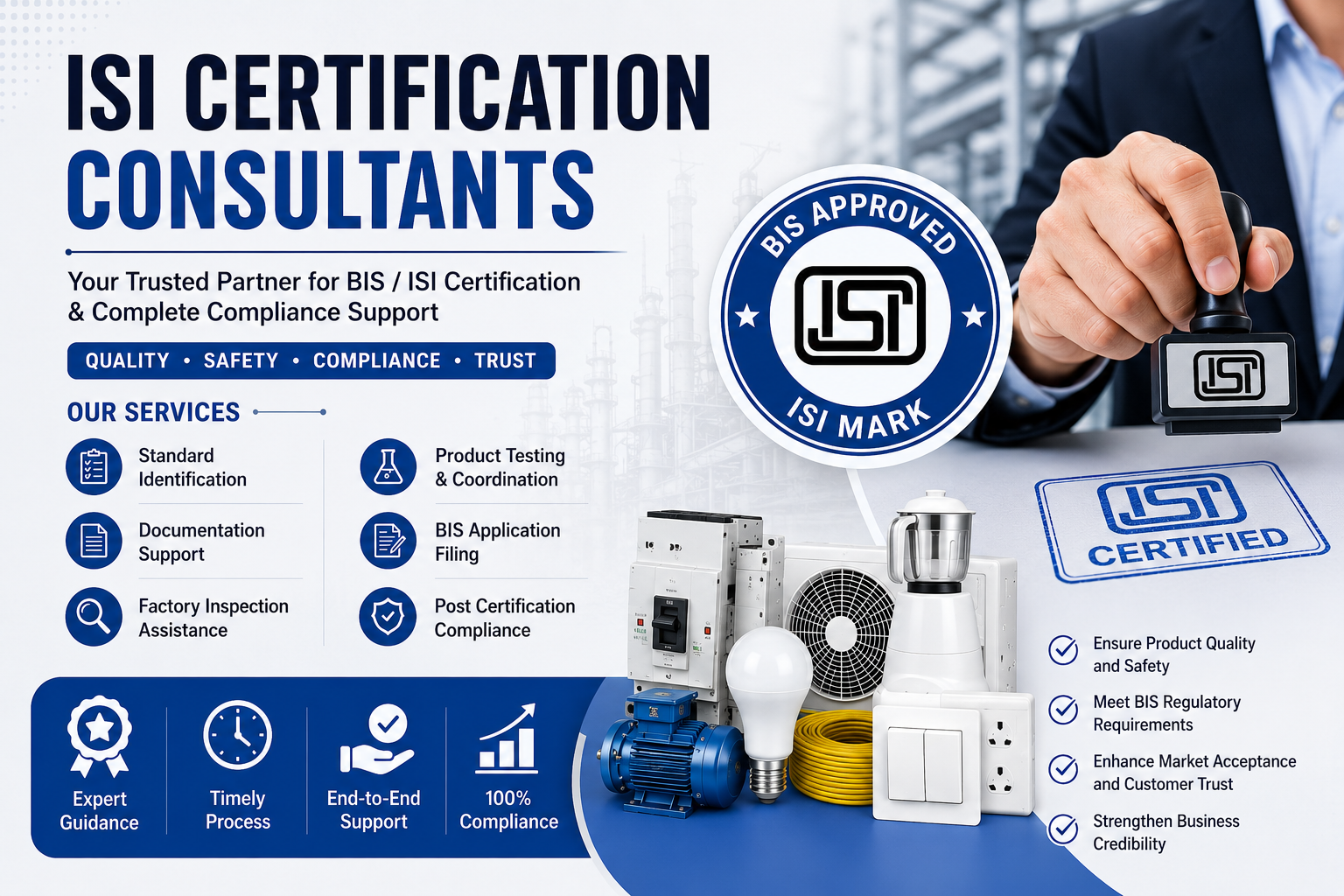
2. BIS ISI Mark Certification
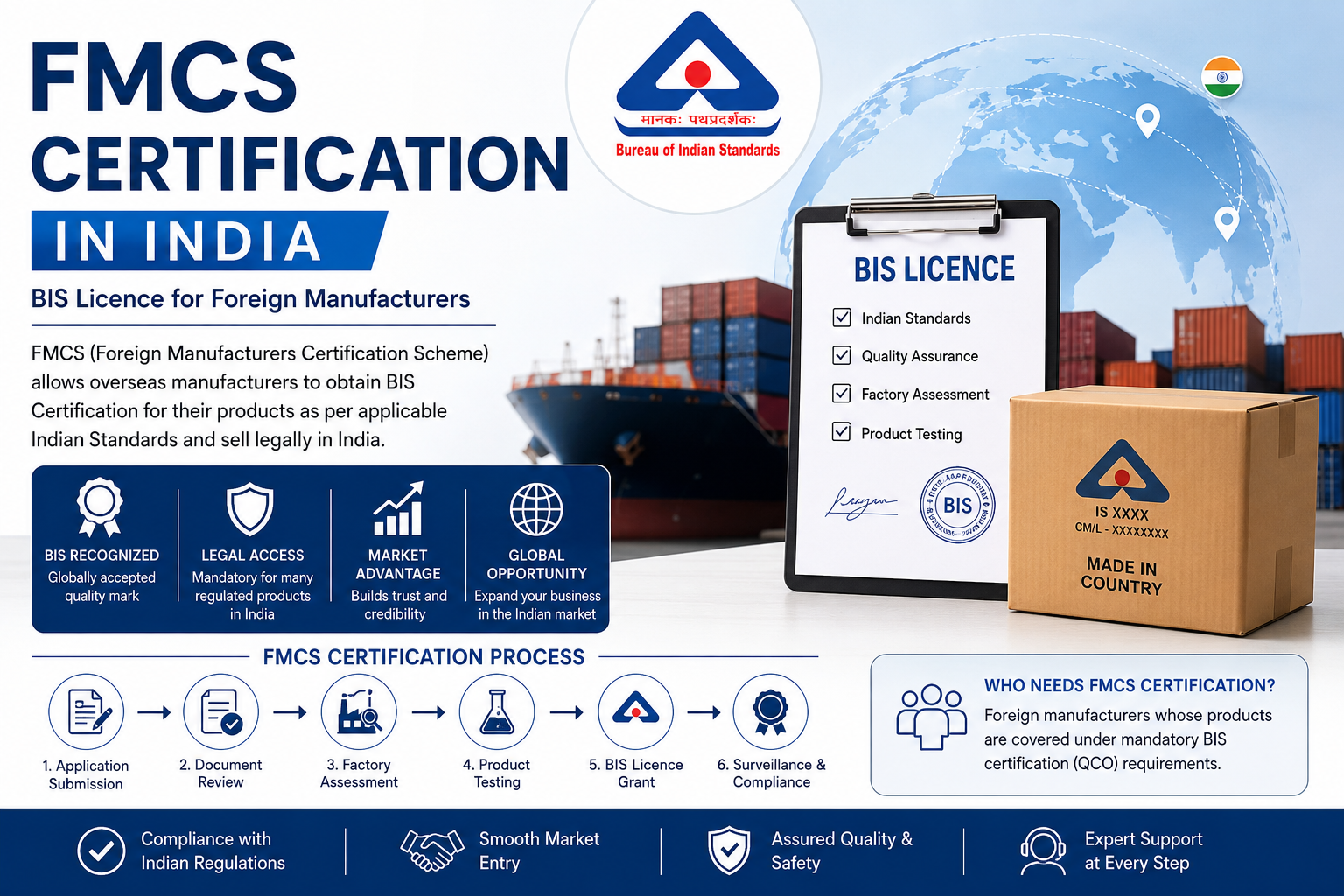
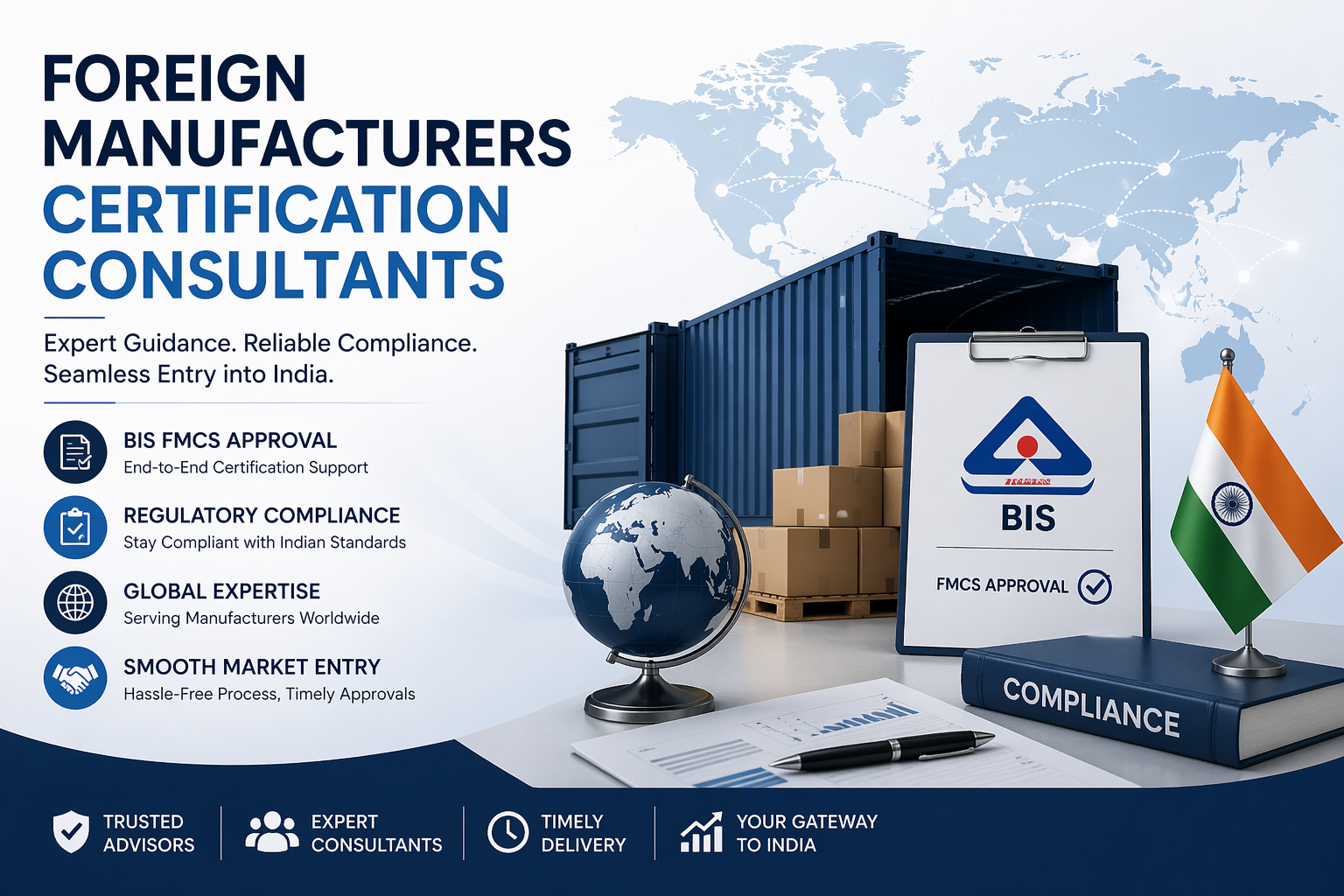
3. Foreign Manufacturers Certification Scheme (FMCS)
4. BIS Scheme X Certification
BIS Certification Process in Chennai
Documents Required for BIS Certification
Industries We Support in Chennai
How to Select the Right BIS Consultant in Chennai
BIS Certification Services for Indian and Foreign Manufacturers
Conclusion
Frequently Asked Questions (FAQs)
1. What do BIS consultants in Chennai do?
2. Is BIS certification mandatory for every product?
3. How long does BIS certification take?
4. Can foreign manufacturers apply for BIS certification?
5. What is the difference between BIS CRS and ISI certification?
6. What documents are required for BIS certification?
7. Can BIS consultants guarantee certification approval?
8. How can I start the BIS certification process?