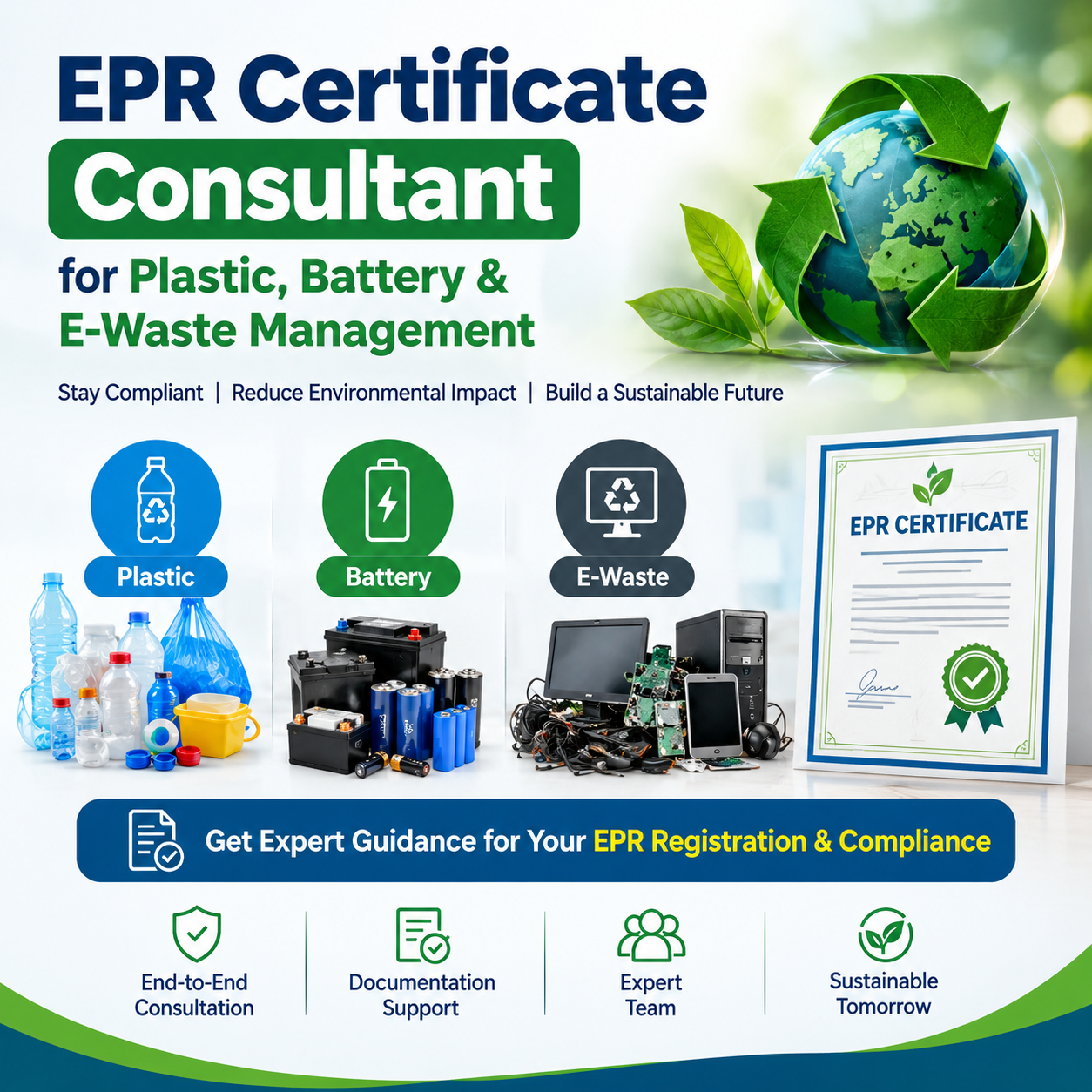
EPR Certificate Consultant for Plastic, Battery & E-Waste Management
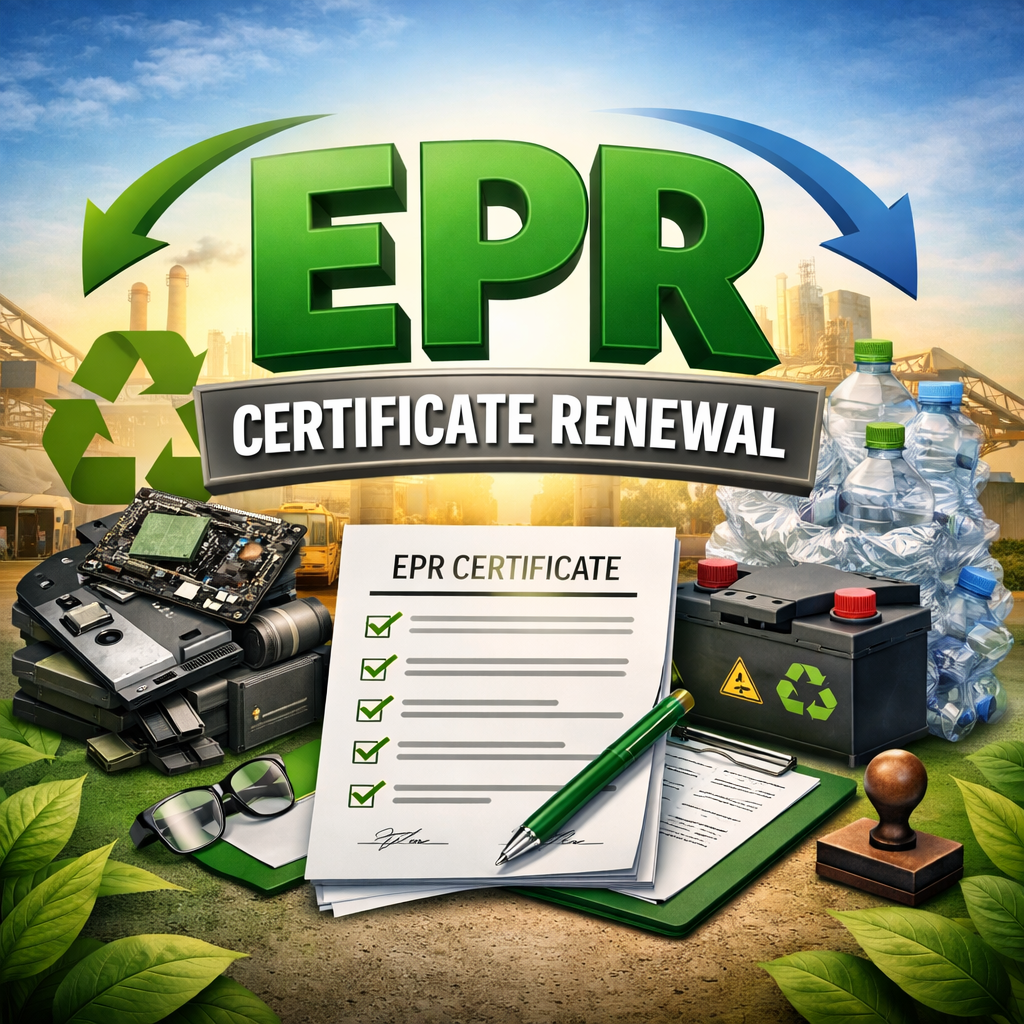
Extended Producer Responsibility (EPR) is an important environmental compliance framework in India that places responsibility on producers, manufacturers, importers and other obligated entities for managing the environmental impact of products after their useful life. Businesses dealing with plastic packaging, batteries, electrical and electronic equipment may need to meet applicable EPR obligations and maintain proper records and compliance documentation. An experienced EPR Certificate Consultant for Plastic, Battery, E-Waste Management can help businesses understand applicable regulations, complete registration requirements, prepare documentation and manage compliance obligations efficiently. An EPR Certificate or EPR registration is a compliance mechanism through which an obligated entity takes responsibility for the collection, recycling, processing or environmentally sound management of waste generated from products or packaging introduced into the Indian market. Depending on the business activity and type of waste involved, different EPR frameworks may apply. These include Plastic Waste Management, Battery Waste Management and E-Waste Management regulations. The objective of EPR is to encourage responsible waste management, recycling and resource recovery while reducing the environmental impact of waste. Businesses involved in manufacturing, importing or using specified plastic packaging may have obligations under the applicable Plastic Waste Management framework. An EPR Certificate for Plastic Waste Management helps eligible businesses comply with their responsibilities concerning plastic packaging placed in the Indian market. A consultant can assist with: Understanding applicability of Plastic EPR Registration and application support Documentation preparation Classification of plastic packaging EPR obligation assessment Coordination for recycling and processing requirements Annual return and compliance support Maintaining relevant records Addressing regulatory queries and notices Proper EPR compliance can help businesses demonstrate their commitment to responsible plastic waste management. The increasing use of lithium-ion, lead-acid and other types of batteries has made responsible battery waste management increasingly important. Businesses covered under the applicable Battery Waste Management regulations may have EPR responsibilities. Manufacturers, producers and importers dealing with batteries can require appropriate registration and compliance support depending on their role and activities. An EPR Certificate Consultant for Battery Waste Management can help with: Determining EPR applicability Registration assistance Documentation and application preparation Understanding battery categories EPR obligation calculations Recycling and collection-related compliance Record maintenance Annual return filing Compliance monitoring Professional guidance can reduce confusion around documentation and regulatory procedures and help businesses maintain their compliance systematically. Electronic products generate significant quantities of waste when they reach the end of their useful life. The E-Waste Management framework establishes responsibilities for entities involved in covered electrical and electronic equipment. Businesses manufacturing or importing applicable electronic products may need to fulfill EPR requirements. An E-Waste EPR Certificate Consultant can provide support for: E-waste EPR registration Product and category assessment Documentation preparation EPR obligation assessment Recycling compliance Record maintenance Annual returns Regulatory communication and compliance support Consultants can also help businesses understand their responsibilities before launching products in the Indian market. EPR compliance can involve multiple regulatory requirements, documentation, registrations, records and periodic reporting. Businesses that are unfamiliar with the process may face delays or compliance issues. An experienced consultant provides a structured approach from applicability assessment through registration and ongoing compliance. Key benefits include: Regulatory Guidance: Understand which EPR framework applies to your business. Documentation Support: Prepare and organize the required information and supporting documents. Application Assistance: Get professional support throughout the registration process. Compliance Management: Maintain records and fulfill applicable reporting requirements. Reduced Errors: Professional review can help minimize mistakes in applications and submissions. Ongoing Support: Businesses can receive assistance with renewals, returns, updates and regulatory requirements as applicable. EPR requirements depend on the applicable regulations and the role of the entity. Businesses that may fall within relevant EPR frameworks can include: Manufacturers Producers Importers Brand owners Entities placing covered products or packaging on the Indian market Businesses dealing with electrical and electronic equipment Battery manufacturers and importers Businesses covered by plastic packaging obligations Since applicability depends on the nature of products, packaging and business operations, it is advisable to conduct an assessment before applying. The general EPR compliance process can include the following steps: The consultant reviews your products, packaging, business activities and role to identify the relevant EPR requirements. Required business, product and compliance information is collected and reviewed. The appropriate registration/application information is prepared according to the applicable requirements. The application is submitted through the relevant regulatory system. If additional information or clarification is required, the consultant can assist with responding appropriately. After registration, the business must continue fulfilling applicable EPR obligations, including record keeping, recycling-related requirements and reporting. EPR compliance is not simply about obtaining a registration. Businesses need to understand their continuing responsibilities under the applicable waste-management framework. Proper compliance can support: Environmentally responsible waste management Transparent recycling practices Better regulatory record keeping Reduced compliance risks Responsible brand positioning Sustainable business operations Businesses should also regularly review regulatory updates because waste-management requirements and implementation procedures can change. Managing Plastic, Battery and E-Waste EPR requirements separately can become complicated, particularly for businesses handling multiple product categories. A professional EPR Certificate Consultant can help create a compliance roadmap based on the company's activities. From registration and documentation to annual compliance and regulatory updates, expert assistance can make the process more organized and efficient. If your business deals with plastic packaging, batteries or electronic products, obtaining professional guidance at an early stage can help you identify applicable requirements and avoid unnecessary compliance complications. An EPR Certificate or registration is part of the regulatory mechanism used to establish producer/manufacturer/importer responsibility for applicable waste management and recycling obligations. Entities covered by applicable Plastic Waste, Battery Waste or E-Waste regulations may need EPR registration. Applicability depends on the business role, products and materials involved. Yes. A professional EPR consultancy can assist businesses with multiple applicable EPR categories and help identify the separate requirements for each category. Documents vary according to the applicable EPR framework and entity type. Generally, business details, product information, registration details and other supporting compliance information may be required. Importers dealing with products or packaging covered by applicable EPR regulations may have compliance responsibilities. The exact requirement depends on the product and business activity. No. Registration is generally only one part of compliance. Applicable entities may also have ongoing obligations such as recycling, record keeping, reporting and annual returns. An experienced consultant can help determine applicability, prepare documentation, manage the registration process and provide ongoing compliance assistance. Businesses dealing with covered electrical and electronic equipment may have EPR responsibilities under the applicable E-Waste framework. Plastic EPR is the system through which covered entities take responsibility for managing applicable plastic packaging waste placed into the market. Battery EPR establishes responsibilities for covered entities to ensure appropriate collection, recycling and environmentally sound management of applicable waste batteries. Yes, consultants can provide support for applicable annual returns, record preparation and other ongoing compliance requirements. You should evaluate your business role, products, packaging materials and applicable waste-management regulations. A professional EPR consultant can conduct an applicability assessment and guide you on the appropriate compliance route.What is an EPR Certificate?
EPR Certificate Consultant for Plastic Waste
EPR Consultant for Battery Waste Management
E-Waste EPR Certificate Consultant
Why Choose an EPR Certificate Consultant?
Who May Need EPR Compliance?
EPR Registration Process
1. Applicability Assessment
2. Document Collection
3. Application Preparation
4. Submission
5. Clarification and Follow-Up
6. EPR Compliance
Importance of EPR Compliance for Businesses
Why Professional EPR Consultancy Matters
Frequently Asked Questions (FAQs)
1. What is an EPR Certificate?
2. Who needs EPR registration?
3. Can one consultant handle Plastic, Battery and E-Waste EPR?
4. What documents are required for EPR registration?
5. Is EPR applicable to importers?
6. Does EPR compliance end after registration?
7. Why should I hire an EPR Certificate Consultant?
8. Is EPR required for electronic products?
9. What is Plastic EPR?
10. What is Battery EPR?
11. Can an EPR consultant help with annual returns?
12. How can I check whether my business requires EPR?


:-important-update-for-manufacturers.png)






.png)